




Is Boxing Good for Self Defence? Boxing vs Other Martial Arts
If you want to learn how to defend yourself, boxing is probably one of the first martial arts that comes to mind. And for good reason. Boxers are fast, powerful, physically conditioned and accustomed to facing opponents who are actively trying to hit them.
But is boxing the most effective in a real street confrontation? Would a boxer stand a chance against someone trained in Brazilian Jiu-Jitsu, wrestling or Muay Thai? And is learning to punch enough to protect yourself when a confrontation turns violent?
Having practised martial arts since 1998, worked as a door supervisor, and taught self-defence professionally since 2003, I consider boxing one of the most effective foundations for practical self-defence.
In fact, boxing forms an important part of what we teach beginners at Shuhari Self Defence.
However, while boxing develops exceptional fighting skills, it also has limitations that become apparent when a confrontation moves beyond punching.
Let's examine where boxing excels, where it struggles, and how it compares with other martial arts when your personal safety is at stake.
Is Boxing Effective for Self-Defence?
Yes. Boxing is extremely effective for self-defence, particularly against an untrained attacker in a standing confrontation.
Think about what happens in most spontaneous physical altercations. When an untrained person becomes aggressive and decides to attack someone, their first instinct is often to throw a punch towards the face.
They may swing wildly, rush forward or attempt to overwhelm their opponent with punches.
This is precisely the type of attack that boxing prepares you to deal with.
A trained boxer develops several valuable defensive abilities:
- Distance management: Understanding how close an opponent needs to be to land a punch and how to stay outside that range.
- Defensive movement: Using footwork, head movement, evasion and guards to avoid being struck.
- Speed and timing: Recognising openings and reacting quickly to an opponent's movements.
- Punching power: Developing the ability to deliver fast, accurate and powerful strikes.
- Physical conditioning: Building the strength and resilience needed during a physical confrontation.
- Composure under pressure: Becoming accustomed to facing an opponent who is actively trying to hit you.
Of these skills, I consider defensive movement and distance management particularly important.
Learning how to punch and how not to get punched both extremely valuable.
An experienced boxer can recognise when an opponent is within striking distance, move out of danger and create opportunities to escape. Also the ability to pre-empt and finish an altercation fast is priceless.
These abilities are useful regardless of whether the confrontation happens inside a boxing ring or outside a pub.
Why Boxing Works So Well
One of boxing's greatest strengths is its simplicity.
Boxers concentrate on a relatively small number of techniques: jabs, crosses, hooks, uppercuts and body punches.
However, they practise these techniques repeatedly, often against fully resisting opponents.
Rather than learning hundreds of complicated movements, a boxer develops a handful of techniques to a very high standard.
Under pressure, this becomes an enormous advantage.
When someone unexpectedly throws a punch towards your face, you do not have time to mentally search through a catalogue of techniques.
Your response needs to be immediate.
Boxing develops these reactions through repetition, movement drills and sparring.
An experienced boxer may instinctively move their head, raise their guard, adjust their distance or counterattack without wasting any time.
That is exactly the kind of practical ability we want to develop through self-defence training.
My Experience: Watching Boxers Handle Real Confrontations
I worked as a door supervisor for years, which gave me opportunities to observe physical confrontations outside the controlled environment of martial arts training.
I witnessed boxers perform very effectively in real situations.
What impressed me was their ability to deal with threats quickly and decisively.
Their speed, distance management and ability to deliver effective punches meant they could respond to aggressive behaviour without becoming unnecessarily entangled in prolonged physical struggles.
This reinforced something I have believed throughout my martial arts career: simple techniques, practised realistically and developed to a high standard, are often more valuable than complicated techniques that have never been tested against resistance.
Of course, not every confrontation is resolved through punching, and boxing does not provide answers to every situation.
Nevertheless, my experience left me with considerable respect for boxing as a practical fighting discipline.
I would never dismiss a trained boxer simply because they do not practise kicks, throws or ground fighting.
A competent boxer is a formidable opponent, particularly while the confrontation remains standing and at punching distance.
Why Boxing Sparring Is So Important
One of boxing's biggest advantages over some traditional martial arts schools is its emphasis on contact sparring.
In boxing, students master punching through bags, pads and sparring.
They learn to apply their skills against opponents who move, defend, counterattack and actively resist.
Contact sparring changes everything.
There is an enormous difference between knowing how to perform a technique and being able to use it against someone who does not want you to succeed.
During sparring, students learn that opponents do not stand still, punches do not always land, and carefully rehearsed combinations frequently fall apart.
They also become familiar with the physical and psychological pressure of being attacked.
This is where genuine fighting ability begins to develop.
Pressure Testing Separates Theory from Reality
In my opinion, pressure testing is one of the most important elements of effective martial arts training.
A technique might look impressive during a demonstration, but that does not necessarily mean it will work against a resisting opponent.
If you have never practised defending yourself against someone genuinely trying to punch you, how confident can you be that your defence will work?
Boxing addresses this problem through contact sparring.
It teaches students to maintain their composure, adapt their movements and continue functioning when their initial plan fails.
Sparring does not perfectly reproduce the conditions of a real assault.
However, it provides a level of realism that purely cooperative drills cannot offer.
A martial art that regularly tests its techniques against resistance has an important advantage over one that relies entirely on compliant training partners.
This principle applies just as much to grappling, wrestling and other martial arts as it does to boxing.
What Are the Weaknesses of Boxing for Self-Defence?
Despite its strengths, boxing has one major limitation: it specialises entirely in punching.
A boxing match takes place under a clearly defined set of rules. Competitors cannot kick, perform takedowns, apply joint locks or continue fighting on the ground.
Consequently, boxers do not normally develop the skills required to deal with these situations through boxing training alone.
The main limitations include:
1. No Defence Against Grappling and Takedowns
Boxing teaches excellent movement at punching distance, but it does not adequately prepare students for someone grabbing them, attempting a throw or taking them to the ground.
This is arguably boxing's greatest weakness.
A boxer may be extremely dangerous at arm's length, but their advantage can disappear when an experienced grappler closes the distance and establishes control.
2. Limited Close-Range Fighting Options
Boxers can be effective at close punching range, particularly with hooks and uppercuts.
However, boxing does not teach the full range of techniques available in close-quarters combat.
Clinch , elbows, knees, throws, joint locks and grappling controls are absent from boxing training.
This limits the boxer's options when punching becomes difficult or impossible.
3. No Kicking Techniques
Boxers do not learn to defend against low kicks, body kicks as part of their normal training.
Someone trained in Muay Thai or karate may exploit this unfamiliarity.
Although boxing footwork can help a practitioner move away from danger, avoiding punches and defending against kicks are not identical skills.
4. No Ground Fighting
If a boxer falls or is taken to the ground, their usual skills become much less useful.
Boxing does not teach students how to escape from underneath an opponent, defend submissions or regain their feet when someone is controlling them.
These are essential skills in a more comprehensive self-defence system.
5. Limited Awareness and De-escalation Training
Boxing develops fighting skills, but conventional boxing classes do not necessarily teach students how to recognise developing threats, verbally de-escalate confrontations or make decisions about when physical force is justified.
These skills are just as important as punching when the objective is personal safety rather than sporting success.
Boxing vs Brazilian Jiu-Jitsu: Who Has the Advantage?
Boxing and Brazilian Jiu-Jitsu (BJJ) approach fighting from very different perspectives.
Boxing specialises in striking while standing. Brazilian Jiu-Jitsu specialises in grappling, positional control and submissions, mainly on the ground.
Both are highly effective within their respective areas of expertise.
The interesting question is what happens when practitioners from these two disciplines face each other.
The Boxer's Advantage
If the boxer can maintain distance, control the movement of the confrontation and land effective punches, they have an advantage.
A powerful, well-timed punch can end a confrontation before the grappler manages to establish contact.
A boxer with excellent footwork and speed may also make it difficult for an inexperienced grappler to close the distance.
However, the situation changes dramatically once the grappler gets hold of them.
The Grappler's Advantage
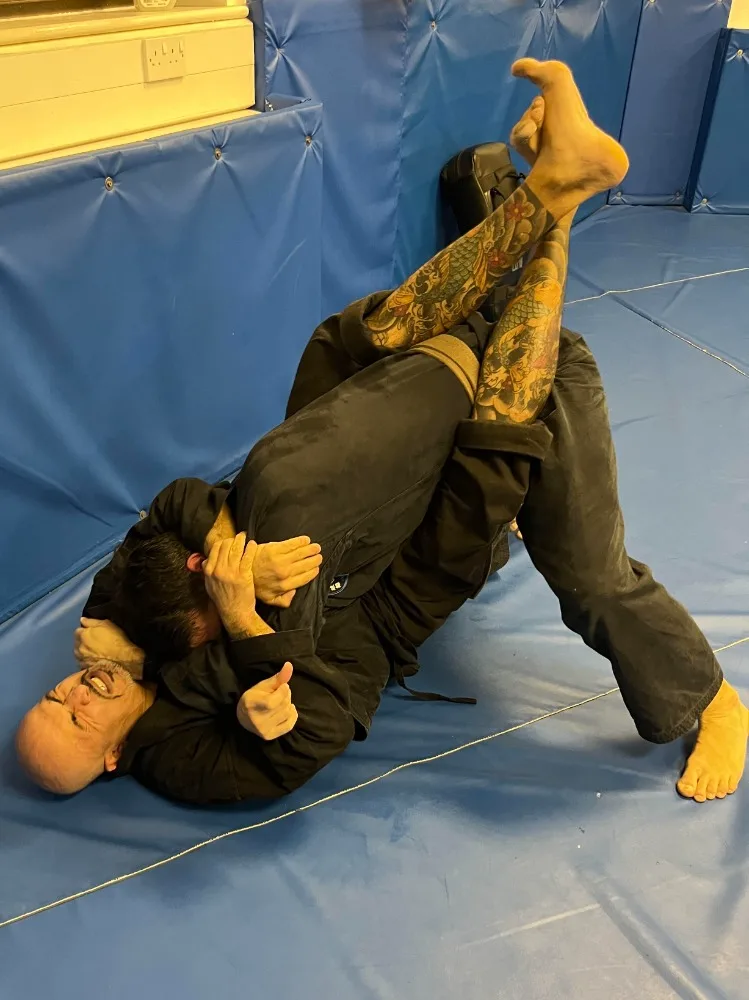
An experienced BJJ practitioner who successfully closes the distance may be able to clinch, take the boxer down and establish a dominant position.
Once the confrontation reaches the ground, a boxer without grappling experience is likely to find themselves in unfamiliar territory.
Their footwork is no longer useful in the same way, their punching options are gone, and they may have little understanding of how to escape.
A boxer who has never trained in grappling is helpless once an experienced grappler establishes control.
Why Ground Fighting Is Different in the Street
There is another important consideration.
Although grappling is extremely valuable for self-defence, deliberately taking a confrontation to the ground can create additional dangers.
Concrete surfaces, weapons and additional attackers can make prolonged ground fighting a bad idea.
For this reason, I believe the ideal approach is to develop enough grappling ability to defend against takedowns, escape dangerous positions and return to your feet whenever possible.
The objective is not to win a sporting contest.
It is to protect yourself and escape the threat.
Boxing vs Muay Thai: Which Is Better for Street Fighting?
Muay Thai, often called the Art of Eight Limbs, incorporates punches, kicks, elbows and knees.
It also includes clinch techniques that allow practitioners to control an opponent at close range.
Compared with boxing, Muay Thai offers a much broader striking arsenal.
A Muay Thai practitioner can attack and defend at distances where a boxer may have fewer options.
Low kicks, knees and elbows are particularly relevant when a confrontation moves beyond conventional punching range.
However, boxing still has important advantages.
Because boxers dedicate so much training time to punching, footwork and head movement, they often develop exceptional proficiency in these specific areas.
A skilled boxer may have better punching combinations, defensive head movement or mobility than a similarly experienced practitioner whose training is divided between several striking methods.
Neither advantage guarantees success.
For self-defence, I consider both disciplines excellent choices.
Muay Thai offers greater striking variety and useful clinch skills, while boxing provides an outstanding foundation in punching, movement and defensive awareness.
However, neither discipline necessarily provides comprehensive ground fighting skills.
Boxing vs Karate: Which Is Better for Self-Defence?
Comparing boxing with Karate is more complicated because Karate encompasses many different styles and training methods.
Some styles emphasise full contact sparring, take downs, joint locks and close-range self-defence. The effectiveness of Karate depends considerably on how it is taught.
A boxer who regularly spars full contact against resisting opponents may have a significant practical advantage over a Karate practitioner whose training consists almost entirely of kata kihon and non-contact point-based sparring
However, a Karate practitioner who trains full contact and develops striking skills with knees elbows, kicks and punches and adds vertical grappling skills will be very hard to deal with.
The important distinction is not simply Boxing versus Karate.
It is how realistically the techniques are practised and whether students can apply them under pressure.
The quality of instruction, frequency of practice and realism of training matter enormously.
Boxing vs MMA: Which Offers Better Overall Preparation?
Mixed Martial Arts (MMA) combines striking and grappling disciplines, typically incorporating boxing, kickboxing, wrestling and Brazilian Jiu-Jitsu.
From a purely physical fighting perspective, this makes MMA one of the most comprehensive combat sports.
An MMA practitioner learns to operate at several different distances.
They can strike while standing, defend against takedowns, grapple in the clinch and fight on the ground.
More importantly, they learn to transition between these situations.
This is something boxing alone does not provide.
For example, an MMA practitioner may use boxing footwork and punching to manage an approaching opponent, then switch to wrestling techniques if the opponent attempts a takedown.
If the confrontation reaches the ground, they have additional skills available.
For these reasons, I would generally favour a well-trained MMA practitioner over an equally experienced boxer in an unrestricted one-on-one physical confrontation.
Is Boxing Effective Against Multiple Attackers?
One of boxing's less appreciated advantages is its emphasis on mobility.
Boxers are accustomed to moving continuously on and off the line, controlling distance, changing angles and avoiding incoming punches.
These abilities become particularly valuable when facing more than one aggressor.
In a confrontation involving multiple people, becoming entangled with one attacker can leave you vulnerable to others.
Also kicking might get you into trouble when fighting more than one person.
This is one reason I consider boxing particularly useful in these circumstances.
A boxer may be better equipped to remain mobile, put opponents in a line, avoid being surrounded and create an opportunity to escape.
By contrast, grappling with one opponent for an extended period is extremely dangerous when additional attackers are present.
However, it is important not to exaggerate this advantage.
No martial art can reliably guarantee your safety against multiple attackers.
Even a highly trained fighter can be overwhelmed, particularly if attacked unexpectedly or from different directions.
The priority should be to recognise the danger early, maintain an escape route and avoid becoming trapped.
Boxing provides useful movement and defensive skills, but it should not encourage anyone to believe they can safely fight several attackers.
Is Boxing Good for Women's Self-Defence?
Absolutely.
Boxing can be an excellent starting point for women who want to develop confidence, physical fitness and practical defensive abilities.
Learning how to punch effectively, avoid incoming strikes and manage distance can make a meaningful difference in a threatening situation.
However, women should also receive grappling training.
The reason is that the circumstances of an assault may differ from a conventional fistfight.
A woman may face an attacker who attempts to grab, restrain, overpower or pin her rather than engage in an exchange of punches.
Although these situations can happen to anyone, they are particularly important considerations when designing women's self-defence training.
Boxing alone does not adequately prepare someone for these scenarios.
Why Grappling Skills Are Essential
A woman who has trained in grappling is better prepared to understand how to maintain balance, resist being controlled and escape from disadvantageous positions.
Brazilian Jiu-Jitsu, wrestling and judo can provide valuable skills in these areas.
For example, learning how to escape from underneath someone who is pinning you is a very different skill from learning how to throw a jab.
Both may be important, but they address different problems.
Training situations against gradually increasing resistance is great preparation.
My recommendation for women's self-defence is to combine effective striking with substantial grappling and escape training.
This provides a broader range of options than boxing alone.
Does Boxing Develop the Right Fighting Mindset?
One area where boxing deserves considerable credit is mental conditioning.
Boxers learn to remain functional under pressure.
They become familiar with the discomfort of physical contact, the unpredictability of an opponent and the need to make quick decisions.
These qualities are extremely valuable in self-defence.
Someone who has never experienced controlled physical resistance may struggle to respond effectively when confronted by genuine aggression.
Boxing helps bridge that gap.
However, there is a difference between developing a fighting mindset and developing a complete self-defence mindset.
A boxer is trained to engage an opponent.
Someone defending themselves in public should be trying to avoid unnecessary engagement whenever possible.
This brings to mind a familiar saying:
If the only tool you have is a hammer, you might begin to see every problem as a nail.
If someone's only training involves punching, they may instinctively view physical confrontation as the solution to threatening behaviour.
Yet many situations in real life require controlling an opponent without harming them.
Self-Defence Is Not About Maximum damage to the other person
A sporting contest has a clear objective: defeat your opponent within the rules.
Self-defence has a different objective: protect yourself and reach safety.
Sometimes that means defending against an attack.
Other times it means walking away from an insult, avoiding a confrontation or recognising that someone may be carrying a weapon.
The law also matters.
A person may use reasonable force when genuinely necessary for self-defence, but the circumstances and proportionality of that force are important.
Being physically capable of knocking someone unconscious does not mean doing so is justified in every confrontation.
For this reason, I believe good self-defence instruction should combine physical training with situational awareness, verbal de-escalation and an understanding of the responsibilities that come with learning potentially dangerous techniques.
Why We Teach Boxing Techniques at Shuhari Self Defence
At Shuhari Self Defence, western boxing forms an important part of our training, particularly during the early stages of a student's development.
When beginners join our classes, we introduce fundamental striking techniques, including:
- Jabs & crosses
- Hooks & uppercuts
- Body punches
- Defensive guards and evasive movement
- Footwork and distance management
- Punching combinations
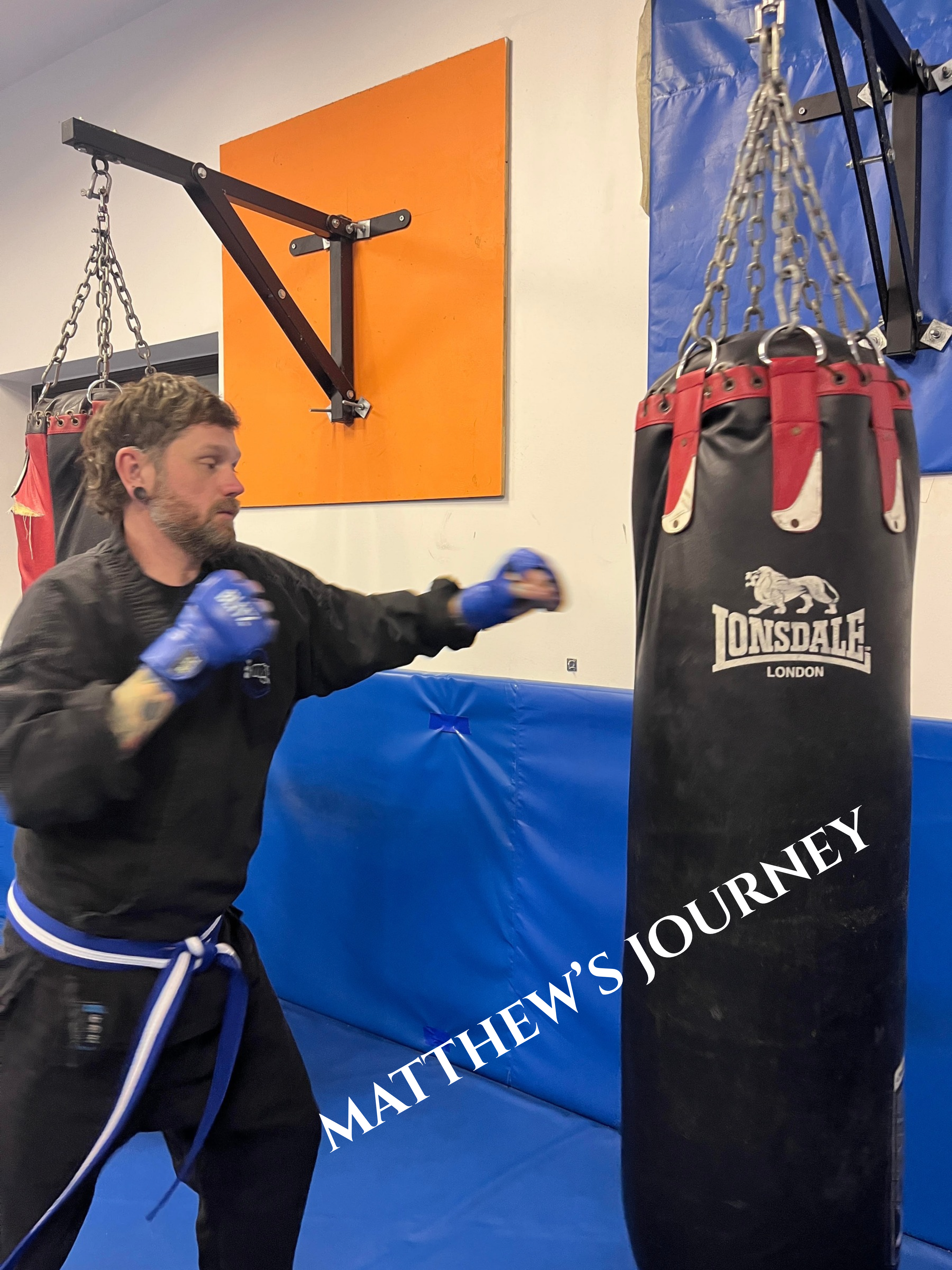
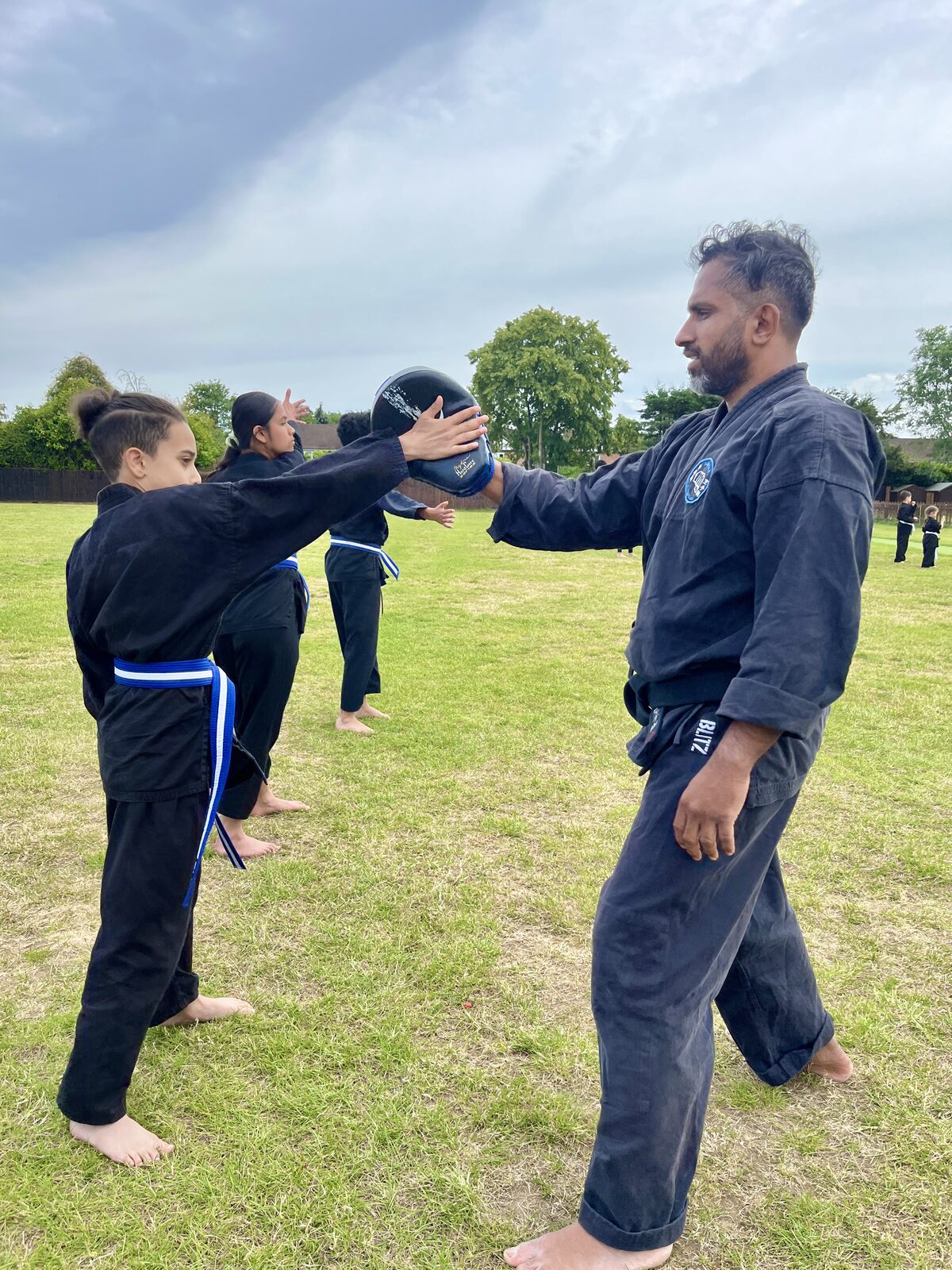
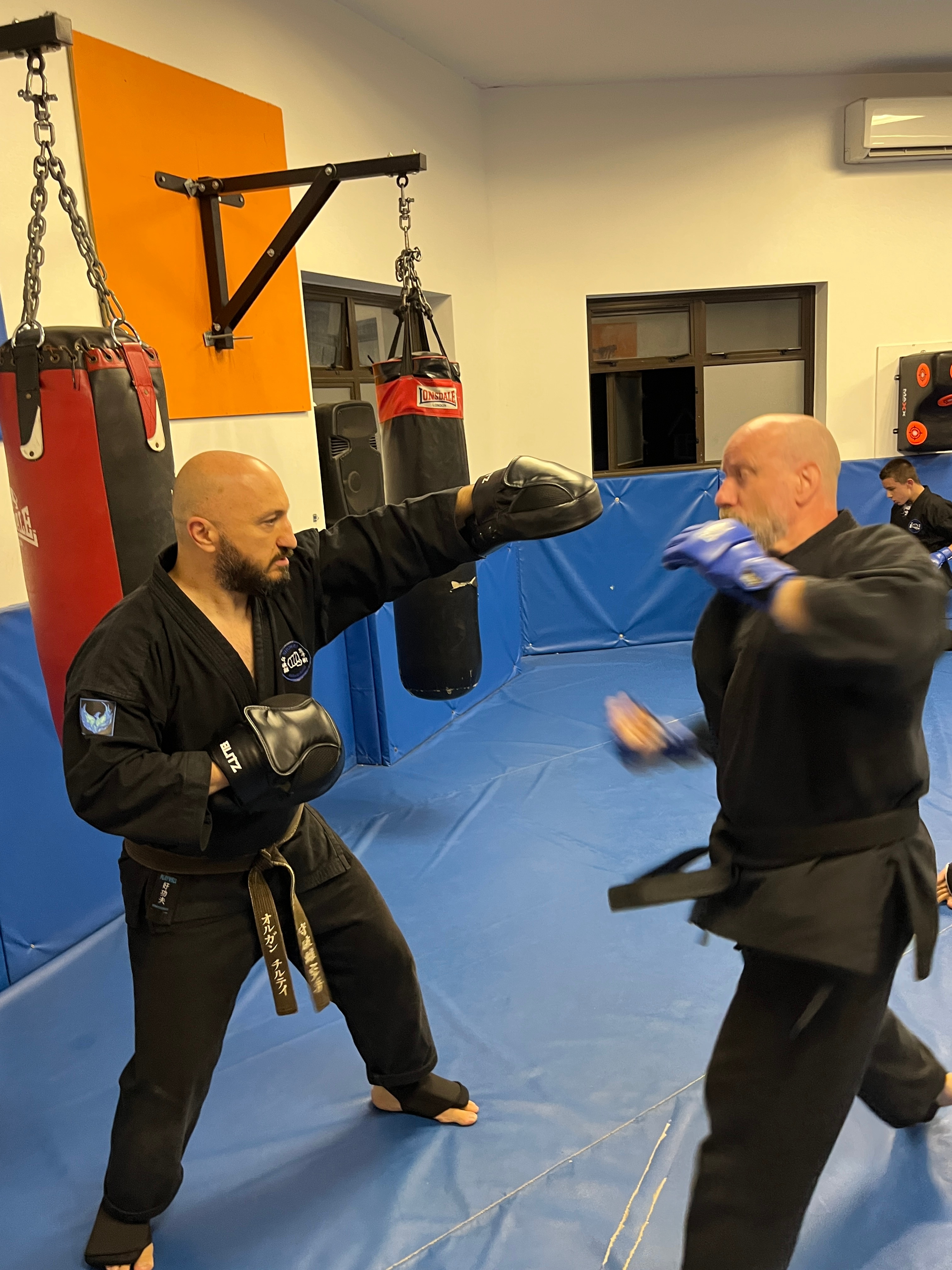
Students develop these skills through pad work, bag work, partner drills and sparring.
There is a practical reason for starting with boxing.
In my experience, teaching a beginner how to throw an effective punch is generally more straightforward than teaching them complex throws, grappling techniques or certain kicks.
Through punching techniques, they learn how to generate power, maintain balance and move efficiently.
Most importantly, they begin developing confidence in their ability to defend themselves against punches.
Building Beyond Boxing
As students progress, we introduce techniques and principles from other martial arts.
Karate and kickboxing expand their striking options.
Muay Thai contributes knees, elbows and close-range fighting techniques.
Judo and wrestling develop balance, throwing, clinch control and takedown defence.
Brazilian Jiu-Jitsu techniques provide ground fighting skills, positional awareness and escapes.
The objective is not to collect techniques simply for the sake of learning more.
It is to develop practical competence across different fighting distances and situations.
A student should understand what to do when an opponent remains at punching distance, what changes when someone grabs them, and how to respond if they are taken to the ground.
These situations are connected.
Real confrontations do not pause while you change from one martial art to another.
Knowing different threats and understanding transitions are important.
That is why we believe an integrated approach to training makes sense.
Why Sparring and Resistance Matter at Shuhari
Learning techniques is only the beginning.
Students also need opportunities to practise applying them against movement and resistance.
At Shuhari, pad work, bag work, contact sparring and partner exercises are important parts of developing practical ability.
The emphasis is on progressive learning. Our aim is to develop well-rounded martial artists.
Boxing provides an accessible starting point, while grappling and other disciplines gradually expand the student's capabilities at the further levels.
Which Martial Art Should You Choose for Self-Defence?
Choose a martial art or training system that teaches both striking and grappling, preferably with regular pressure testing.
If you have access to an excellent boxing coach and no suitable alternative, I would encourage you to start boxing.
You will develop skills that can be extremely valuable in a real confrontation.
Likewise, Brazilian Jiu-Jitsu, judo, wrestling, Muay Thai and Karate can all provide useful abilities when taught effectively.
However, if your primary objective is comprehensive personal protection, I believe you should eventually become competent in both standing striking and grappling.
The Importance of Choosing the Right Instructor
The name of the martial art is only part of the equation.
A good boxing instructor may produce more capable fighters than a poor MMA instructor.
Similarly, a well-run Karate school that incorporates realistic sparring and grappling may offer great self-defence preparation.
When choosing a martial arts school, look beyond the style.
Consider whether the instructor has relevant experience, whether students practise with appropriate resistance and whether the training prepares them for situations outside controlled environment.
Most importantly, find a club where you can train consistently and make measurable progress.
Frequently Asked Questions
Is boxing enough for self-defence?
Boxing provides an excellent foundation for self-defence, particularly against punches in standing confrontations. However, it does not adequately address takedowns, ground fighting, kicks or many grappling situations. Combining boxing with grappling training provides more comprehensive preparation.
Is boxing better than Karate for a street fight?
It depends on the practitioners and how they train. Boxing's regular contact sparring, powerful punches and defensive movement are significant advantages. However, a Karate practitioner trained in effective striking, vertical grappling and realistic self-defence may have a broader range of skills.
Can a boxer beat a BJJ practitioner?
Yes, particularly if the boxer maintains distance and lands effective punches before the grappler establishes control. However, an experienced BJJ practitioner has a substantial advantage if they successfully take an untrained boxer to the ground. Neither outcome is guaranteed.
Is boxing or Muay Thai better for self-defence?
Both are excellent striking disciplines. Boxing specialises in punches, footwork and defensive head movement, while Muay Thai adds kicks, knees, elbows and clinch techniques. Muay Thai offers more striking options, but boxing provides a particularly strong foundation in punching.
Is boxing better than MMA for self-defence?
Boxing is highly effective at punching distance, but MMA provides a broader physical skill set by combining striking, wrestling and ground fighting. For comprehensive one-on-one fighting ability, MMA generally offers more options.
Is boxing useful against multiple attackers?
Boxing develops footwork, mobility, distance management and defensive movement, all of which can help someone avoid becoming trapped or entangled. It is a respectable solution to multiple opponents. However, fighting multiple attackers is extremely dangerous regardless of training.
Is boxing good for beginners?
Yes. Boxing is one of the most accessible martial arts for beginners because it concentrates on a relatively small number of fundamental techniques. Students can begin developing useful movement, defensive skills and punching mechanics early in their training.
Should women learn boxing or Brazilian Jiu-Jitsu?
Ideally, both. Boxing teaches valuable striking skills while Brazilian Jiu-Jitsu develops skills for dealing with grabs, restraint and ground fighting. Combining these disciplines with situational awareness and escape training offers broader preparation.
How long does it take to learn boxing for self-defence?
Beginners can start developing useful defensive habits and punching skills within their first year of consistent training. However, becoming reliable under pressure takes considerably longer. Progress depends on training frequency, coaching quality, sparring experience and individual ability.
Final Thoughts: Boxing Is an Excellent Foundation, but Not the Complete Answer
It is practical, efficient and built around techniques that have been tested repeatedly against resisting opponents.
Remember, a boxer who cannot grapple has an important weakness.
A grappler who cannot defend against punches has a different weakness.
And a martial artist who can fight effectively but cannot recognise or avoid unnecessary confrontation is missing another essential part of self-defence.
This is why I believe in combining the strengths of different martial arts.
Boxing is an excellent place to start. Learning to strike, studying weapons, multiple opponents, throws and grappling and pressure testing across different situations is an even better place to finish.
Experience Practical Self-Defence at Shuhari
At Shuhari Self Defence, we combine techniques and training methods from boxing, Karate, kickboxing, Muay Thai, wrestling, judo and Brazilian Jiu-Jitsu into a structured martial arts programme.
Our classes are designed to help beginners and experienced practitioners develop practical self-defence skills, physical fitness, confidence and mental resilience.
We offer classes for children aged seven and above, teenagers and adults across Slough, Maidenhead, Bracknell, Langley, Cippenham, Burnham and High Wycombe.
Whether you have never thrown a punch before or already have experience in boxing or another martial art, you are welcome to join us.
Your first class is free.
Come and discover how boxing and other martial arts can work together to develop a more complete set of self-defence skills.