





What to Expect at Your First Martial Arts Class: A Beginner's Guide
The First Class Experience
Stepping into a martial arts class for the first time can feel intimidating. The unfamiliar environment, the terminology, the athletic students already mid-training; it's natural to wonder whether you'll fit in or keep up.
Here's what most beginners don't realise: every martial artist you see, from white belts to black belts, started exactly where you are now. That nervous energy you're feeling? It's the same feeling that's launched thousands of successful martial arts journeys.
At Shuhari Self Defence, we've welcomed over 8,670 students across our Berkshire locations since 2010. Our 23 experienced instructors have guided complete beginners through their first sessions in Slough, Maidenhead, Bracknell, Cippenham, Burnham, and Langley. This guide draws from 16 years of experience to show you exactly what your first class will look like and why there's nothing to worry about.
Before You Arrive: Practical Preparation
It is a good idea not to eat too much before physical training. You don't want to train with a full stomach.
What to Wear to Your First Session
Forget the images of pristine black gis and belts. For your trial class, simple comfortable clothing works perfectly:
- Loose-fitting t-shirt that allows full arm movement
- Tracksuit bottoms, joggers, or athletic shorts (avoid jeans or restrictive clothing)
- Bare feet (martial arts classes train without shoes for safety and technique)
- Hair tied back if long, to keep it out of your face during movement
At Shuhari, you won't need any specialised equipment for your first session. Once you've decided martial arts is for you, we'll guide you through obtaining the proper uniform (Gi).
Arriving at the Venue
We recommend arriving 10-15 minutes before your scheduled class time. This buffer allows you to:
- Find the venue and locate the training space within the venue
- Introduce yourself to the instructor
- Observe the end of the previous class if one is running
Our venues across Berkshire are all accessible community spaces:
- Slough: Ramgarhia Educational & Cultural Centre
- Maidenhead: Larchfield Primary School, Bargeman Road
- Bracknell: St. Michaels Centre, Crowthorne Road
- Cippenham: Cippenham Baptist Church Youth Centre
- Burnham: Our Lady of Peace School
- Langley: Langley Free Church
Each location offers parking facilities to make your arrival as straightforward as possible.
Mental Preparation: Setting Realistic Expectations
Your first martial arts class isn't about proving yourself or demonstrating athletic prowess. The session serves three simple purposes:
- Introduction to the basics
- Assessment of the training environment to ensure it suits your goals
- Building familiarity with instructors, students, and class structure
Nobody expects perfection. In fact, our instructors specifically watch for students who are willing to try, ask questions, and show genuine interest.
The Class Structure: What Actually Happens
Bowing and Meditation
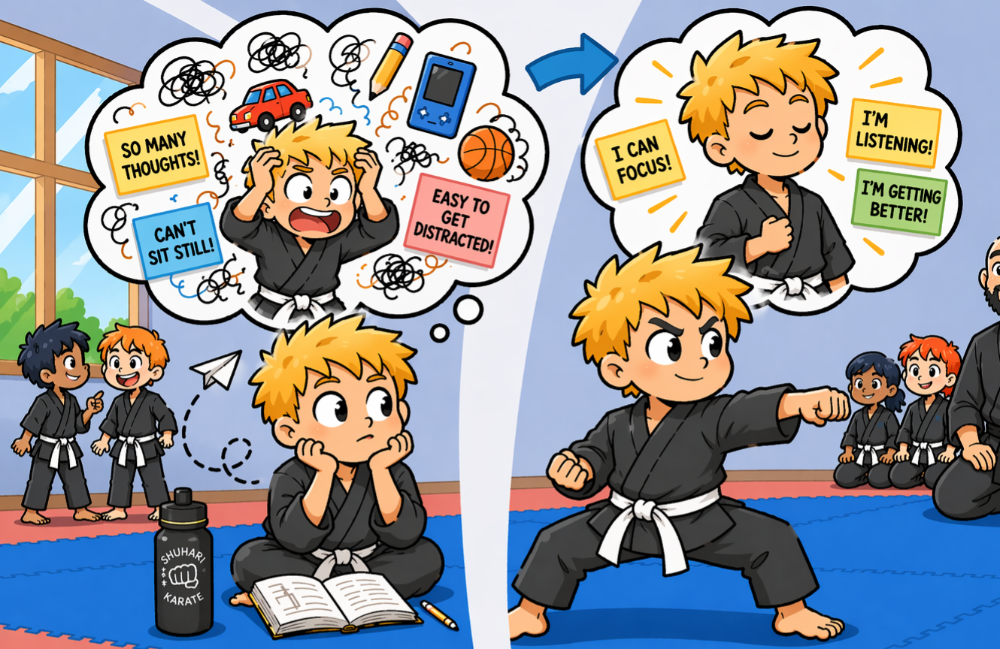
Every Shuhari class begins with bowing and a short meditation to clear your mind so you can be ready for the class mentally.
Warm-Up and Stretching (10-15 minutes)
Each class continues with a warm-up and stretching session so you can be ready for the class physically. Expect:
Light cardiovascular work: Gentle jogging, skipping, or dynamic stretching to elevate your heart rate gradually. These exercises require no prior experience and can be modified to any fitness level.
Mobility drills: Arm, elbow, wrist circles, hip rotations, and knee mobility work specific to martial arts movements. Your instructor will demonstrate each movement and may pair you with an experienced student who can offer guidance.
At Shuhari, you'll notice students of varying ages, fitness levels, and experience working alongside each other. Parents training with their children, complete beginners learning next to intermediate students; this is intentional and creates a supportive learning environment.
Fundamental Techniques (20 minutes)
The core of your first session focuses on absolute basics. Depending on your chosen discipline, this might include:
- Basic stances like short fighting stance, so you can learn to be connected to the ground in the correct way.
- Footwork to cover how to move efficiently.
- Fence, so get used to having your hands between you and the other person to keep you safe.
- Fundamental intercepting techniques to stop incoming strikes and holds.
- Simple strikes like jab, cross, hook and uppercuts.
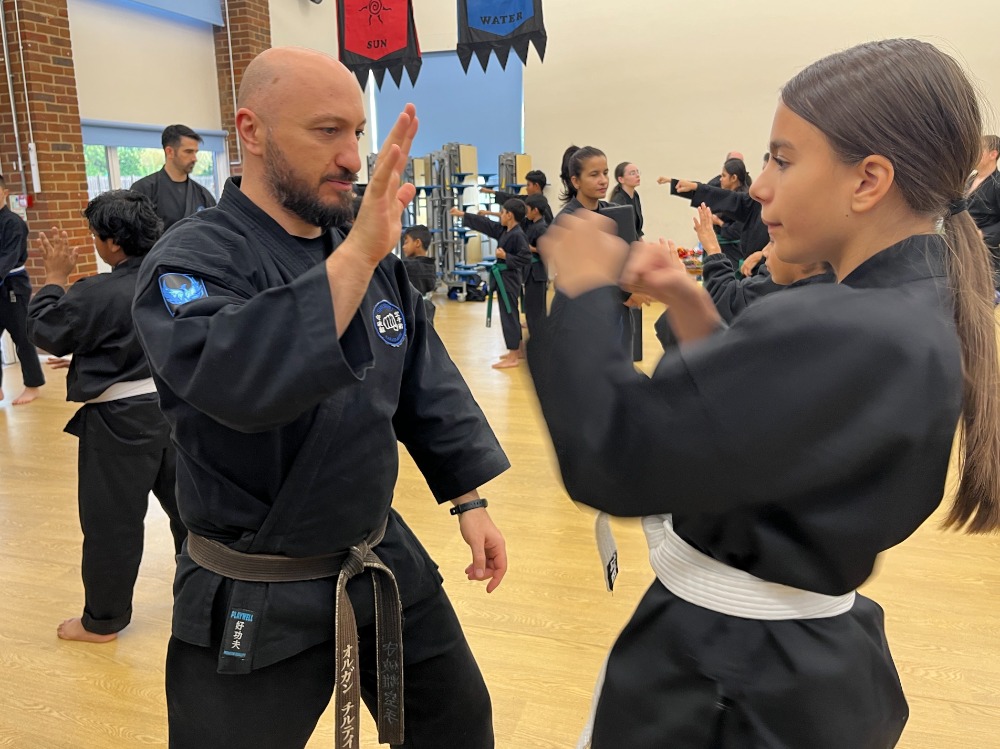
Your instructor will break down each movement into manageable components, explaining the purpose and application of each technique.
Pad work: You'll likely work on stationary targets or focus mitts held by the instructor.
Non physical principles like awareness and avoidance.
Throughout this section, instructors circulate constantly, offering individual attention and encouragement. At Shuhari, our instructor-to-student ratio ensures you receive personal attention even in larger classes. With 23 instructors across our locations, we maintain small, manageable groups where nobody gets lost in the crowd.
Partner Work or Drilling (15 minutes)
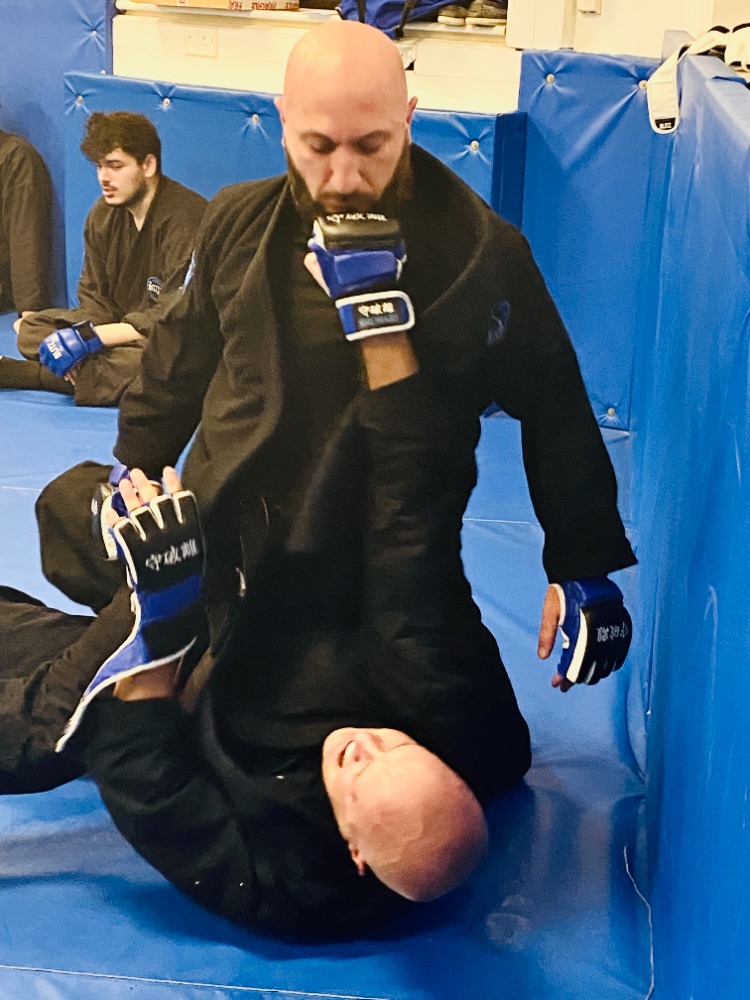
Most first sessions include some element of low intensity partner work for striking.
You'll likely work with a partner on focus mitts. Sparring is reserved for more experienced students only.
This partner element is supportive and encouraging. Martial arts culture emphasises mutual improvement—your training partners want you to succeed because your progress helps their development too in the long run.
Self Defence Drills (20 minutes)
Scenario-based self defence drills with partners, practicing techniques at controlled speed and intensity. The focus is on understanding the application rather than full-force execution.
End of Class (5 minutes)
Classes conclude with:
- Class debrief: A brief opportunity to ask questions, receive feedback, and learn about upcoming events.
- Bowing and meditation: At the end we bow and then reflect on what we have learned in the session.
How We Support Beginners
Experienced Instruction Tailored to Your Level
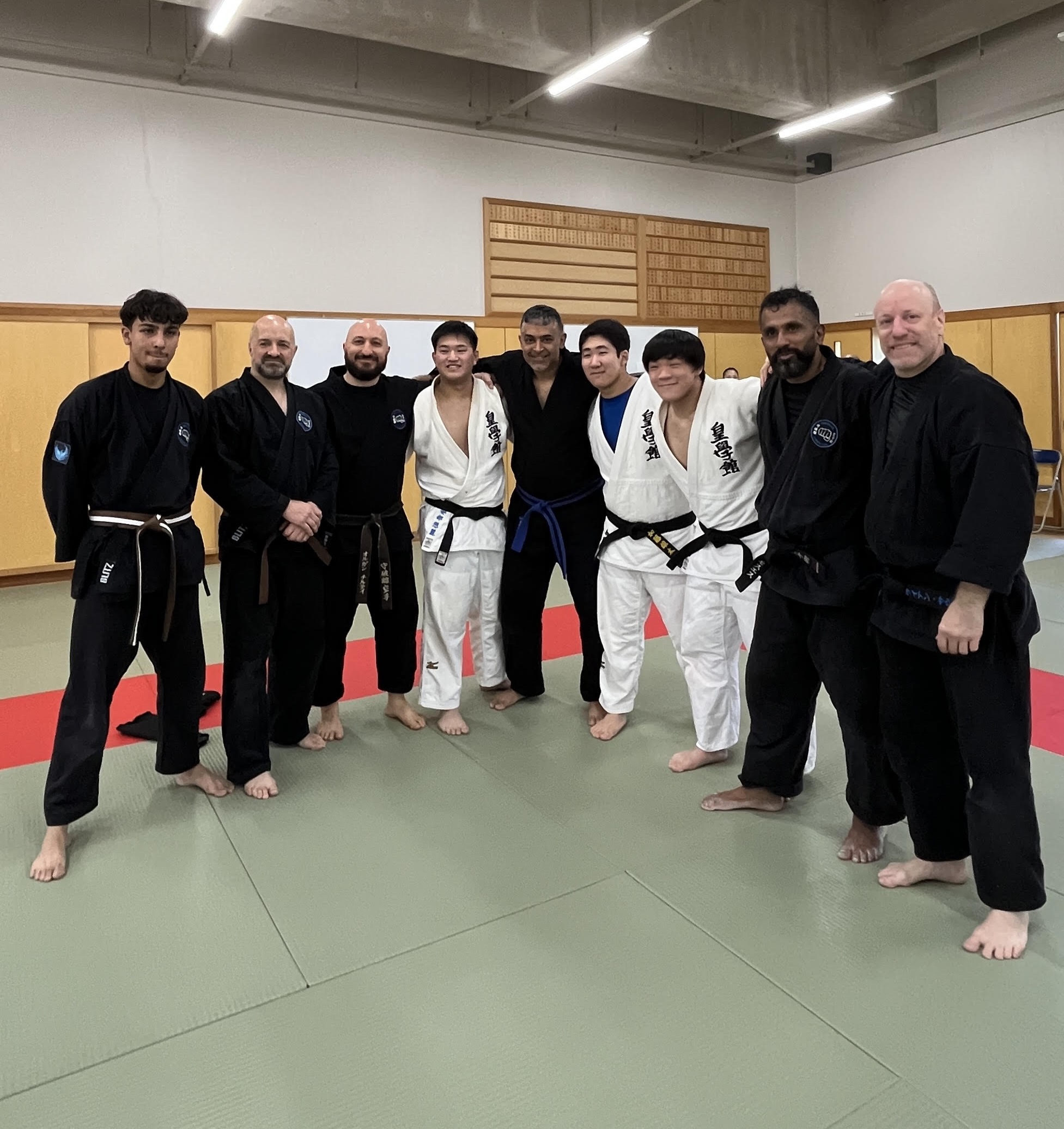
Our instructors bring diverse backgrounds across different martial arts disciplines. You will learn from someone who genuinely understands the beginner mindset, because they've guided thousands of students through exactly where you are now.
Our chief Instructor Olgun Tiltay founded Shuhari in 2010 with a specific mission: "to help people become the strongest version of themselves, both mentally and physically." That philosophy shapes how every instructor approaches beginners. You're not there to be moulded into a professional fighter; you're there to develop at your own pace towards your personal goals.
Structured Progression for Beginners
Shuhari operates a clear beginner pathway:
- Trial class: Your first session with no commitment or special equipment required.
- Belt progression: We use a belt system to mark progress. It is a slow and steady process and your instructor will guide you through grading requirements when you're ready, never before.
Common First-Class Concerns Addressed
"I'm Not Fit Enough"
This concern tops the list of beginner worries, yet it fundamentally misunderstands martial arts training. You don't need fitness to start martial arts, you do martial arts to build fitness.
Our classes include students spanning all fitness levels, from school children to retirees, from complete beginners to competitive athletes. Every student works at their own intensity within the class structure.
During your first session, if you need to slow down or modify an exercise, that's completely acceptable. Your instructor will offer scaled versions of challenging exercises and monitor your exertion to ensure you're working safely.
Most beginners discover they're more capable than they believed. The combination of engaged focus (which distracts from discomfort) and achievable progressive challenges allows people to surpass their perceived limitations naturally.
"What If I Can't Keep Up?"
You're not expected to keep up; you're expected to try, learn, and gradually improve. That's the entire point of being a beginner.
Advanced students in the class aren't your competition; they're your proof that persistence works. Every black belt was once a beginner who couldn't execute a proper punch or stance. They kept showing up, and eventually, capability developed.
You'll receive individual goals appropriate to your level, and your progress will be measured against your previous self, not against others in the room.
"I'm Too Old to Start"
Shuhari's oldest students in their 60s and 70s would strongly disagree. Martial arts training adapts to any age; the techniques remain the same, but the intensity, training methods, and goals shift to suit your body's capabilities and needs.
Older beginners often progress faster than younger students in technical understanding, discipline, and consistency. What they might lack in explosive athleticism, they compensate for with patience, maturity, and strategic thinking.
Our instructors modify techniques based on individual needs. Joint issues? We'll show you variations that reduce strain. Concerned about contact? Many of our classes offer minimal or controlled contact options.
See our article about starting martial arts at different ages.
"What If I'm the Only Beginner?"
This scenario rarely occurs at Shuhari. With classes running across six locations throughout the week, we consistently welcome new students. However, even if you are the sole beginner in a particular session, this creates advantages:
- Individualised attention: The instructor can dedicate more time to your specific needs and questions.
- Experienced partners: Working with more advanced students allows you to observe proper technique up close and receive helpful guidance.
- Accelerated learning: Training alongside capable martial artists raises your standards and motivates faster progression.
Advanced students at Shuhari understand the beginner experience and approach it supportively. Martial arts culture emphasises helping others develop, so you'll find training partners genuinely invested in your success.
"What About Injuries?"
Legitimate concern, especially if you've heard dramatic stories about martial arts training. The reality is more mundane when martial arts is taught properly with appropriate safety measures.
Shuhari's approach prioritises safety through:
- Controlled progression: No beginner is thrown into full-contact sparring or advanced techniques. You'll build fundamental skills and body awareness before any higher-risk activities.
- Proper warm-ups: Every class includes thorough preparation to reduce muscle strains and joint issues.
- Supervised partner work: Instructors monitor partner drills to ensure appropriate intensity and technique.
The most common "injuries" for beginners are mild muscle soreness (from using muscles in new ways) and occasional light bruising (from contact in grappling arts). Serious injuries are exceedingly rare and typically occur only when students ignore instructor guidance or train recklessly.
After Your First Class: Next Steps
Immediate Post-Class Reflections
Once your first session concludes, take a moment to consider:
How did you feel? Not just physically, but mentally and emotionally. Did you enjoy the challenge? Feel welcomed by the group? Experience a sense of accomplishment?
Did the instructor's teaching style suit you? Some instructors are technical and detail-oriented; others focus on general principles and repetition. Different styles work for different learners.
Can you see yourself returning? A good martial arts programme is the one you'll actually attend consistently. If the class structure, location, and atmosphere align with your schedule and preferences, that matters more than finding the "perfect" martial art.
Booking Your Next Session
If your first class confirmed that Shuhari offers what you're seeking, the next step is simple: commit to a second class. One session provides a glimpse; consistent attendance over several weeks allows real assessment.
We offer a beginner-friendly package:
- Flexible membership: Month-to-month options that allow you to train without long-term commitment.
Our team can discuss which option aligns with your goals, schedule, and budget. Contact us at 07739 464005 or info@shuhari.com to arrange your next session.
Setting Realistic Goals
After your first class, you'll have a clearer sense of what martial arts training involves. Use this knowledge to set achievable initial goals:
- Consistency over intensity: Attending 2-3 classes weekly for three months will develop more skill than sporadic intensive training.
- Technical focus over athleticism: Prioritise learning proper technique rather than training harder than your body is ready for.
- Enjoyment as a metric: If you're not enjoying the process, something needs adjusting. Speak with your instructor about modifying your approach, trying a different discipline, or addressing specific concerns.
Frequently Asked Questions
Can I watch a class before joining?
Absolutely. We welcome prospective students to observe classes at any of our locations. However, most people find that actually participating in a trial class provides much better insight into whether martial arts suits them. Watching from the sidelines doesn't convey the engaging challenge and supportive atmosphere you'll experience in class.
Do you offer family classes?
Yes we have classes where children train alongside their teenager siblings and parents. This structure mirrors real-world scenarios and creates a family-friendly environment where parents and children train together. We've found that this diversity enriches the learning experience for everyone involved. Teenagers and adults can train separately if they wish to in age specific classes too.
How long until I see progress?
Most beginners notice improvements within their first couple of months. To get to a respectable competency level takes years.
Remember that progress isn't linear. You'll experience plateaus where improvement seems to stall, then sudden breakthroughs where everything clicks into place. This rhythm is normal and universal to skill development.
What if I need to miss classes?
Life happens. Work commitments, illness, family obligations, and holidays will occasionally interfere with training. This is expected and manageable.
With classes running throughout the week across multiple locations, Shuhari offers flexibility to make up missed sessions at different venues or times. Our instructors can also provide brief catch-ups on material you've missed if you're absent for extended periods.
Will I be learning techniques from multiple martial arts simultaneously?
Yes, cross-training across disciplines offers several benefits:
- Comprehensive skill development: Striking arts complement grappling arts, creating well-rounded capability.
- Injury prevention: If one technique causes mild strain (e.g., shoulder discomfort from Judo techniques), you can focus on another (e.g., kicks from karate) while the issue resolves.
- Enhanced learning: Skills from one art often provide insight into another. Footwork developed in Boxing improves Karate. Weight distribution from Judo enhances Wrestling.
Why Choose Shuhari Self Defence?
Proven Track Record
Since 2010, we've built one of Berkshire's most trusted martial arts communities. Our 4.9 out of 5 rating across 245 verified reviews, plus over 600 five-star reviews on Google and Trustpilot combined, reflects the consistent quality of instruction and supportive environment we provide.
These aren't carefully selected testimonials; they're genuine reflections from students across all levels, ages, and backgrounds who've trained with us over 16 years.
Accessible Locations Across Berkshire
With six training venues across Slough, Maidenhead, Bracknell, Cippenham, Burnham, and Langley, you'll find a Shuhari location convenient to home or work. Our class schedule includes early evening sessions for working professionals, after-school programmes for children, and weekend options for families.
This geographic spread and scheduling flexibility remove common barriers that prevent people from maintaining consistent training.
Your First Class Awaits
That nervous anticipation you're feeling? It's the threshold between your current self and the person you'll become through consistent martial arts training. Every accomplished martial artist you've ever admired crossed this same threshold; uncertain, inexperienced, wondering if they belonged.
The difference between those who transform through martial arts and those who don't isn't talent, athleticism, or natural ability. It's simply walking through the door for that first class, then showing up again for the second, third, and fourth.
At Shuhari Self Defence, we've guided over 8,670 students through this journey across our 16 years in Berkshire. Our 23 experienced instructors understand exactly where you are right now because they've seen it thousands of times before—and they've consistently helped people just like you develop into capable, confident martial artists.
Your first class is just one hour. One hour where you'll discover that martial arts isn't as intimidating as you imagined, where you'll meet supportive instructors and fellow students, and where you'll take the first step towards physical, mental, and personal development that could transform your life.
Book Your First Class Today
Ready to experience what martial arts training really involves? Contact Shuhari Self Defence to arrange your trial class, book your first class today!
Choose your preferred location, and we'll schedule your first session at a time that suits your schedule. There's no pressure, no long-term commitment; just an opportunity to discover whether martial arts training offers what you're seeking.
We'll see you in the dojo.