





How Long Does It Take to Get Good at Martial Arts? Realistic Timelines for Every Stage
"How long until I'm good at martial arts?" This question echoes through dojos across Berkshire every week, asked by eager beginners in Slough, determined parents in Maidenhead, and curious adults in Bracknell. The answer isn't straightforward, but after training over 8,670 students since 2010, we've identified clear patterns in how martial arts skills develop.
The timeline varies dramatically based on your definition of "good," the discipline you choose, your training frequency, and your natural attributes. A proficient boxer might emerge in 2 years, whilst a competent Brazilian Jiu-Jitsu practitioner typically requires four to five years. Understanding these realistic expectations prevents frustration and helps you celebrate meaningful progress along your journey.
What Does 'Good' Actually Mean in Martial Arts?
Before examining timelines, we must define success. "Good" means different things across martial arts disciplines and contexts.
The Self-Defence Standard
For practical self-defence effectiveness, most students develop fundamental protective skills within a year of consistent training. At our Self Defence classes in Cippenham and Langley, students learn to defend against common attacks within their first six months. However, applying these techniques under genuine stress requires years of training.
This timeline assumes twice-weekly attendance at structured classes. Students who train once weekly typically need twice the time to reach comparable competency.
The Competitive Standard
Competition readiness follows a different trajectory. Amateur boxing matches become realistic after 12-18 months of dedicated training for adequate fitness and absorbed fundamental techniques.
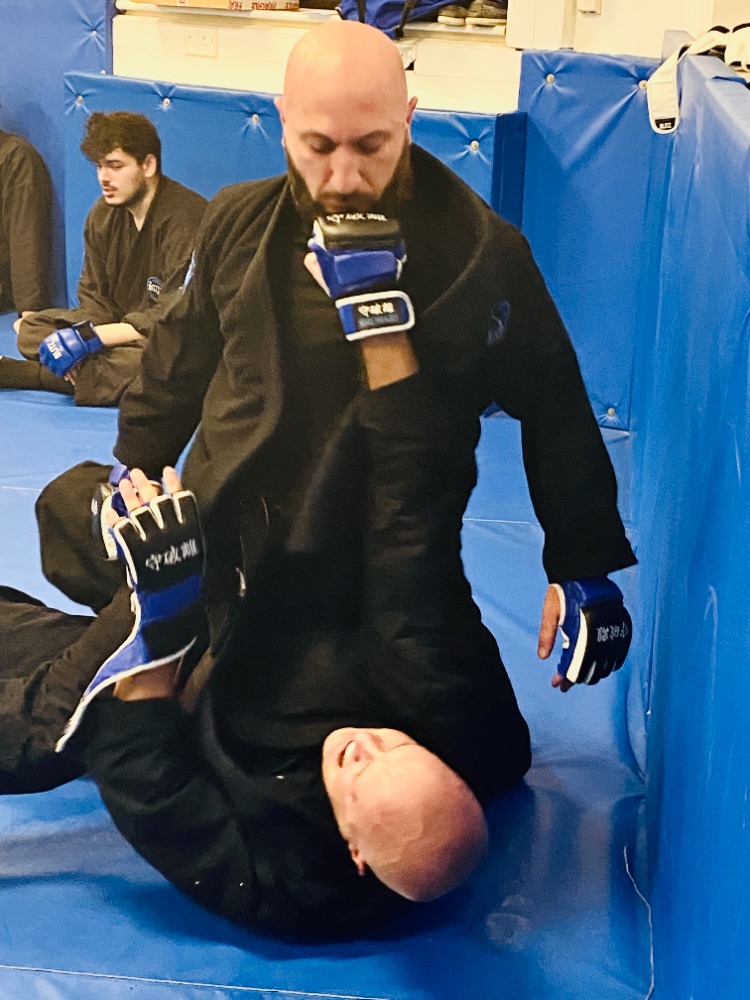
Brazilian Jiu-Jitsu tournaments demand more time investment. Most practitioners enter their first competition at blue belt level, which typically requires 2-3 years of training. The complex positional chess game of BJJ simply needs more repetition before competition becomes productive rather than overwhelming.
The Traditional Mastery Standard
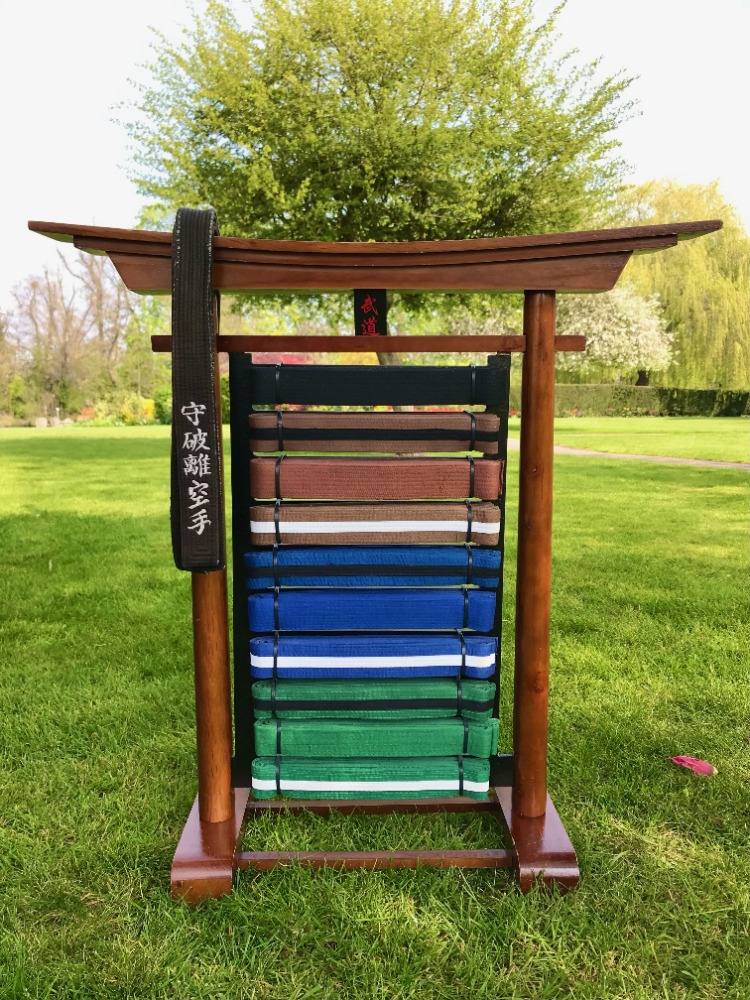
Traditional martial arts like Karate measure progress through belt rankings, with black belt representing serious proficiency rather than complete mastery. Our Karate students in Maidenhead typically reach first-degree black belt after 10 years of consistent training.
This timeline aligns with traditional Japanese martial arts philosophy, where "shu-ha-ri" describes the learning journey:
- Shu (守): Following the rules
- Ha (破): Breaking with tradition
- Ri (離): Transcending form
Our academy's name, Shuhari Self Defence, reflects this progression model that's served martial artists for centuries.
Discipline-Specific Timelines: Breaking Down the Numbers
Different martial arts have vastly different learning curves based on their technical complexity, physical demands, and training methodologies.
Striking Arts Timeline
Boxing
- Basic Competence: One year (fundamental combinations, footwork, defensive movement)
- Intermediate Skill: Roughly 1-3 years (consistent sparring ability, ring generalship, conditioning)
- Advanced Proficiency: 3 years + (refined technique, strategic thinking, competition readiness)
Boxing's relatively limited technique set allows faster initial progress. Our classes in Burnham emphasise drilling fundamental combinations until they become reflexive. Students who've never thrown a punch often feel capable of basic self-defence within their first year.
Kickboxing & Muay Thai
- Basic Competence: 2 years (fundamental kicks, knee & elbow strikes, clinch basics)
- Intermediate Skill: 2-5 years (fluid combinations, effective defence, sparring confidence)
- Advanced Proficiency: 5 years + (refined timing, fight IQ, conditioning)
Adding kicks, elbows and knees increases technical complexity. The clinch work in Muay Thai represents an entirely separate skill set requiring specific training. Students typically longer than boxing to reach comparable striking proficiency when lower body techniques enter the equation.
Grappling Arts Timeline
Brazilian Jiu-Jitsu
- Basic Competence: 3 years (fundamental positions, basic escapes, simple submissions)
- Intermediate Skill: 3-6 years (blue belt, developing personal game, competent rolling)
- Advanced Proficiency: 6-12 years (purple/brown belt, refined technique, teaching ability)
BJJ famously takes longer than any other martial art to achieve black belt status, typically requiring 10-15 years. The complexity stems from infinite positional variations.
This extended timeline isn't a bug—it's a feature. The gradual progression builds problem-solving skills and humility alongside technical prowess.
Wrestling
- Basic Competence: One year (fundamental takedowns, basic positioning, mat awareness)
- Intermediate Skill: 2-3 years (effective shooting, scrambling ability, conditioning)
- Advanced Proficiency: 4-6+ years (refined technique, strategic wrestling, competition success)
Wrestling's athletic demands mean physical conditioning significantly impacts progression speed. A naturally fit 25-year-old progresses faster than someone building fitness simultaneously with technique. However, wrestling's relatively focused technique set (primarily takedowns and control) allows quicker development than submission grappling.
Judo
- Basic Competence: 1-2 years (fundamental throws, basic groundwork)
- Intermediate Skill: 3-4 years (green/blue belt, developing tokui-waza, randori confidence)
- Advanced Proficiency: 5-8 years (brown/black belt, refined throwing, teaching capability)
Judo sits between BJJ and wrestling in complexity. The emphasis on throwing requires excellent timing, balance, and spatial awareness. Students typically feel competent executing throws against cooperative partners within 12 months, but applying these techniques against resistant opponents takes 2-3 years of regular training.
Reality-Based Systems Timeline
Krav Maga
- Basic Competence: 6-12 months (common attack defences, stress inoculation, fighting mindset)
- Intermediate Skill: 12-18 months (complex scenarios, multiple attackers, weapon defence basics)
- Advanced Proficiency: 3-5 years (scenario mastery, teaching capability)
Krav Maga prioritises stress testing and realistic scenarios from day one. Students learn functional techniques in class, though true competence under genuine threat requires extensive scenario training and stress inoculation.
Traditional Systems
Kung Fu
- Basic Competence: 12-18 months (fundamental forms, basic applications, conditioning)
- Intermediate Skill: 3-5 years (advanced forms, sticky hands, style-specific weapons)
- Advanced Proficiency: 6-10 years (mastery of multiple forms, teaching capability, internal development)
Traditional Kung Fu encompasses enormous technical breadth, from forms to weapons. This variety means progression timelines vary significantly based on which aspects students prioritise. Combat-focused training accelerates fighting ability, whilst traditional practice emphasises broader skill development.
Karate
- Basic Competence: 12-18 months (fundamental kata, basic kumite)
- Intermediate Skill: 2-4 years (brown belt level, competitive kata, controlled sparring)
- Advanced Proficiency: 5-7 years (for most traditional styles)
Traditional Karate emphasises form perfection alongside practical application. The kata (formal patterns) component means students must memorise and refine specific sequences whilst simultaneously developing fighting ability. This dual focus extends the timeline but builds exceptional body control and technique precision.
Shuhari Self Defence as a discipline
- Basic Competence: 2-3 years (basic punches, elbows and knees, combinations, pad work, partner drills, basic sparring)
- Intermediate Skill: 3-7 years (blue to brown belt level, kicks, vertical grappling, sticky hands, arm drags, limb control, scenario training, semi contact sparring)
- Advanced Proficiency: 7-12 years (Brown to black belt level: Contact sparring, multiple opponent drills, conditioning, throws, groundwork, tameshiwari, weapons and improvised weapons)
The Training Frequency Factor: How Often You Practice Matters More Than How Long
Two students starting simultaneously rarely progress at identical rates. Training frequency creates dramatic outcome differences.
Once-Weekly Training
Students attending one 60-minute session weekly develop skills slowly but steadily. Expect timelines twice as long compared to estimates above.
This schedule suits busy professionals and those treating martial arts as one activity amongst many. Progress occurs, but expect plateaus and occasional regression between sessions.
Twice-Weekly Training
This frequency represents the sweet spot for most recreational martial artists. Muscle memory solidifies, techniques feel increasingly natural, and genuine progression becomes evident within months rather than years.
Three+ Times Weekly
Dedicated students training three to five times weekly accelerate through every progression stage. Physical conditioning improves rapidly, technique refinement happens faster, and sparring experience accumulates quickly.
Elite students training 5-6 times weekly might reach their black belt in 8 years instead of 12 years. BJJ blue belts sometimes emerge within 12-18 months under this training volume, though most academies maintain minimum time-in-grade requirements regardless of skill development.
Daily Training
Professional fighters and serious competitors often train twice daily, combining technical sessions with strength and conditioning work. This commitment level produces results impossible to match through less frequent training.
However, daily training carries injury risks without proper programming, recovery protocols, and coaching. We've seen ambitious beginners burn out within months attempting this schedule before their bodies adapted to the demands.
Age Factors: Children, Adults, and Older Beginners
Age significantly influences both progression speed and training objectives.
Children (7-12 Years)
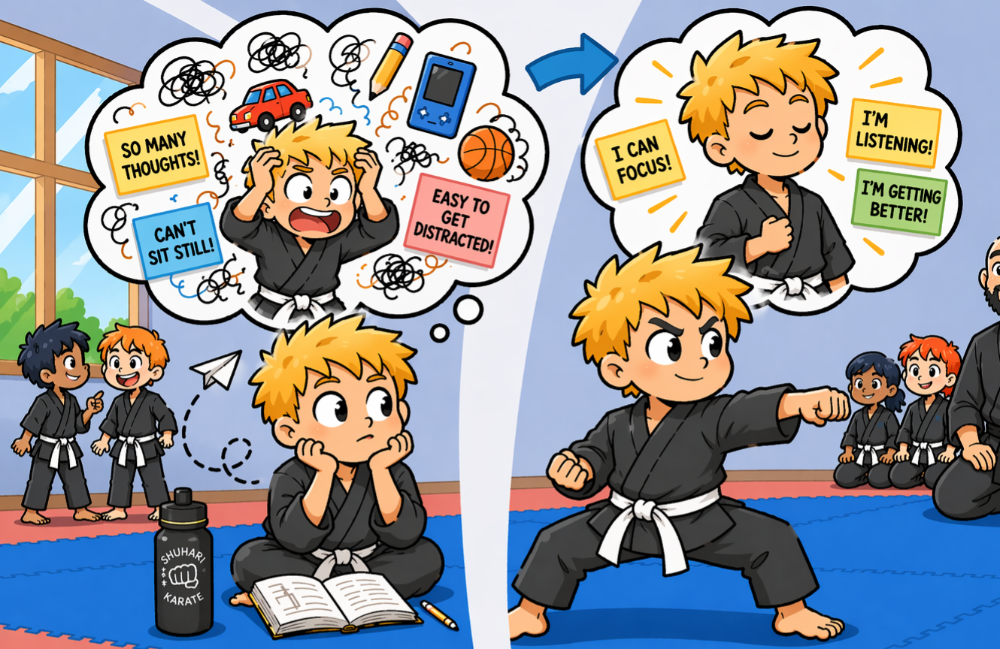
Young students develop fundamental movement patterns quickly but lack the physical strength and mental focus for advanced techniques. Our children's Karate classes in Slough introduce age-appropriate material that builds coordination, discipline, and confidence.
The advantage children possess is neuroplasticity; they acquire movement patterns faster than adults. A 10-year-old learning Brazilian Jiu-Jitsu often moves more fluidly than a 40-year-old who's trained the same duration. Children are more flexible than adults, so kicks might come easier to a junior student than to a 50 year old karate beginner.
Young Adults (18-30 Years)
This age bracket combines physical prime with mental maturity. Young adults typically progress fastest through martial arts training, possessing both athletic capability and learning discipline.
A motivated 25-year-old training 3-4 times weekly often outpaces timeline estimates by 20-30%. Their recovery capacity allows harder training, and their learning speed remains excellent.
Middle-Aged Adults (30-50 Years)
Adults in this bracket bring life experience, discipline, and clear training objectives. Whilst they might not match 20-year-olds in raw athleticism, their consistency and strategic thinking often compensate.
We've trained numerous 35-45 year-olds who've reached Karate black belt within the standard 10 year timeline. Their approach differs from younger students—they might spar and pay attention to details and take notes after the session and drill technique more deliberately, leading to refined skill development.
Older Beginners (50+ Years)
Starting martial arts after 50 requires adjusted expectations around athleticism whilst maintaining full technical standards. Our oldest beginners often progress beautifully through graded syllabuses, reaching advanced belts.
Physical Attributes and Natural Ability
Genetics and prior athletic experience create significant variance in progression speed.
Coordination and Body Awareness
Students with dance, gymnastics, parkour or other movement backgrounds often excel at martial arts. They've already developed kinesthetic awareness that others must build from scratch.
A former gymnast might learn traditional martial arts forms much faster than someone learning basic body control simultaneously with technique. This advantage diminishes as training continues—eventually, everyone reaches similar technical proficiency regardless of starting coordination.
Strength and Athleticism
Physical strength matters differently across disciplines. In Judo and Wrestling, natural strength accelerates early progression by compensating for imperfect technique. In BJJ, excessive strength sometimes slows learning as beginners rely on power rather than developing proper leverage.
Boxing and Kickboxing fall somewhere between. Strength helps but technique development remains paramount. We've seen numerous naturally strong beginners plateau after rapid initial progress because they never developed fundamental movement efficiency.
Learning Style and Retention
Some students absorb techniques through visual demonstration, others through verbal instruction, and many through physical repetition and correction. Identifying your learning style accelerates progress.
Our instructors across all 23 team members employ multiple teaching methods because no single approach works for everyone. Students who actively identify how they learn best—and communicate this to instructors—typically progress faster than those passively attending classes.
The Quality of Instruction Makes or Breaks Your Timeline
Perhaps nothing influences progression speed more dramatically than coaching quality.
Structured Curriculum vs Unstructured Training
Academies with clear progression systems, regular gradings, and structured lesson plans produce faster student development. Random technique exploration creates confusion and plateaus.
Our academy runs organised programmes, ensuring students build foundations before advanced concepts. This systematic approach is paramount to reduce injury and confusion.
Instructor-to-Student Ratios
Personal attention accelerates learning. Our classes maintain instructor ratios ensuring everyone receives individual feedback during sessions.
We aim to have no more than a 1-10 instructor to student ratio. In a class of 24 students, we normally have an instructor, an assistant instructor and also a student leader.
Sparring and Application Opportunities
Technique drilling builds motor patterns, but sparring develops timing, distance management, and stress tolerance. Programmes balancing both elements produce well-rounded martial artists faster than drilling-only or sparring-only approaches.
We incorporate progressive sparring from beginner levels, starting with highly controlled scenarios and gradually increasing resistance as competence develops. This methodology builds confidence whilst minimising injury risk.
Realistic Expectations: What Progress Actually Looks Like
Understanding typical progression prevents discouragement and helps identify genuine improvement.
First Year: Building Foundations
Expect to feel clumsy and overwhelmed. You're learning new movement patterns whilst absorbing terminology, etiquette, and training protocols. Physical soreness is normal as your body adapts to unfamiliar demands.
Success markers:
- Learning basic stances and fence
- Executing fundamental techniques with conscious thought
- Surviving entire classes without excessive fatigue
- Understanding basic terminology
- Developing class routine familiarity
1-2 Years: Developing Basic Competence
Techniques begin feeling natural rather than foreign. You start recognising mistakes before instructors point them out. Sparring becomes less chaotic and more controlled.
Success markers:
- Executing basic combinations without conscious thought
- Successfully applying techniques during light sparring
- Helping newer students with fundamental concepts
- Maintaining reasonable composure under pressure
- Improved balance and coordination
3-4 Years: Intermediate Skills Starts
Your personal style begins developing. Some techniques feel more natural than others. Strategic thinking emerges during sparring alongside purely reactive responses.
Success markers:
- Consistent performance during regular sparring
- Developing favourite techniques and combinations
- Understanding why techniques work, not just how
- Teaching fundamentals to beginners
- Noticeable fitness and flexibility improvement
7-12 Years: Advanced Proficiency
You're genuinely skilled, capable of handling most training partners competently. Technique refinement becomes more important than learning new moves.
Success markers:
- Comfortable against opponents in your weight class
- Developing personalised style and strategy
- Explaining complex concepts to intermediate students
- Strong, agile and supple, with great timing, aiming, breathing
- Transitions between techniques are smooth
12+ Years: Mastery Journey
True mastery begins where most people think it ends. Black belt isn't mastery—it's serious proficiency. The journey continues indefinitely as you refine technique, deepen understanding, and perhaps begin teaching to better understand and question what you do and how you do it.
Success markers:
- Effortless technique execution under pressure
- Teaching capability across skill levels
- Deep understanding of principles transcending specific techniques
- Personal refinement rather than new technique acquisition
- Mental clarity and maturity
Special Considerations: Factors That Slow or Accelerate Progress
Several factors beyond training frequency influence development speed.
Injuries and Consistent Training
A serious injury erasing 6-12 months of training time significantly extends timelines. Chronic injuries force technique modifications, sometimes requiring different learning approaches.
Prevention through proper warmup, cooldown, and technique fundamentals dramatically impacts long-term progression.
Cross-Training Benefits and Drawbacks
Training multiple martial arts simultaneously offers benefits and challenges. Boxing improves Karate hand speed. Judo enhances BJJ fighting for grip. However, dividing attention between disciplines slows progression in each individual art.
We recommend beginners focus on one art until reaching competency before adding others. This approach builds a solid foundation before breadth.
Private Lessons Supplement Group Classes
One-on-one instruction accelerates progression dramatically. Private lessons allow personalised curriculum, immediate feedback, and training intensity impossible in group settings.
Students supplementing twice-weekly group classes with fortnightly private lessons often progress faster than group-only students. The investment provides excellent returns for motivated learners willing to allocate resources towards accelerated development.
Mental and Emotional Progression: Beyond Physical Technique
Martial arts develop far more than fighting ability. The mental and emotional journey follows its own timeline.
Confidence Development
Most students notice confidence improvements within the first year. Simply knowing you possess defensive capability changes how you carry yourself and interact with the world.
This confidence deepens over years. A one year student feels capable of basic self-defence. A seven-year student possesses genuine calmness and self-assurance that comes from extensive experience handling physical confrontation in controlled settings.
Discipline and Consistency
Martial arts training builds exceptional discipline through consistent practice. Students learn to train regardless of motivation level, weather conditions, or competing obligations.
This discipline typically solidifies within 12-18 months. Students who've maintained twice-weekly training for a year have developed habit strength that carries them through plateaus and challenges that make newer students quit.
Humility and Respect
Beginners often start with inflated self-assessment. The first year delivers humbling reality checks. Intermediate students develop genuine respect for martial arts complexity and their own limitations.
Advanced students often describe themselves as "beginning to understand how little they know." This perspective shift typically occurs 3-5 years into training and marks genuine wisdom development.
Stress Management
Regular sparring and pressure testing create remarkable stress tolerance improvements. Students learn to remain calm when threatened, think clearly under pressure, and regulate emotional responses during confrontation.
These benefits emerge within 1-2 years but deepen throughout entire martial arts careers. A six year practitioner typically demonstrates exceptional composure during stressful situations both inside and outside the dojo.
Setting Realistic Personal Timelines
Your individual progression timeline depends on clear goal-setting and honest self-assessment.
Define Your Objectives
Someone seeking basic self-defence awareness might require a year of focused Krav Maga or equivalent self defence system training. Someone training for MMA competition might need 3-5 years building skills across multiple disciplines. Someone pursuing a black belt goal in a respectable style that would give thorough competency and deserved confidence might need a decade of dedication.
Clarity prevents frustration. If your goal is pragmatic real life self-defence competence and you are training in an artistic, form or kata based style with no sparring, expect much smaller and slower progress toward your specific objective than if you'd chosen a style that emphasises pragmatic skill. Respect all disciplines, but keep your expectations in check.
Assess Available Time Commitment
Be honest about sustainable training frequency. Committing to five sessions weekly whilst working 60-hour weeks creates inevitable disappointment when life interferes.
Better to plan for twice-weekly training and occasionally exceed that target than plan for daily training and constantly fall short. Consistency beats intensity over extended timelines.
Accept Individual Variance
Some students progress faster than peers despite identical training frequency. Genetics, prior experience, age, learning style, and countless other factors create variance.
Comparing yourself to others creates frustration. Instead, measure progress against your own baseline. Are you better than six months ago? That's the relevant metric.
Plan for Plateaus
Everyone hits progression plateaus where improvement seems to stop. These phases are normal, typically lasting months before breakthrough moments.
Understanding plateaus as natural learning phases prevents quitting during these frustrating periods. Often, your body and mind are integrating previous learning before the next development jump.
Why Shuhari Self Defence Provides Optimal Training Environment
Over 16 years operating across Berkshire has taught us what helps student progression.
Structured Progression Systems
What we teach follows clear progression frameworks. Students know exactly what they're working towards and receive regular feedback on development.
Experienced Instructor Team
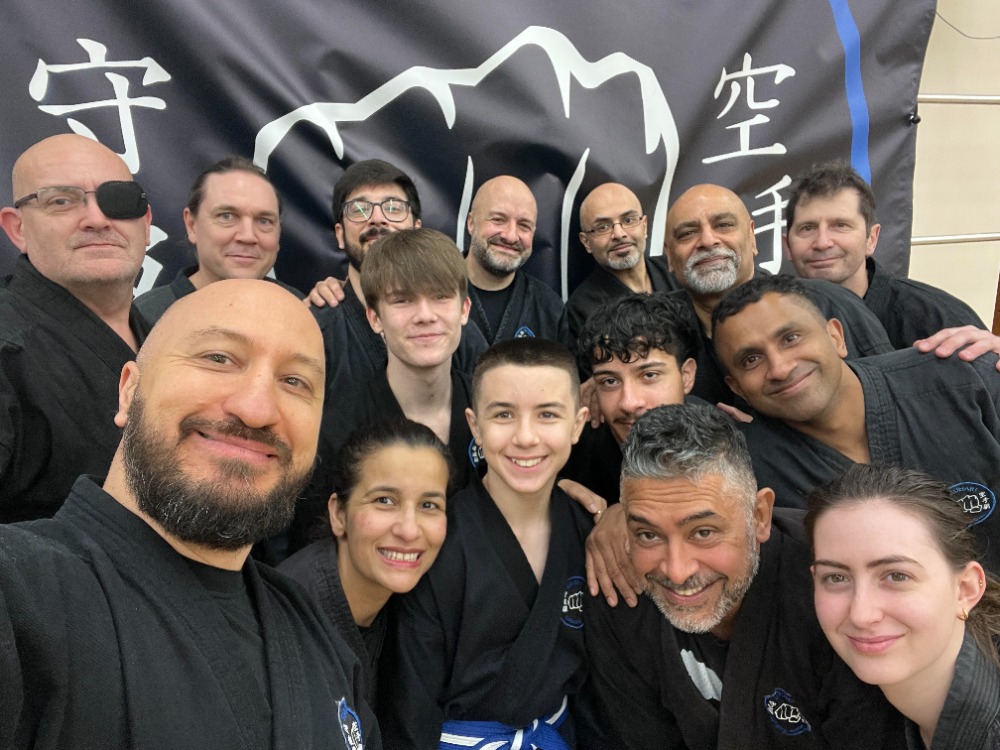
With 23 qualified instructors, students receive expert coaching regardless of which dojo they attend.
Our instructors aren't just technically proficient—they're trained in teaching methodology, ensuring they can effectively transfer knowledge rather than simply demonstrating technique.
Multiple Training Locations
Six locations across Slough, Maidenhead, Bracknell, Cippenham, Burnham, and Langley mean students can maintain consistent training despite work schedules, family commitments, and location changes.
Consistency drives progression. When students can train near work some days and near home other days, they rarely miss sessions due to travel obstacles.
Proven Track Record
Over 8,670 students trained since 2010 demonstrate our methodology produces results. Our 4.9-star rating across 245+ Trustpilot reviews and 600+ combined five-star Google and Trustpilot reviews reflects consistent student satisfaction.
We've guided countless students from complete beginners to black belts, from self-defence novices to confident practitioners, from children to adults across every age bracket.
The Journey Matters More Than the Destination
Ultimately, "how long to get good" might be the wrong question. Martial arts training is a lifelong journey rather than a destination to reach and abandon.
Students who've trained 20+ years still discover new insights, refine techniques, and develop capabilities. The black belt isn't an ending; it's a better stage of learning.
Focus on enjoying the process rather than obsessing over timelines. Celebrate small victories: the first time you successfully execute a combination during sparring, the moment a technique clicks after weeks of struggle, the day you help a newer student understand something you yourself understood after a long time.
These moments matter more than belt colours or arbitrary skill milestones. Martial arts should enrich your life throughout the journey, not merely at some future point when you've "arrived."
Conclusion: Your Timeline Starts Today
Becoming genuinely skilled at martial arts requires decades of consistent training for most people, with basic competence achievable in 1-2 years and functional self-defence ability within 3-4 years.
However, these timelines mean nothing if you never start. The student who begins today and trains consistently for five years will far surpass the person who spends five years researching "the perfect martial art" or "ideal training programme" before starting.
Your timeline begins with your first class. Every week you delay is a week of progress you've postponed. Whether you ultimately need three years or seven years to reach advanced proficiency matters less than starting the journey.
We understand realistic timelines, we've seen what works and what doesn't, and we're committed to helping every student progress as smoothly as their individual circumstances allow.
Your first step? Book a trial class at whichever location suits you best. Experience our teaching methodology, meet our instructor team, and begin the journey that will change not just your fighting ability but your confidence, discipline, and character.
The question isn't "how long does it take to get good at martial arts?" The real question is: "When will you start?"
Frequently Asked Questions
How long until martial arts feels natural rather than awkward?
Most students report basic techniques feeling natural rather than conscious within the first year. Complex combinations and sparring scenarios typically feel comfortable after 12-18 months of consistent training. However, this timeline varies significantly based on coordination, prior athletic experience, and training frequency.
Can I accelerate my martial arts progression?
Yes, through several methods: increasing training frequency from twice to three times weekly, supplementing group classes with private lessons, filming yourself during practice to identify technique flaws, and actively studying martial arts through video analysis and reading between physical sessions.
What's the minimum training frequency to make genuine progress?
Twice weekly represents the minimum for steady progression in most martial arts. Once-weekly training produces very slow development with frequent plateaus. Three or more weekly sessions accelerates progress significantly. Quality matters alongside quantity as well. Being present mentally in every session, absorbing more of what the instructor is teaching is the key.
Do children progress faster or slower than adults?
Children develop movement patterns faster due to neuroplasticity but lack the mental focus for advanced applications. Adults typically progress more deliberately but consistently. Overall timelines end up similar, though the journey differs significantly between age groups.
How do I know if I'm progressing at normal speed?
Compare yourself to your own baseline rather than training partners. Track specific metrics: Can you execute combinations you couldn't manage six months ago? Do techniques feel less conscious and more natural? Are you successfully applying skills during sparring that previously failed? These markers indicate healthy progression regardless of how you compare to others.
What if I plateau and stop improving?
Plateaus are normal, typically lasting months. Continue consistent training, ensure adequate recovery and sleep, temporarily reduce intensity to prevent burnout, and trust the process—breakthroughs often follow extended plateaus.
Is there an age limit for starting martial arts?
No upper age limit exists for martial arts training, though discipline selection matters. We've successfully trained students starting in their 50s, 60s, and beyond. You can read our article on the subject here.
How long before martial arts improves my fitness?
Fitness improvements appear within 2-3 months for most students. Cardiovascular endurance develops fastest. Strength and flexibility improvements take slightly longer but become noticeable within 6-12 months of consistent training. Dramatic fitness transformation typically requires 1 year + alongside proper nutrition.
Ready to start your martial arts journey? Contact Shuhari Self Defence today on 07739 464005 or email info@shuhari.com to book your trial class. With locations across Slough, Maidenhead, Bracknell, Cippenham, Burnham, and Langley, there's a convenient option for everyone in Berkshire. Check our timetable here.