





Understanding Martial Arts Belt Systems: From White Belt to Black Belt
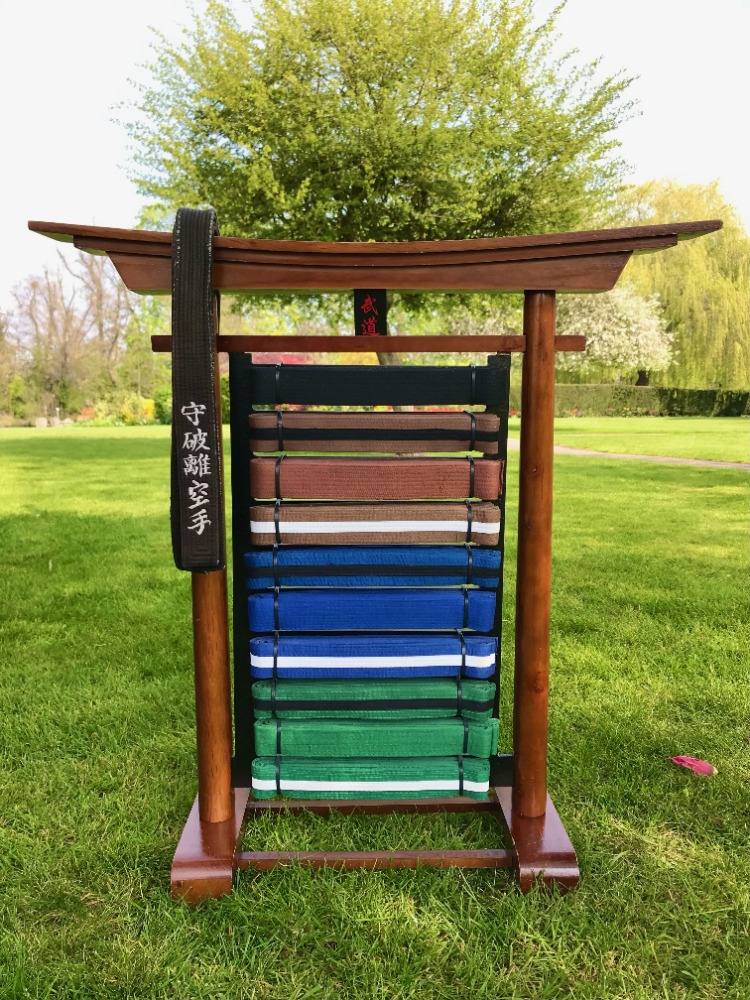
Walk into almost any martial arts club and one of the first things you notice is the range of belt colours worn by students. White, yellow, orange, green, blue, purple, brown, red, black: each one carries a meaning, a story, and a number of hours of effort behind it.
Belt systems are one of the most visible and frequently misunderstood features of martial arts training. Parents researching classes for their children often ask how long it would take them to achieve a black belt. Adults starting out wonder if it is possible for them to reach this level. And people who have never trained are sometimes surprised to learn that not every martial art uses the same system at all.
This guide explains where belt rankings came from, how they work across different disciplines, what a grading actually involves, and why the colour on your belt tells only part of the story.
Where Did Belt Rankings Come From?
The belt grading system as we know it today was introduced in Japan in the early twentieth century. Jigoro Kano, the founder of Judo, is widely credited with creating the first formal ranking structure using coloured belts (obi) to distinguish between student grades (kyu) and master grades (dan). His system used black belts to denote advanced practitioners, a convention that has since spread to nearly every major martial art.
Before Kano, Japanese martial arts used certificates and scrolls to record a student's progress, a practice that dated back to feudal Japan. Kano adapted this tradition into a visible, wearable system that allowed students to recognise the experience level of everyone in the dojo at a glance.
The coloured belt system for junior grades was introduced later, partly to give younger students and beginners clear, short-term milestones to work towards. Gichin Funakoshi, the founder of Shotokan Karate, adopted and expanded the system when he brought Karate from Okinawa to mainland Japan in the 1920s. From there, it spread globally as martial arts grew in popularity through the twentieth century.
Today, belt systems vary by discipline and by organisation. The order of colours, the number of grades, and the time between them differ across Karate, Brazilian Jiu-Jitsu, Judo, and other arts. What they share is a common purpose: to map a student's journey in a structured, motivating way.
Shuhari Karate-Jutsu Belt Order: What Each Colour Means
Karate uses one of the most widely recognised belt progressions in martial arts. The exact colours and their order can vary between styles. Traditional karate styles commonly use the order: white, yellow, orange, green, blue, brown and black.
Below is the grading order in our style.
| Belt | Approx. Time* | What It Represents |
|---|---|---|
| White Belt | Starting point | No prior knowledge. The beginner arrives open minded and ready to learn. |
| Green & White Belt | Approx. 6 months | Basic punching techniques, fence and stance taking shape. Awareness is developing. |
| Green Belt | Approx. 12 months | Punching foundations are solidifying. Practical combinations. |
| Green & Black Belt | Approx. 18 months | Knowledge is growing. Technique begins to flow. More percussion, especially open hand techniques. |
| Blue & White Belt | Approx. 2 years | A significant milestone. Sparring is tested. Application of technique becomes more instinctive. |
| Blue Belt | Approx. 3 years | Confidence increases. The student is moving to elbows. |
| Blue & Black Belt | Approx. 4 years | Knee techniques. Timing, aiming, footwork are being refined. |
| Brown & White Belt | Approx. 5 years | Kicks. Advanced level. A foundation of serious knowledge. |
| Brown Belt | Approx. 6 years | Escape techniques from grabs, pad work. |
| Brown & Black Belt | Approx. 7 years | Limb control, trapping and heavy bag work. Conditioning. |
| Black Belt | Approx. 8 years | Full contact sparring & tameshiwari. |
| 1st Dan | Approx. 9 years | Ground & pound, mount, side control, guard. Take downs, anti takedown techniques. |
*Timelines are approximate. Progression speed depends on training frequency, age, natural aptitude. For a detailed look at realistic progression timelines across disciplines, see our article How Long Does It Take to Get Good at Martial Arts?
What does a black belt actually mean?
A black belt in Karate signifies that a student has built a thorough grounding in the art's fundamental techniques and principles. In most traditional systems, 1st Dan (Shodan) is considered the beginning of genuine mastery, not the end of learning. Many instructors describe it as the point where a student finally understands enough to start learning properly. Which might be seen as the Ha stage of the Shu-Ha-Ri journey.
BJJ Belt System: Why It Works Differently
Brazilian Jiu-Jitsu (BJJ) has a noticeably different belt structure from Karate, and it is worth understanding why. The progression is normally slower, the number of belts is smaller, but has more stripes in each colour and achieving a black belt typically takes around 12+ years.
| Belt | Approx. Time* | What It Represents |
|---|---|---|
| White | Starting point | Survival & humility phase. Learning the core positions, escapes, and submission defence. |
| Blue | Approx. 2 years | Better understanding of fundamentals. Can hold their own in rolling. |
| Purple | Approx. 5 years | Intermediate. Beginning to develop a personal game. |
| Brown | 8–9 years | High-level practitioner. Refining and teaching concepts to others. |
| Black | 12+ years typically | Recognised expertise. Fewer than 1% of practitioners reach this level. |
BJJ also uses a stripe system, with up to four stripes awarded on each belt to mark progress between formal promotions. This gives students more frequent recognition of their development without changing the belt structure itself.
The reason BJJ takes a long time to learn is rooted in how the art is tested. Every class involves live sparring (called rolling), where techniques must actually work against a resisting partner. There is no room for non resistant performance: the mat provides an honest assessment of genuine skill. This means promotions carry significant weight, which is why achieving a BJJ black belt is considered one of the most demanding achievements in martial arts.
Judo Belt Progression
Judo, the art from which all modern belt systems originate, uses a six-colour kyu system for junior grades and a dan system for advanced practitioners. The standard colours used by British Judo are:
| Belt | Grade (Kyu) | Stage |
|---|---|---|
| White | 6th Kyu | Complete beginner. Learning basics like breakfalls, posture, and simple throws. |
| Yellow | 5th Kyu | Basic techniques start coming together. |
| Orange | 4th Kyu | Developing technique and awareness. Improved coordination and more throws. |
| Green | 3rd Kyu | Stronger technique, better timing, more flow. |
| Blue | 2nd Kyu | Advanced student level. Good control, understanding of strategy. |
| Brown | 1st Kyu | Pre-black belt. Near-advanced practitioner. |
| Black (1st Dan) | Shodan | First dan. Solid understanding of the art. |
How Grading Works at Shuhari Self Defence
At Shuhari Self Defence, grading is taken seriously. It is not an automatic reward for attendance: it is a genuine assessment of a student's progress, technique, and understanding.
Students are assessed by our team of 23 instructors, drawing on over 16 years of teaching experience since the academy was founded in 2010. The grading process looks at:
- Technical accuracy: strikes, interceptors, stances, combinations, pad work, bag work, sparring.
- Application: whether the student can use techniques against resisting opponents.
- Attitude, effort, and character in class.
Instructors at Shuhari will only invite a student for grading when they are genuinely ready. Students from locations across Berkshire, including Slough, Maidenhead, Bracknell, Cippenham, Burnham, and Langley, are assessed to the same standard, regardless of which venue they train at.
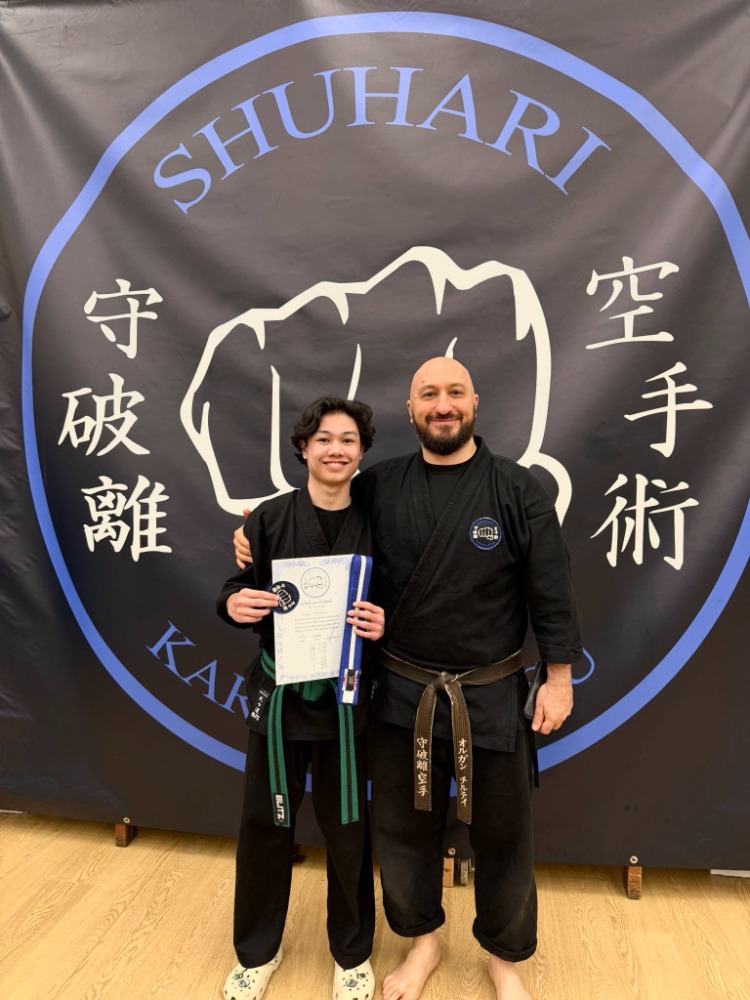
Grading days are an important occasion in a student's development. For children in particular, the experience of preparing for an assessment, performing under a degree of pressure, and earning a new belt through their own effort builds confidence, resilience, and a healthy understanding of what genuine achievement feels like. These are qualities that carry well beyond the training mat.
How Belt Systems Motivate Children
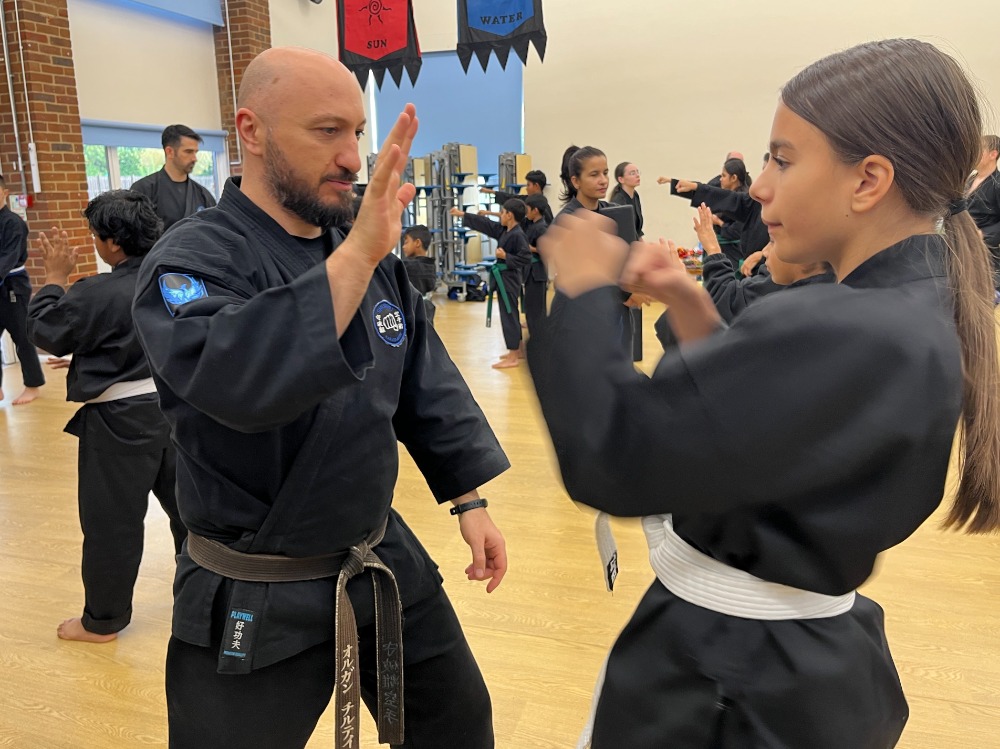
One of the reasons the belt system has endured for over a century is that it works exceptionally well as a motivational structure, particularly for children.
Children respond well to visible, tangible progress. A new belt colour gives a child a clear, concrete marker of what they have achieved and a specific goal to work towards next. Research in developmental psychology consistently shows that children benefit from goal structures that balance challenge with attainability: belt gradings are structured precisely this way, with each belt representing a realistic but genuinely earned step forward.
The grading system also teaches children something more profound than martial arts technique. Preparing for a grading means practising specific skills repeatedly over months and years, managing nerves before a formal assessment, and experiencing what it means to earn rather than be given a reward. These are experiences that shape character in ways that extend far beyond sport.
Parents at Shuhari frequently comment that their child's first belt promotion was a turning point: not because of the belt colour, but because of what the child learned about themselves in earning it.
Why the Journey Matters More Than the Destination
The most common question people ask about belt systems is: how long will it take to get a black belt? It is a natural question, but experienced martial artists often smile at it, not dismissively, but with recognition. When you have trained long enough, you understand that asking about the black belt is a little like asking how long a conversation will take before realising what you really want is the connection.
A black belt represents a body of knowledge that has been absorbed through thousands of repetitions, hundreds of sparring sessions, multiple gradings, and years of showing up when motivation was low. It cannot be rushed into meaning. What it represents is not a destination reached but a level of understanding built, and that building is the point.
Shuhari's name reflects this exactly. Shu-Ha-Ri is a Japanese concept describing the three stages of mastery: Shu (following the rules and learning the fundamentals), Ha (breaking from convention to explore deeper understanding), and Ri (transcending the form entirely to create from intuition). The belt system maps neatly onto the early stages of this journey, but the journey itself never ends.
Students who arrive focused solely on earning the next belt often plateau and get frustrated. Students who fall in love with the process, who are curious about technique, who enjoy the challenge of each session for its own sake, tend to stay the longest. The belt follows the effort; it does not lead it.
Frequently Asked Questions About Martial Arts Belts
How long does it take to get a black belt in martial arts?
Timelines vary significantly by discipline. In traditional Karate, a black belt typically requires four to five years of consistent training. In Judo, a black belt takes around 6–7 years. In Shuhari, it is around 8–10 years. Factors including training frequency, natural ability, and age all affect progression. Shuhari's article on realistic martial arts timelines covers this in detail.
Is a black belt the highest rank in martial arts?
No. In most systems, black belt marks the beginning of advanced study rather than the end. Karate uses dan grades (1st Dan through 10th Dan) above black belt, with higher dans representing decades of practice and contribution to the art. A 10th Dan is an extremely rare, lifetime achievement.
Does BJJ use the same belt system as Taekwondo?
No. BJJ has a simpler structure with fewer belts: white, blue, purple, brown, and black for adults. The progression is slower and more demanding than most Taekwondo systems.
What happens at a grading at Shuhari Self Defence?
Shuhari gradings are formal assessments conducted by the instructors team. Students are assessed on technical accuracy, speed, impact, timing, aiming, foot work, pad work, sparring, bag work. Instructors only invite students for grading when they are genuinely ready, so receiving an invitation to grade is itself a recognition of progress. But an invitation is no guarantee of a grade.
What age can children start working towards belts?
Children can begin working towards their first belt from the age of seven at Shuhari. Shuhari sets this minimum age because martial arts involves contact and requires a level of cognitive and physical maturity to train safely and benefit fully. Starting at seven means a child is ready to engage properly with both the technique and the grading process.
Start Your Belt Journey in Berkshire
Whether you are an adult looking to start from scratch, a parent considering classes for your child, or a teenager ready to commit to something genuinely demanding and rewarding, Shuhari Self Defence has classes for you across Berkshire.
With classes running across six locations in Slough, Maidenhead, Bracknell, Cippenham, Burnham, and Langley, with 19 classes per week led by experienced instructors, there is a timetable slot that works for your schedule.
Shuhari has been training students since 2010. Over 8,670 people have started their martial arts journey with the club, and a 4.9-star Trustpilot rating from more than 250 verified reviews reflects the quality of coaching and community they have found here.
Visit shuhari.com or call 07739 464 005 to book your first class. Your white belt is waiting.