




What are the Hardest Martial Arts to Learn? Difficulty by Discipline
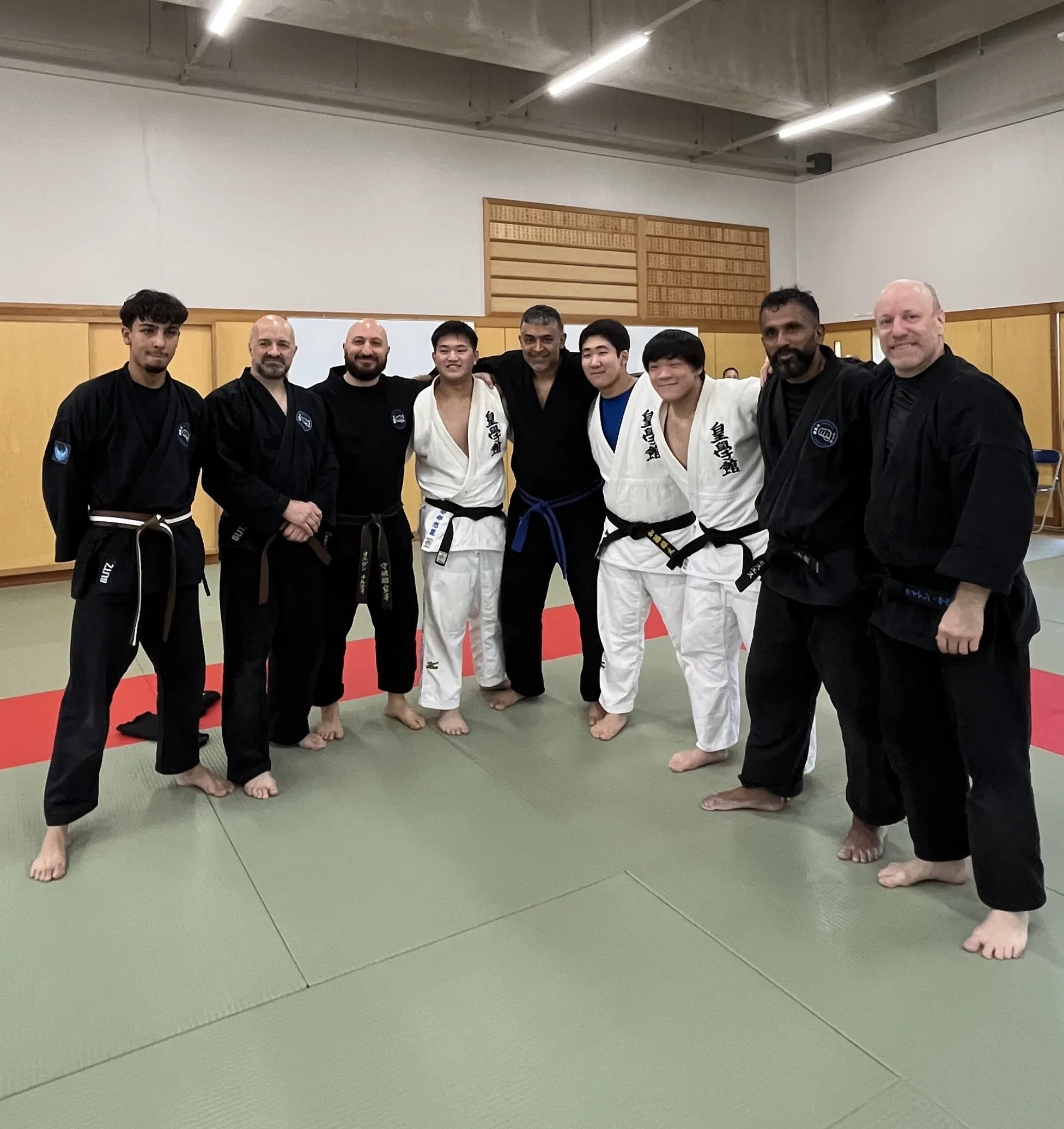
Every martial art is difficult. That might sound like a cop-out, but it is the most important thing to understand before reading any ranking. The person who starts training for the first time, regardless of the discipline, is doing something genuinely hard. They are learning to move differently, think under pressure, push themselves physically and mentally and accept being a beginner in front of strangers.
That said, some martial arts are harder than others. The techniques are more numerous, the physical demands are steeper, and the road to competence is longer. If you have ever wondered which martial art takes the longest to master, or which fighting style will challenge you the most, this simple guide breaks it down discipline by discipline.
At Shuhari Self Defence, we teach techniques from multiple martial arts disciplines, across six locations in Berkshire, so our instructors see first-hand how students respond to different levels of complexity. This article draws on that experience, along with widely recognised training frameworks, to give you an honest difficulty ranking.
How We Define 'Hard'
Difficulty is not one thing. A martial art can be physically punishing yet technically simple, or the reverse. To compare fairly, we use three separate criteria.
Physical demands refers to the conditioning required just to train. Some disciplines need high levels of flexibility, explosive power, or cardiovascular endurance, toughness and some others might have artistic elements built into them like set patterns of movements performed by the student individually.
Some disciplines demand the physical testing of the individual against fully resisting training partners and other disciplines might test the understanding of the technique against non resisting partners.
Technical complexity measures the breadth and depth of the skill set. How many techniques exist within the system? How precise do they need to be? How hard is it to understand and internalise the concepts?
Time to proficiency looks at how long it typically takes to reach a competent intermediate level. How long before a beginner can execute them reliably in sparring and in real life?
In disciplines with formal belt systems, this is easier to quantify. In others, we rely on accepted benchmarks from the wider martial arts community.
In reality, the club, your instructor and your training partners set the difficulty level. But a martial art that scores high on all three above is genuinely difficult.
Striking Arts
Muay Thai
Muay Thai is sometimes called the art of eight limbs because it uses fists, elbows, knees, and legs as weapons. That alone makes it technically broader than most striking systems. For example boxing uses just the hands and taekwondo uses mostly feet nowadays. Practitioners of Thai boxing must develop competence across all eight striking surfaces while also learning the clinch, a form of vertical grappling unique to Muay Thai that blends seamlessly with the striking game.
The physical demands are significant. Muay Thai conditioning involves heavy bag work, pad rounds, and sparring sessions that test cardiovascular endurance and toughness to its limits. Shin conditioning, where practitioners gradually toughen the shinbone through repeated impact, is famously uncomfortable for newcomers.
Kickboxing
Kickboxing occupies a middle ground. It adds kicks to the boxing toolkit but typically excludes elbows, knees, and clinch work. This makes it broader than boxing but narrower than Muay Thai.
For beginners, the main challenge is coordinating hands and feet together. Most adults are comfortable throwing a punch but far less natural when kicking, particularly at higher targets. Flexibility and hip mobility become important early.
Full Contact Karate
Full contact karate is difficult because it combines physical intensity, technical precision, and mental toughness all at once.
You will take constant hits (kicks, punches, knees). Unlike non contact styles, there's no pulling punches, so pain tolerance and conditioning are crucial.
Fighters must train their bodies to absorb and deliver force. It has high conditioning requirements. Matches are physically exhausting—requiring strength, endurance, and stamina. Training includes intense drills like body conditioning, pad work, bag work and sparring rounds.
Timing, distance, and accuracy are critical—mistakes get punished immediately. Fighters need to have mental toughness and learn to stay calm while being hit and fatigued. It builds resilience, discipline, and the ability to push through discomfort.
Boxing
Do not let the apparent simplicity fool you. Boxing uses only the hands, yet the technical depth is extraordinary. Footwork, head movement, timing, distance management, and punch selection create a skill ceiling that takes years to approach. There is a reason professional boxers describe their sport as the sweet science.
The physical conditioning is grueling. Boxers build exceptional hand speed, reflexes, and stamina through pad work, bag rounds, skipping, and sparring. The sport also demands significant mental toughness, as getting hit cleanly while remaining composed is a skill in its own right.
Grappling Arts
Brazilian Jiu-Jitsu
Brazilian Jiu-Jitsu is widely considered as one of the hardest martial arts to learn, and the data supports that reputation. The average time from white belt to black belt is just over 12 years. Less than one per cent of white belts ever reach black belt, making it one of the rarest achievements in the martial arts world.
The difficulty lies in several overlapping factors. The technical syllabus is enormous, covering hundreds of positions, transitions, sweeps, submissions, and escapes. Every technique must work against a fully resisting opponent during live sparring (known as rolling), which means there are no shortcuts. You cannot simply memorise sequences; you must develop genuine, pressure-tested skill.
Wrestling
Wrestling is one of the most physically demanding martial arts. Training sessions involve intense drilling, live grappling, and conditioning circuits that push athletes to the edge of their cardiovascular limits. There is a well-known culture of mental toughness in wrestling that goes beyond most disciplines.
Technically, wrestling is somewhat narrower than BJJ. The core skill set revolves around takedowns, pins, and escapes rather than the extensive submission game found in Jiu-Jitsu. However, the execution demands explosive speed, precise timing, and a level of physical strength that takes years to develop fully.
Judo
Judo shares DNA with BJJ but nowadays focuses primarily on throws and takedowns rather than ground submissions. Falls are an unavoidable part of Judo training, and learning to receive throws safely is itself a skill that takes time. The physical demands are significant, particularly around grip strength, hip mobility, and explosive power. However, the progression to black belt is typically much faster than in BJJ, averaging four to six years in many schools.
Hybrid Systems
MMA
Mixed martial arts is, by definition, the most technically expansive combat system. Practitioners must develop competence in striking, grappling, wrestling, clinch work, and the transitions between all of them. Being excellent at one discipline is not enough; you need functional skill across multiple ranges of combat.
The physical demands match the technical breadth. MMA fighters train multiple sessions per day across different disciplines, developing cardiovascular endurance, explosive power, flexibility, and durability simultaneously. The risk of injury is also higher than in single-discipline training because of the variety of techniques involved.
Combat Sambo
This is a dynamic grappling and striking art developed in the Soviet Union, combining elements of wrestling, judo, and traditional folk styles. Its name means self-defence without weapons, which reflects its practical, combat-focused roots.
One of the reasons sambo is difficult to learn is its hybrid nature. Practitioners must become comfortable with fast-paced takedowns, leg locks, throws, and continuous transitions between standing and ground fighting. Sambo places a heavy emphasis on leg attacks early in training, which adds a layer of technical complexity that many beginners find unfamiliar.
Physically, sambo is demanding in a similar way to wrestling and judo. It requires explosive strength, balance, grip endurance, and the ability to move quickly under pressure. Matches are often fast and aggressive, meaning athletes must develop both conditioning and resilience.
The core techniques can be learned relatively quickly, but applying them effectively against resisting opponents at speed takes years of consistent training. The blend of styles also means students must adapt to a wider range of situations, increasing the overall learning curve.
Why Difficulty Should Not Determine Your Choice
Choosing a discipline purely because it tops a difficulty ranking is like choosing a university course because it has the highest dropout rate. The difficulty is not the point; the outcome is.
In the long term, the one you will stick to is the best one for you.
The right martial art for you depends on what you want to achieve. If your goal is practical self-defence, you need a system that covers realistic threat scenarios. If you want to improve fitness, the discipline that keeps you engaged and will deliver far better results.
The Role of Good Instruction in Making Any Martial Art Accessible
Difficulty is not fixed. A well-structured class with experienced instructors can make even the most complex martial art accessible to complete beginners. Conversely, poor instruction can make a straightforward discipline feel impossibly confusing.
Good instruction means several things in practice. It means breaking complex techniques into manageable progressions. It means pairing beginners with appropriate training partners. It means creating an environment where asking questions is normal and making mistakes is expected.
The difference between a frustrating first month and an enjoyable one rarely comes down to the martial art itself. It comes down to how the first few classes are structured and whether the instructors genuinely invest in beginner development.
How Shuhari Makes Complex Disciplines Approachable
At Shuhari Self Defence, we teach techniques from multiple disciplines: Karate, Boxing, Wrestling, Krav Maga, Kung Fu, Judo, BJJ, Kickboxing, and Muay Thai. Several of those appear near the top of the difficulty rankings above, yet our classes welcome complete beginners every week.
The reason is our approach to instruction. Since 2010, we have trained over 8,670 students across our six locations in Slough, Maidenhead, Bracknell, Cippenham, Burnham, and Langley. Our team of 24 instructors understands that the first class matters more than the fiftieth. If a beginner feels overwhelmed, confused, or out of place in their first session, they are unlikely to return for a second.
That is why every class follows a structured warm-up, a clear technique focus, and progressive skill building that allows beginners to train alongside more experienced students without feeling lost. Techniques from different disciplines are introduced gradually, giving students the tools to understand how striking, grappling, and self-defence connect without drowning in complexity.
Frequently Asked Questions
What is the hardest martial art to learn?
Brazilian Jiu-Jitsu and MMA are widely considered the hardest martial arts to learn. BJJ has less than one per cent of its beginners ever reaching to black belt level. MMA requires competence across multiple disciplines, including striking, grappling, and wrestling, making it equally demanding in terms of overall skill development.
Which martial art takes the longest to master?
BJJ typically has the longest path to mastery among individual disciplines, with an average of 12 years to reach black belt. MMA does not have a single unified belt system, but developing well-rounded proficiency across all necessary disciplines generally takes a similar timeframe.
Is Muay Thai harder than boxing?
Muay Thai is generally considered harder than boxing because it uses eight striking surfaces (fists, elbows, knees, and shins) compared to boxing's two (fists only). Muay Thai also includes clinch work, a form of standing grappling. However, boxing has extraordinary technical depth in footwork, head movement, and timing, and should not be dismissed as simple.
Can a complete beginner learn a difficult martial art?
Yes. Every martial art, regardless of its difficulty ranking, welcomes beginners. The key factor is the quality of instruction. A well-structured class with experienced instructors will break complex techniques into manageable progressions, making even the hardest disciplines accessible from day one.
What is more challenging, MMA or BJJ?
They challenge practitioners differently. BJJ has deeper technical complexity within its specific domain (ground grappling), and it can be very confusing. MMA requires broader competence across striking, grappling, clinch work, and the transitions between them.
Every Expert Was Once a Beginner: Start Your Journey Today
The martial artists who hold black belts in Karate, who practice MMA, or who have trained Muay Thai for decades all started exactly where you are now. They walked into a class knowing nothing, felt awkward and uncertain, and decided to come back the following week. That decision, repeated hundreds of times, is what separates a beginner from an expert.
If you are in Berkshire and curious about martial arts, Shuhari Self Defence offers a welcoming environment to take your first step. With classes running seven days a week across Slough, Maidenhead, Bracknell, Cippenham, Burnham, and Langley, there is a time and location that fits your schedule.
Book your first class today. Call us on 07739 464 005, email info@shuhari.com, or visit shuhari.com to claim your beginner's discount.