





What Is Karate? A Beginner's Guide to the World's Most Recognised Martial Art
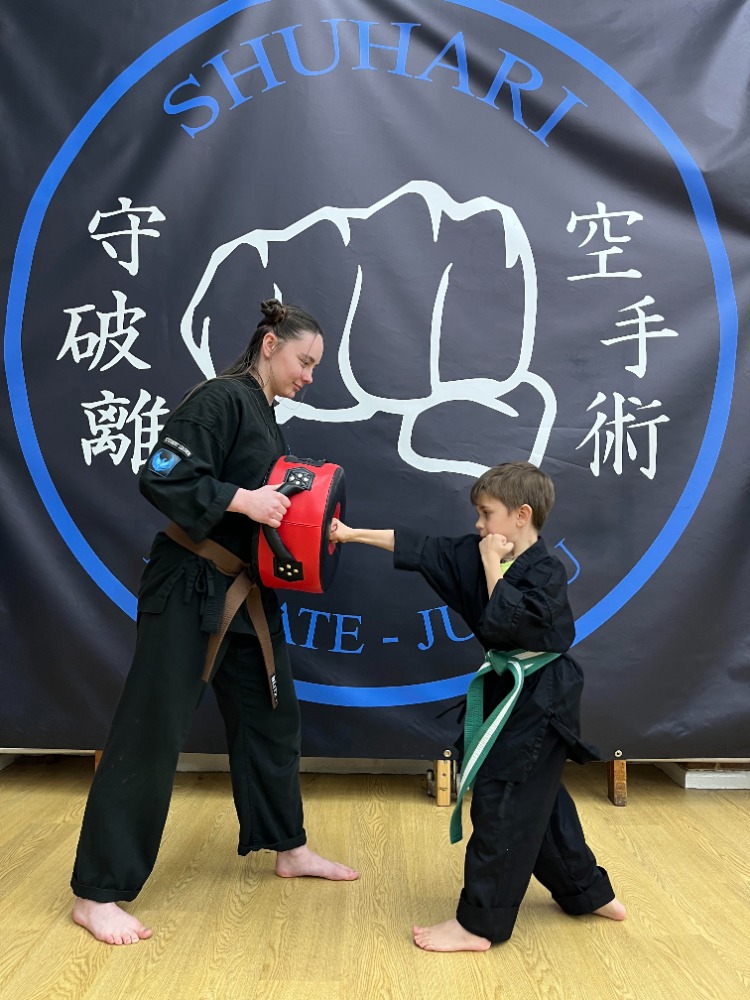
Ask most people to picture a martial artist, and chances are they picture someone in a white gi throwing a sharp, precise punch. That image belongs to karate, and it has been embedded in popular culture for good reason. Karate is one of the most widely practised martial arts on the planet, with an estimated 100 million practitioners worldwide and a history stretching back several centuries.
Yet for all its visibility, karate is frequently misunderstood. Many people associate it with competitive point based sparring sport, without realising how deep its principles run, or how practical its techniques are in real-world situations. This guide covers what karate actually is, where it comes from, how it is trained, and whether it could be the right fit for you or your child.
What Does Karate Mean?
The word karate translates from Japanese as 'empty hand'. This reflects the art's defining characteristic: the practitioner's body is the weapon. Unlike disciplines that rely on weapons, in the absence of one, you are the weapon. Karate is a civilian self defence system built on striking: punches, kicks, knees, elbows, and open-hand techniques delivered with speed.
The 'empty' in empty hand also carries a philosophical meaning. In karate's original Okinawan tradition, training was understood as a path of self-emptying: stripping away ego, aggression, and the impulse toward conflict. The goal was not to create fighters, but to develop disciplined, self-aware people who could protect themselves and others if the need arose.
A Brief History of Karate
Karate originated on the island of Okinawa, drawing from indigenous fighting traditions of the island and Chinese martial arts that reached the island through centuries of trade. For much of its early history, karate was practised in secret, as weapons were banned under various ruling powers and unarmed combat had to be developed quietly.
In the early twentieth century, karate was introduced to the Japanese mainland, where it was formalised and codified. Masters such as Gichin Funakoshi, widely regarded as the father of modern karate, adapted Okinawan techniques for a broader audience and developed the systematic teaching structures still used today.
Following the Second World War, karate spread rapidly to the West through returning servicemen and growing global interest in Japanese culture. Today it is practised in virtually every country on earth.
The Main Styles of Karate
Karate is not a single, uniform system. Several distinct styles have developed over the decades, each with its own technical emphasis and philosophical approach. The four most widely practised are:
| Style | Key Characteristics | Best Known For |
|---|---|---|
| Shotokan | Long, deep stances; powerful linear techniques; strong emphasis on kata | Most widely practised style in the UK and globally |
| Goju-Ryu | Hard and soft techniques combined; circular movements; close-range fighting | Strong Okinawan roots; practical close-quarters & grappling |
| Wado-Ryu | Evasion and body shifting over pure force | Fluid, evasive movement |
| Shito-Ryu | Large kata library; elements of both Shotokan and Goju-Ryu | Versatility; preserving a wide range of traditional forms |
| Kyokushin | Full contact sparring & conditioning | Heavy handed practice for toughness |
| Shorin-ryu | Speed & agility | Quick snapping techniques |
While these styles differ in emphasis, they share the same foundational principles: disciplined technique, focused intent, and continuous self-improvement through structured practice.
What Does Karate Training Actually Involve?
A typical karate session draws on three interconnected elements, each serving a different purpose in the practitioner's development.
Kihon: Fundamental Techniques
Kihon means 'basics'. This is where the building blocks are drilled: punches, kicks, interceptors, and stances. Kihon practice develops muscle memory, body mechanics, and the precise coordination that makes karate techniques effective. It may look repetitive to an outside observer, but it serves the same function as scales in music: it creates the fluency needed to perform under pressure.
Kata: Prearranged Forms
Kata are sequences of techniques performed solo. Each kata is a preserved record of karate's historical knowledge, encoding defensive and offensive strategies in a structured sequence of movements. There are dozens of kata across different styles, ranging from introductory forms to advanced sequences.
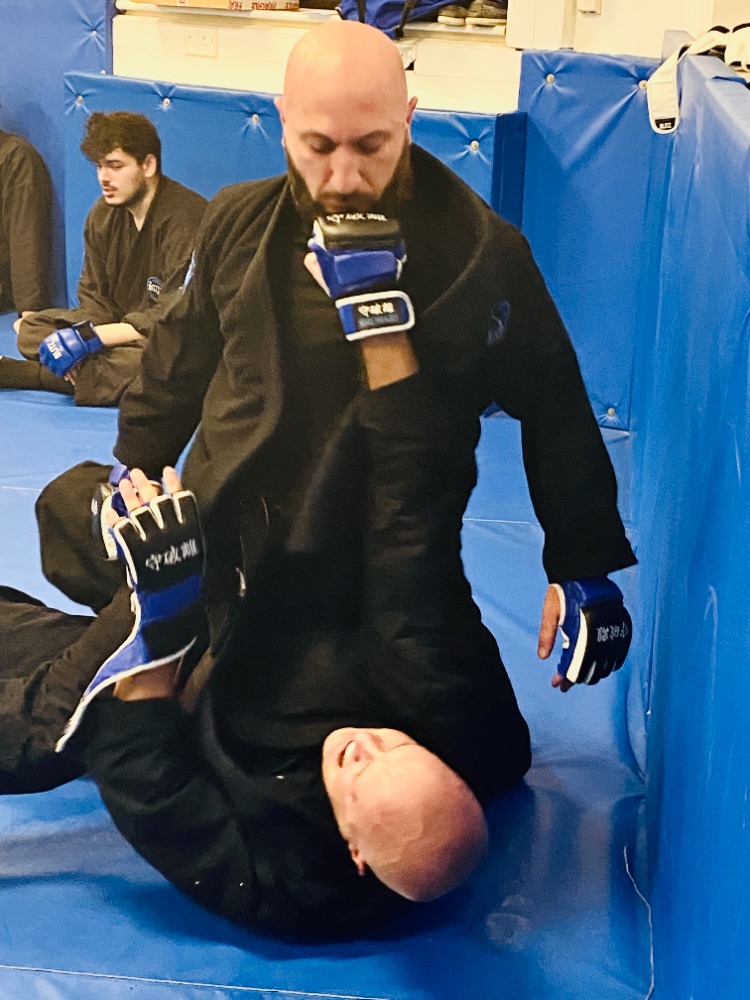
In our club, training emphasises practical self defence application of karate, conditioning, sparring, pad work, bag work, movement, vertical grappling, ground grappling, take downs and scenario based practice against resisting partners. Because of this focus, we currently don't include kata in our syllabus, though we understand and respect its place in traditional karate.
Kumite: Sparring [Entangled hands]
Kumite refers to the partner practice of free sparring. This is where techniques are tested against a real person who is actively trying to counter you. Kumite develops timing, distance management, and the ability to read an opponent, skills that are difficult to develop through solo practice alone.
At most clubs, beginners start with structured, low-contact kumite and progress towards freer sparring as their skills and control develop. Safety is always the priority.
The Belt System in Karate
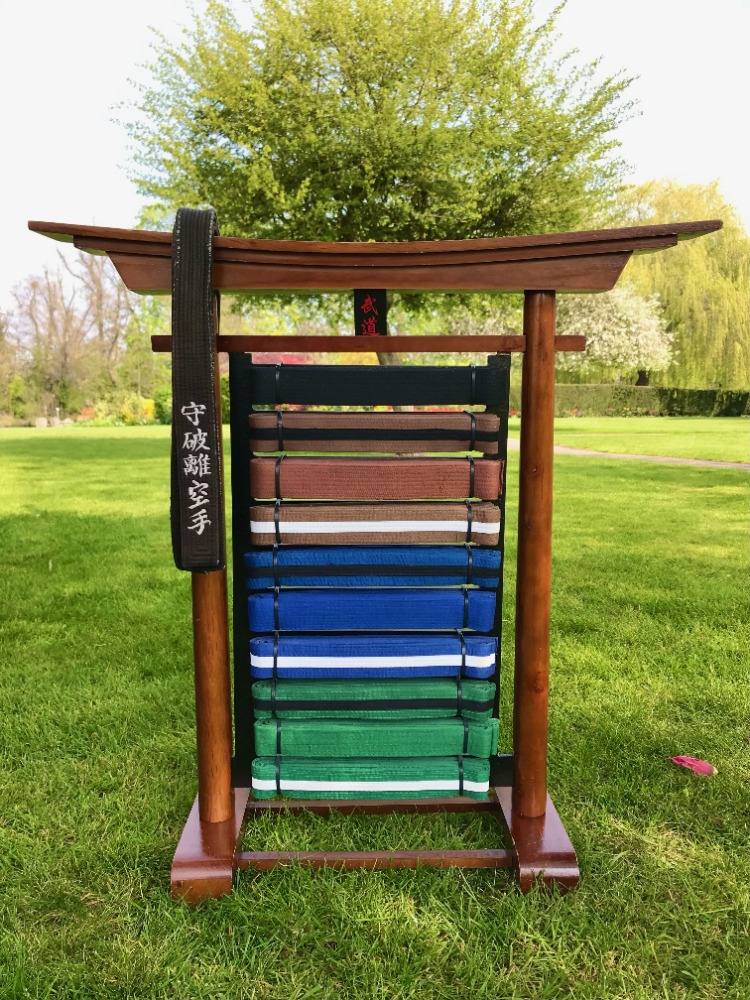
Karate uses a coloured belt system to mark a student's progress. The exact sequence varies between styles and clubs, but the general framework moves from white (beginner) through a series of coloured belts, before reaching the black belt grades (known as 'dan' levels).
A common progression in UK karate clubs runs as follows: White, Yellow, Orange, Green, Blue, Purple, Brown, and then Black belt through multiple dan grades. Each grade represents not just technical competency, but also demonstrated understanding of karate's wider principles.
It is worth noting that a black belt is not an endpoint. In karate, it marks the point at which a student has learned the basics sufficiently well to begin serious study. Many karateka train for decades beyond their first black belt.
Is Karate Effective for Self-Defence?
This is one of the most frequently asked questions about karate, and the honest answer is: it depends on how it is taught. If you practice in a pragmatic system and do contact sparring, conditioning, pad work, bag work, tameshiwari, limb control, vertical grappling, take downs, multiple opponents, verbal to physical escalation scenario based drills and weapon/improvised weapon awareness in the dojo, then yes it is very practical for self defence purposes.
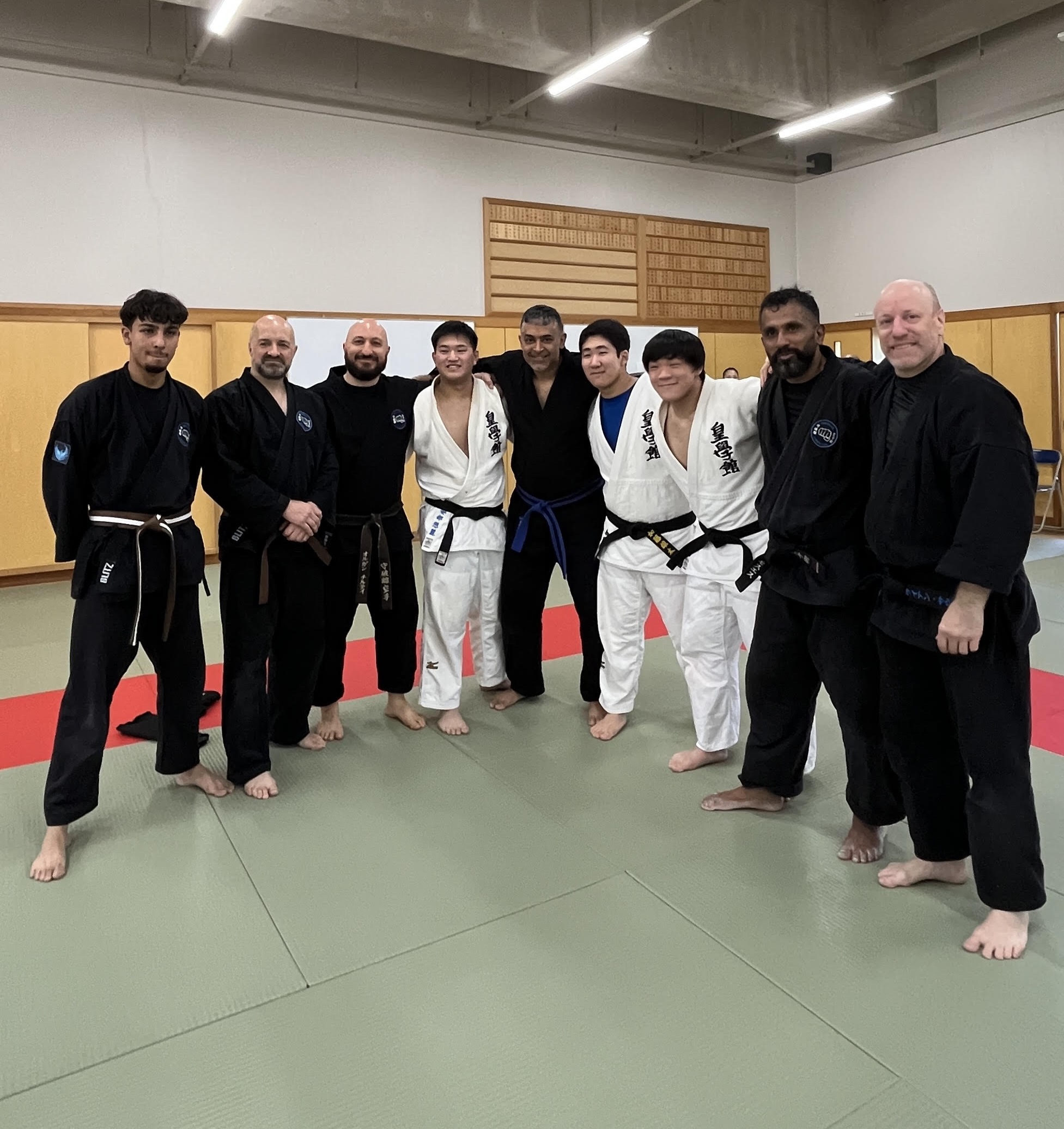
Modern self-defence training, including the approach used at Shuhari Self Defence, often draws on techniques from multiple disciplines. Karate's striking principles form a very important part of this broader picture, complementing other techniques. Students at Shuhari's classes across Slough, Maidenhead, Bracknell, Cippenham, Burnham, and Langley learn to apply techniques from karate alongside those from boxing, wrestling, Judo, and other disciplines, all within their regular training sessions.
What Are the Physical and Mental Benefits of Karate?
Karate delivers a broad range of benefits that extend well beyond fighting capability. Consistent training over years produces changes across multiple areas of a person's life.
Physical Benefits
- Improved cardiovascular fitness from continuous movement and drilling
- Greater core strength, developed through technique
- Better flexibility, particularly in the hips, hamstrings, and shoulders
- Enhanced coordination and balance, which transfer to everyday movement
- Improved reaction speed, trained through sparring and partner work
Mental Benefits
- Stronger focus and concentration, built through repetitive, precise practice
- Greater self-discipline, as progress in karate is directly tied to consistent effort
- Improved confidence, which comes from competence
- Reduced stress, through the meditative quality of training
- Resilience, because karate consistently presents challenges that must be worked through
These outcomes are why karate is particularly valued for a person's development. The discipline, focus, and respect that karate demands are qualities that carry directly into school, home, and working life.
Who Is Karate Suitable For?
One of karate's genuine strengths is its accessibility.
Children
Karate is one of the most popular martial arts for young people. The structured environment, clear progression, and emphasis on respect make it particularly well suited to children's development. At Shuhari Self Defence, children are welcome from age seven. This minimum age reflects the point at which a child's cognitive development is sufficiently mature to engage safely with contact-based training, learn and apply technique correctly, and understand the principles behind what they are practising.
Teenagers
For teenagers, karate provides structure, a constructive physical outlet, and a peer community built around shared goals rather than passive consumption. Many teens who start karate find it has a significant positive effect on self-confidence, particularly through the consistent experience of setting and meeting challenges over time.
Adults
Adults of all ages begin karate, including those who have never trained in any martial art before. The common concern that it is 'too late to start' simply does not hold up. Adults bring qualities to training that younger students often lack: patience, focus, and the ability to reflect on technique. Many adults find karate to be one of the most effective forms of exercise they have encountered, precisely because it engages the mind as well as the body.
How Does Karate Differ from Other Martial Arts?
Karate is often compared to similar striking arts. Here is a brief overview of how it relates to some other disciplines:
| Comparison | Karate | Other Art |
|---|---|---|
| Karate vs Kickboxing | Wider range of techniques like knees and elbows. Civilian self defence focus | Sport-focused; punching and kicking only |
| Karate vs Taekwondo | Balanced hand and foot techniques; Okinawan/Japanese origin | Heavily kick-focused; Korean origin; Olympic sport since 2000 |
| Karate vs Judo | Stand-up striking art; effectiveness through speed and accuracy | Grappling and throwing art; effectiveness through leverage and control |
Frequently Asked Questions About Karate
Is karate suitable for complete beginners with no martial arts experience?
Yes. The vast majority of beginners arrive with no prior experience. Good karate classes start with foundational techniques and progress systematically. No flexibility, strength, or fitness level is required to begin.
How long does it take to earn a black belt in karate?
The timeline varies by style, club, and individual progress, but most students training consistently two or three times per week reach black belt level within four to six years. Some take longer, some less. The belt is a marker of sustained commitment as much as technical skill. In our system, it takes around 8–10 years.
Do I need to be fit to start karate?
No. Karate training will improve your fitness over time, regardless of your starting point. Classes accommodate different fitness levels, and beginners are not expected to match more experienced students immediately. The training builds the body you need as you go.
Is karate good for children's confidence?
Yes, consistently so. The confidence built through karate comes from genuine competence earned through hard work, not from being told you are doing well. Children who train regularly develop the kind of grounded self-assurance that transfers to school, social settings, and later life. This is one of the most frequently cited benefits by parents of students at Shuhari.
Try Karate at Shuhari Self Defence
Shuhari Self Defence has been training students across Berkshire since 2010 with a clear mission: to help people build a stronger body, a sharper mind, and an immovable spirit.
Classes are available for children (age 7+), teenagers, and adults across six locations: Slough, Maidenhead, Bracknell, Cippenham, Burnham, and Langley. Whether you are a complete beginner or returning to training after a break, you will find a welcoming, structured environment that meets you where you are.
Contact us on 07739 464 005 or visit shuhari.com to find your nearest class and arrange a free taster session.