





Karate vs BJJ: Which Martial Art Should You Choose?
Karate and Brazilian Jiu-Jitsu (BJJ) are two of the most widely practised martial arts in the world, and for good reason. Both are effective, rewarding, and genuinely life-changing when trained consistently. They are built on fundamentally different principles, and you should take the time to understand these before choosing.
This honest comparison covers how each discipline works, who each one suits, and why the choice does not always have to be either/or.
The Fundamental Difference Between Karate and BJJ
Karate done right is a civilian self defence system which primarily focuses on stand up striking; BJJ is primarily a ground grappling art.
Karate teaches you different ranges of striking. Techniques are built around punches, elbows, knees, kicks, open-hand strikes, defensive interceptors and limb control. The goal is to control the space between you and an opponent, respond with speed, precision, and neutralise a threat before it escalates further.
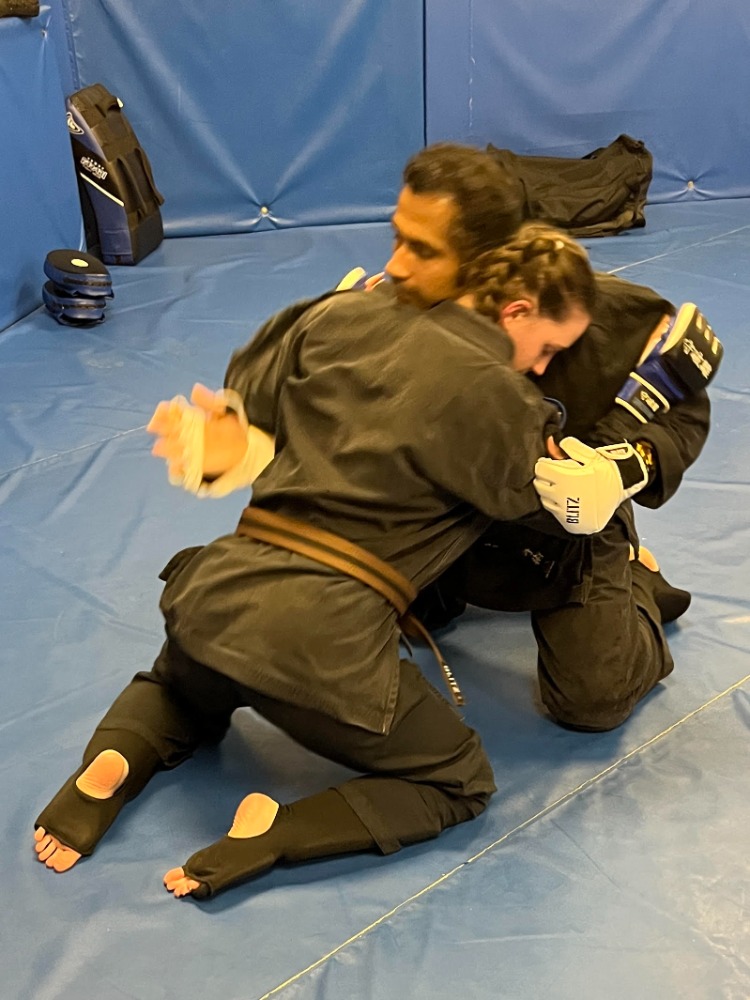
BJJ works on the assumption: that many confrontations end up close-quarters or on the ground, where height and weight advantages can be overcome by leverage and technical positioning. BJJ teaches how to take an opponent down, control them from dominant positions, and apply joint locks or chokes that force a submission. Technique is prioritised over brute force.
Karate vs BJJ: Side-by-Side Comparison
| Category | Karate | BJJ (Brazilian Jiu-Jitsu) |
|---|---|---|
| Core focus | Striking: punches, elbows, knees, kicks, interceptors | Grappling: ground control, joint locks, and chokes |
| Fighting range | Short, mid and long range stand-up | Close-range and ground-based |
| Belt system | Coloured belts from white to black | White to black (fewer belts, more stripes, longer progressions) |
| Fitness emphasis | Cardiovascular endurance, speed, accuracy and agility | Functional strength, flexibility, and breathing under pressure |
| Self-defence | Effective against stand-up threats | Particularly effective if a fight goes to the ground |
| Contact level | Light sparring for most; full contact at advanced level | Regular live rolling (sparring) |
| Learning curve | Gradual curve, accessible for beginners | Steep curve, not as beginner friendly, technical from the outset |
| Best for | Structure, discipline, and striking fundamentals | Ground defence, leverage-based technique, and resilience |
Which Is More Effective for Self-Defence?
This is one of the most-searched questions around both disciplines, and the honest answer is: it depends on the scenario.
Karate is well-suited to situations where you need to create distance quickly, respond to an incoming attack, or de-escalate a threat before it becomes an entanglement. Effective striking technique, timing, aiming, footwork, distancing and accuracy built through years of pad work, bag work and sparring, is a decisive tool in a stand-up altercation. Especially important against multiple opponents.
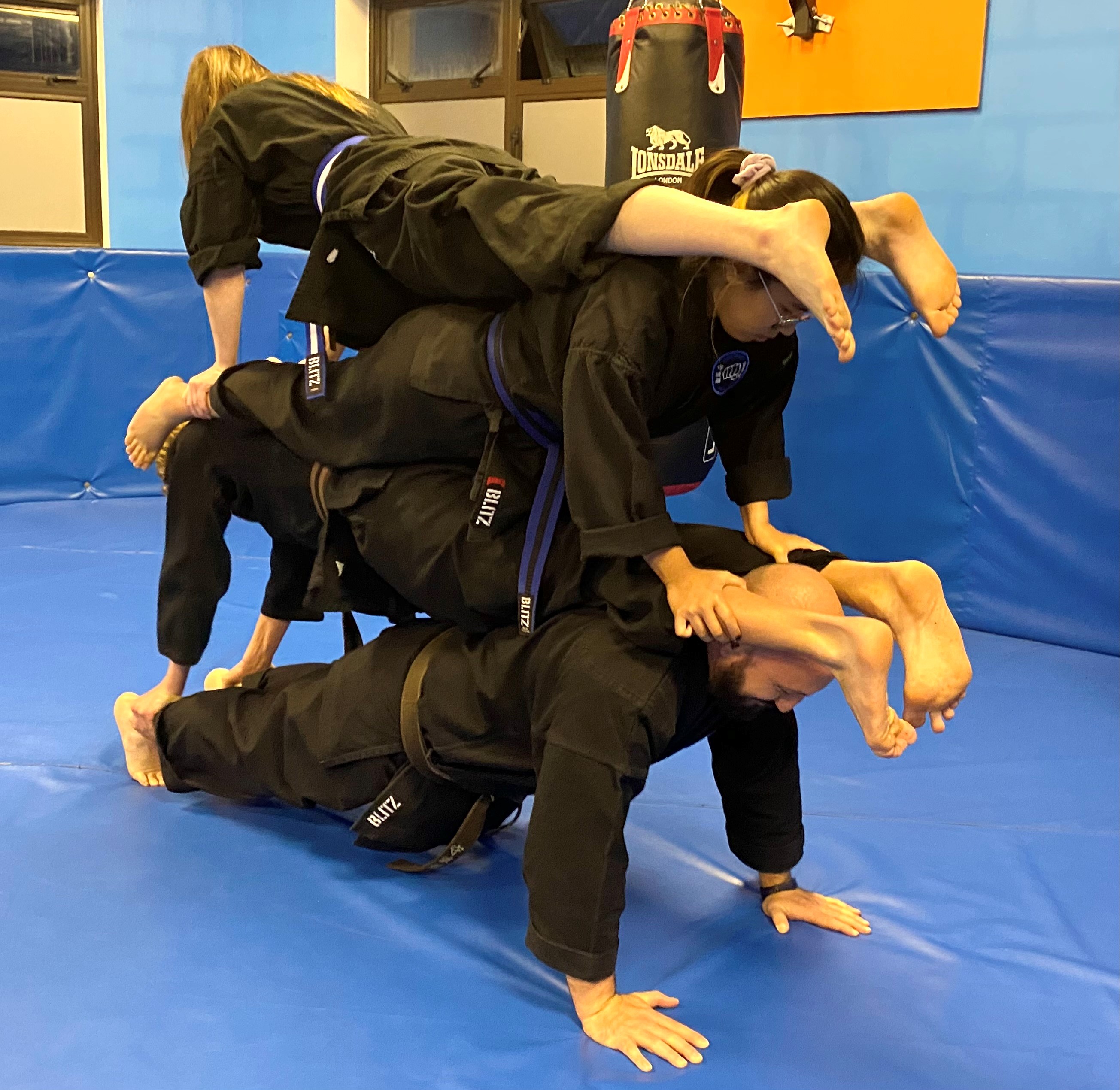
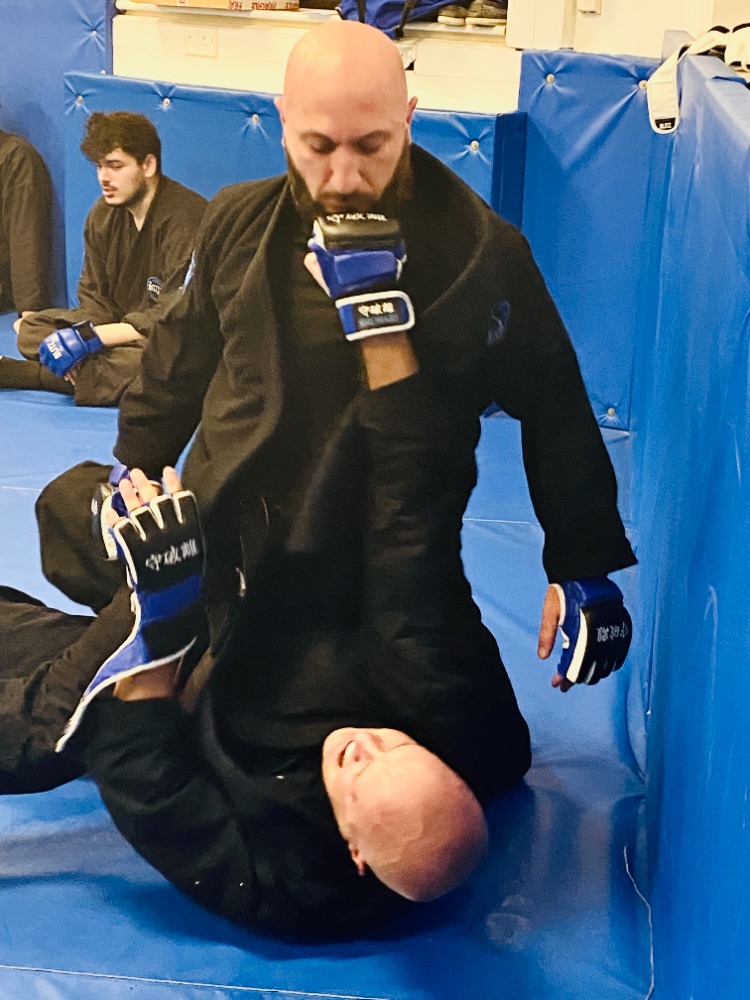
BJJ addresses a different problem. A significant proportion of physical confrontations involve some degree of grappling, grabbing, or falling to the ground. BJJ trains you to be calm and effective in exactly those situations: controlling an opponent, escaping a hold, or neutralising a threat without needing to strike at all. Grappling competency is an important skill in a realistic personal safety toolkit.
Neither discipline is complete on its own for all self-defence scenarios, which is one of the reasons integrated training programmes that draw on multiple disciplines have become increasingly popular. At Shuhari, our classes incorporate techniques from nine disciplines within every session, including karate, BJJ, boxing, wrestling, and more, so students develop practical skills across all ranges.
The truth is that, one without the other is lacking. If you are a grappler and you have never been hit in your life, it is an issue. If you are a striker and you have never been taken down to the floor before, it is also an issue. Nothing is worse than being shocked by something you have never covered before when it really counts.
Fitness and Physical Benefits
Karate
Karate training improves cardiovascular fitness, coordination, balance, and speed. The combination of sharp technique drills, partner work, and sparring creates a varied and demanding workout. It has an explosive pace, and it develops physical toughness
BJJ
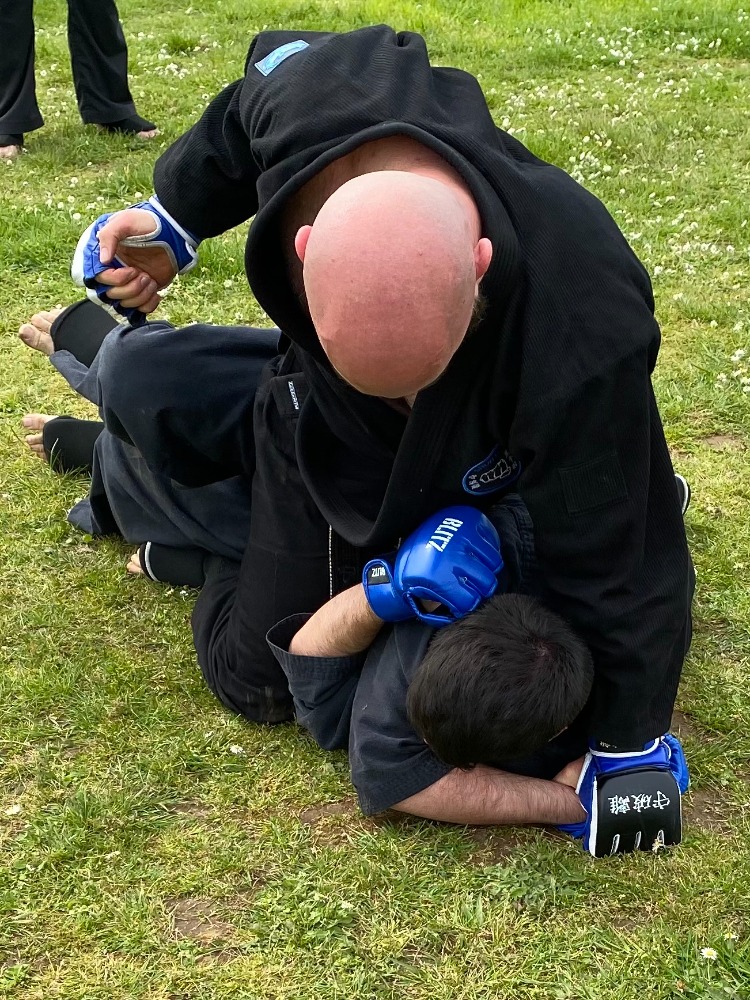
BJJ is one of the most physically demanding martial arts to begin. Live rolling, where you spar with partners from the ground, demands whole-body engagement, hip mobility, core stability, and anaerobic endurance simultaneously. Most beginners are surprised by how exhausting a single round of ground sparring can be. Over months and years of consistent training, the physical transformation tends to be significant.
Both arts improve mental resilience, focus, and the ability to remain composed under pressure. These qualities are transferable far beyond the training mat.
Which Is Better for Beginners?
Karate is generally considered more accessible for those who have no prior martial arts experience. The defined syllabus, and the progression from solo practice to partner work gives beginners a clear path and visible milestones. The lighter contact in most beginner karate classes also means new students can build confidence without absorbing significant impact early on and can build up to semi contact and full contact gradually.
BJJ has a steeper initial learning curve. Live rolling begins relatively early in BJJ training, which can feel overwhelming for those unused to being controlled or placed under physical pressure. However, many practitioners describe this as precisely the reason they stayed: BJJ forces you to confront discomfort, solve problems under pressure, and develop composure in ways that other disciplines sometimes do not demand as quickly.
Both are entirely achievable for beginners with no martial arts background. The deciding factor is often temperament. If you prefer structured progression with clear technique goals, karate is likely the better starting point. If you are drawn to the puzzle-solving aspect of grappling and do not mind being uncomfortable early, BJJ will reward you considerably.
How Long Does It Take to Reach Competence?
Both arts require long-term commitment to reach genuine proficiency, though they measure progress differently.
In karate, coloured belts provide regular markers of progression. A dedicated student training consistently two or three times per week can typically reach intermediate level within a couple of years. Black belt in karate usually represents several years of committed training and reflects technical depth, not just physical ability.
In BJJ, the belt system is slower. A blue belt, the first belt above white, typically takes around two years of consistent training to earn. Black belt in BJJ is considered one of the most respected achievements in martial arts and can take a decade or more. The slower progression is a deliberate reflection of the depth of the art, not a barrier designed to discourage beginners.
Can You Train Both?
Yes, and many practitioners choose to do exactly that. Karate and BJJ complement each other well because they address different ranges of combat. A karateka with ground competency becomes a significantly more capable martial artist. A BJJ practitioner with striking skills becomes harder to manage before a grapple even begins.
At Shuhari, our classes are not structured as separate discipline programmes. Techniques from different martial arts, including karate, BJJ, wrestling, boxing, Muay Thai, and others, are taught within unified adult, teen, and kids classes. This integrated approach means students develop a broad, practical skill set rather than a narrow specialisation, and it removes the logistical challenge of attending multiple separate programmes at different venues.
Who Should Choose Karate?
Karate is likely the better fit if you:
- Prefer a striking-based approach and enjoy working at distance
- Are looking for a discipline with a strong traditional etiquette framework
- Want to develop impact, speed, aiming, toughness, balance, coordination, and cardiovascular fitness
- Are new to martial arts and want a more gradual introduction to contact
Who Should Choose BJJ?
BJJ is likely the better fit if you:
- Are drawn to problem-solving under pressure and tactical thinking
- Want to develop ground-based self-defence capability
- Do not mind a steep learning curve in exchange for deep technical skill
- Want to learn how to use the concept of leverage
- Are interested in competitive grappling or submission wrestling
Frequently Asked Questions
Is karate or BJJ better for self-defence?
Both have genuine self-defence applications but address different scenarios. Karate focuses on striking and distance management; BJJ addresses ground situations and physical control. A well-rounded self-defence skill set benefits from exposure to both, which is why many integrated programmes teach techniques from both disciplines together.
Which is harder: karate or BJJ?
BJJ has a steeper initial learning curve due to early live rolling and the complexity of ground positions. Karate is generally considered more accessible for complete beginners. Both become progressively demanding as you advance, though in different ways.
Can a complete beginner start karate or BJJ?
Yes. Both disciplines welcome complete beginners, and no prior martial arts experience is necessary. At Shuhari, our classes across Berkshire start from absolute beginner level and progress at a pace that suits each individual.
Is BJJ good for fitness?
BJJ is extremely demanding physically. Regular training builds functional strength, core stability, cardiovascular endurance, and flexibility. Most beginners find it more physically challenging than they expected, particularly in the early months of training.
Do I have to choose between striking and grappling?
Not necessarily. Many martial artists train both, and they complement each other well. At Shuhari Self Defence, classes incorporate techniques from striking and grappling simultaneously without needing to split your training across multiple venues.
Train Both at Shuhari Self Defence
If the choice between striking and grappling feels difficult, there is a practical solution: train at a club that covers both. At Shuhari Self Defence, our classes draw on techniques from karate, BJJ, boxing, wrestling, Muay Thai, Krav Maga, Kung Fu, Judo, and Kickboxing within every session. You do not need to pick a single discipline before you begin.
Founded in 2010 by Olgun Tiltay, Shuhari operates across six locations in Berkshire: Slough, Maidenhead, Bracknell, Cippenham, Burnham, and Langley. Our 23 instructors bring genuine expertise across disciplines, and our beginners are always welcome regardless of fitness level or previous experience. First class is free.
Visit shuhari.com or call 07739 464 005 to book your trial.