





Martial Arts Discipline: How Training Teaches Self-Control and Focus to Improve Your Life Overall
Ask most people why they start martial arts and they'll mention fitness or self-defence. Ask them a year later what keeps them coming back, and the answer often shifts. Discipline is one of these benefits that come later as a part of the journey. A word that might have almost negative connotations in the mind of the beginner, in time turns into a way of living your life which brings freedom.
Discipline is one of those words that gets thrown around freely. It is not just about willpower or forcing yourself through something unpleasant. It is about developing an internal framework, the mental strength, the ability to direct your attention and follow through on commitments with purpose, so you are not controlled by your impulses.
At Shuhari Self Defence, we have been watching this transformation happen for over 16 years. Students arrive as beginners who see physical exercise as a chore or a price to pay to stay healthy. And over time understand that discipline gives them control over their life and sets them free. The mat is where the work happens, but the results show up everywhere else in life.
The paradoxical nature of freedom reveals that doing whatever you want in the moment feels like freedom, but it leads to stress, regret and missed opportunities later. Discipline is choosing what you want most over choosing what you want now.
What Martial Arts Actually Means by "Discipline"
Discipline in martial arts is the consistent, self-driven practice of controlling one's mind, body, and emotions.
In traditional martial arts, the Japanese concept behind the name Shuhari captures something important. Shu means to follow the rules. Ha means to break from convention. Ri means transcendence, internalising principles so deeply that they become instinct. Discipline, in this framework, is not just blind obedience. It is a graduated journey from following external structure to developing genuine internal authority. Every session reinforces this. You arrive, bow in, and leave your outside world at the door. The dojo sets the terms. You listen. You repeat. You fail. You correct and you try again.
This consistent practice of subordinating impulse to intention is, quite literally, the neurological training ground for self-control.
The Neuroscience Behind Martial Arts and Self-Regulation
Research into self-regulation consistently shows that it functions like a muscle, it strengthens with use and weakens with neglect. Martial arts training offers one of the most systematic forms of that exercise available.
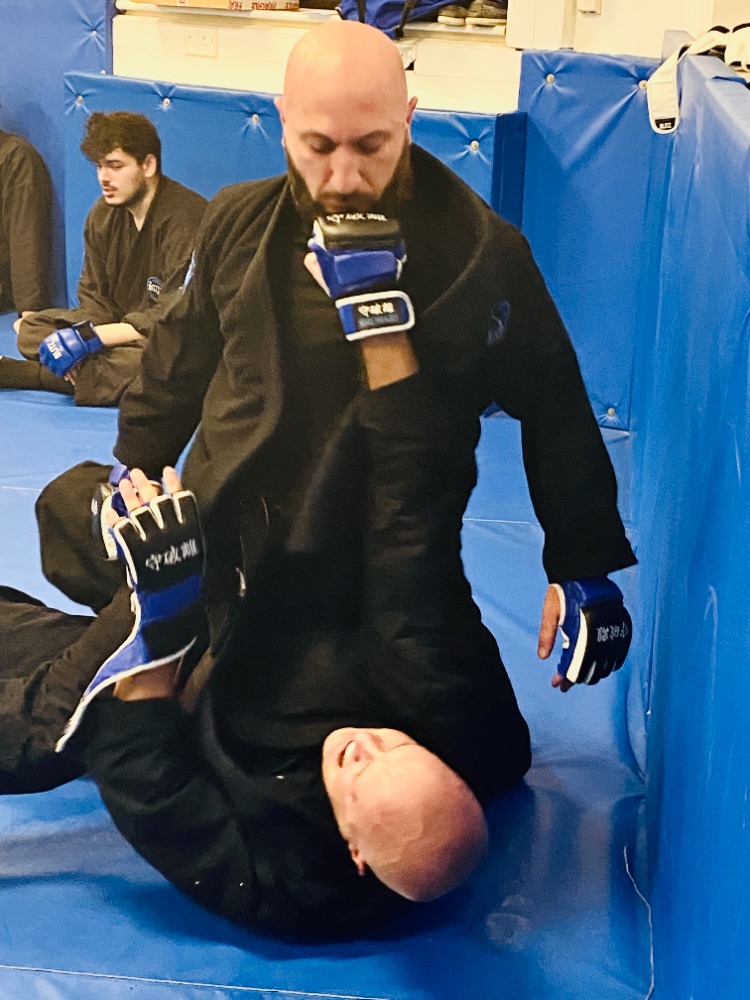
Consider what happens in a single class. You are asked to hold a stance when your legs are burning. You are told to listen to corrections rather than react defensively. You practise a technique dozens of times, even when frustration creeps in. You spar with a partner and learn to manage the adrenaline response to think clearly under physical and emotional pressure rather than reacting on instinct alone.
This is active, structured practice in the very skills that psychologists associate with life outcomes: emotional regulation, delayed gratification, sustained attention, and impulse control. Unlike sitting in a classroom and being told to focus, martial arts training requires you to demonstrate it, in real time, with immediate feedback.
Focus: Training the Mind to Stay Present
One of the benefits of training is improved ability to concentrate, not just during training, but in daily life.
The mechanism is straightforward. Martial arts demands a quality of attention that is genuinely hard to sustain elsewhere: total present-moment focus. When you are sparring in karate or rolling in Brazilian Jiu-Jitsu, your mind cannot wander without immediate consequence. Miss your cue, and the technique falls apart. Drop your guard mentally, and you will know about it.
Over time, this trains what psychologists call directed attention, the capacity to consciously choose where your mind goes and hold it there. Students often find that after several years of regular training, tasks that previously felt tedious or difficult to sustain, become more manageable. The mental muscle has been exercised.
For children and teenagers in particular, this benefit is increasingly significant. In an environment saturated with rapid-fire digital stimulation designed to compete for attention, the structured, screen-free focus demanded by the dojo offers a genuine counterbalance.
Self-Control Beyond the Mat
Discipline and self-control developed through martial arts does not stay in the training hall.
Emotional Regulation
Controlled sparring whether in Boxing, Kickboxing, or Judo, teaches you to manage heightened emotional states in real time. Anger, frustration, competitive pressure: all of these arise naturally in training, and martial arts gives you a structured environment to work through them rather than suppress them. Students learn to breathe through adrenaline, to reset after a mistake, and to stay measured when the pressure is on.
These are the same skills that determine how someone handles a difficult conversation at work, a tense moment with a family member, or an unexpected setback. They are learned behaviours, and they transfer.
Consistency and Follow-Through
Grading systems and belt progression create a structure uniquely suited to building the habit of committing time after time. Progress in martial arts is non-linear and often invisible week to week, which means students must develop genuine patience and faith in the process. This is the opposite of the instant-reward loops that dominate so much of modern life, and it teaches something invaluable: that meaningful achievement requires sustained effort over time, regardless of how you feel on a given day.
Respect and Awareness of Others
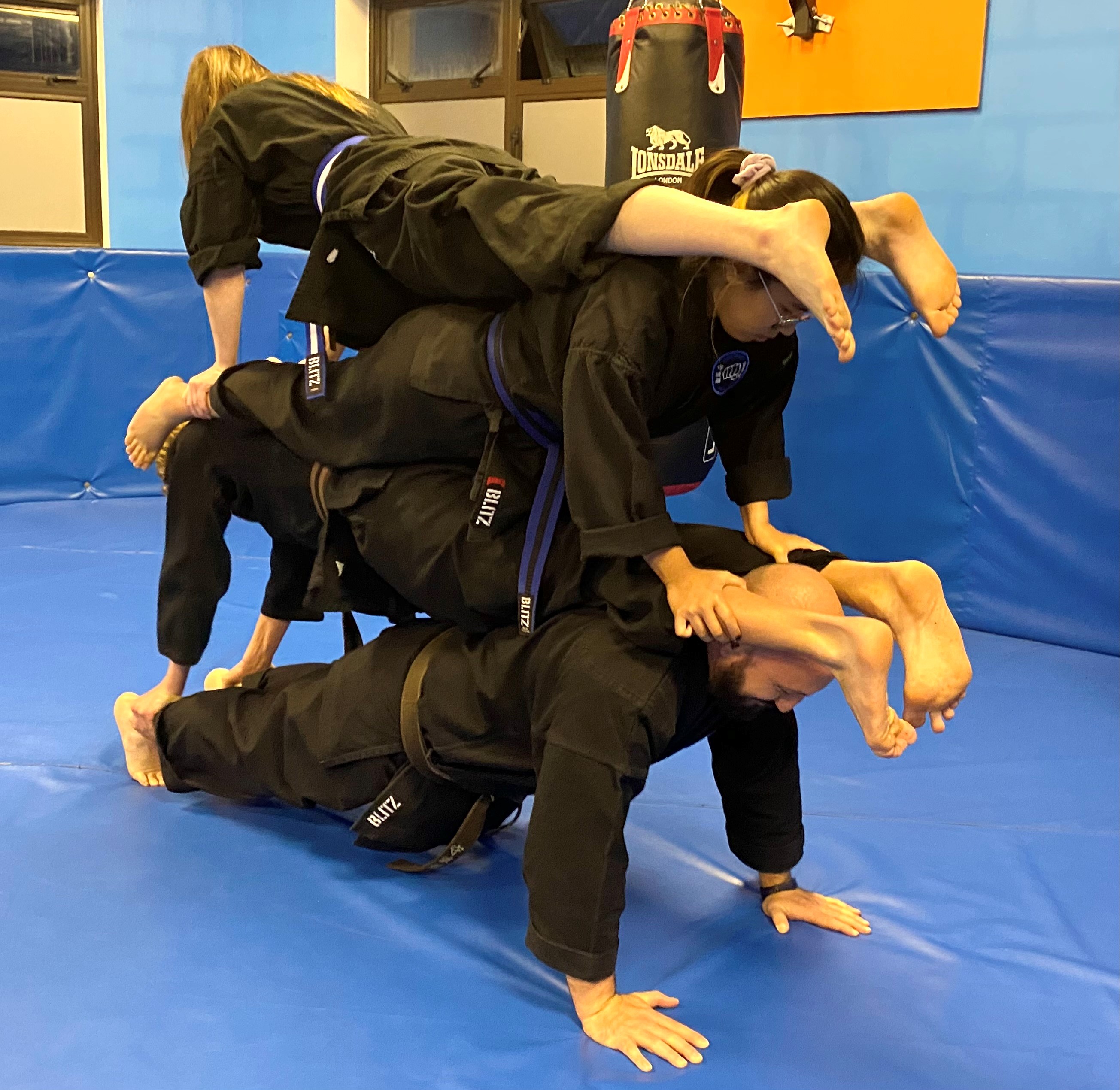
Every class begins and ends with a bow. Students address instructors formally. Seniors help juniors. This is not a ceremony for its own sake, it is intentional cultivation of social awareness and the discipline to override ego. Students who might arrive with competitive or aggressive tendencies learn, through repetition and culture, to hold themselves with greater humility and consideration.
Why Structure Matters: The Role of the Instructor
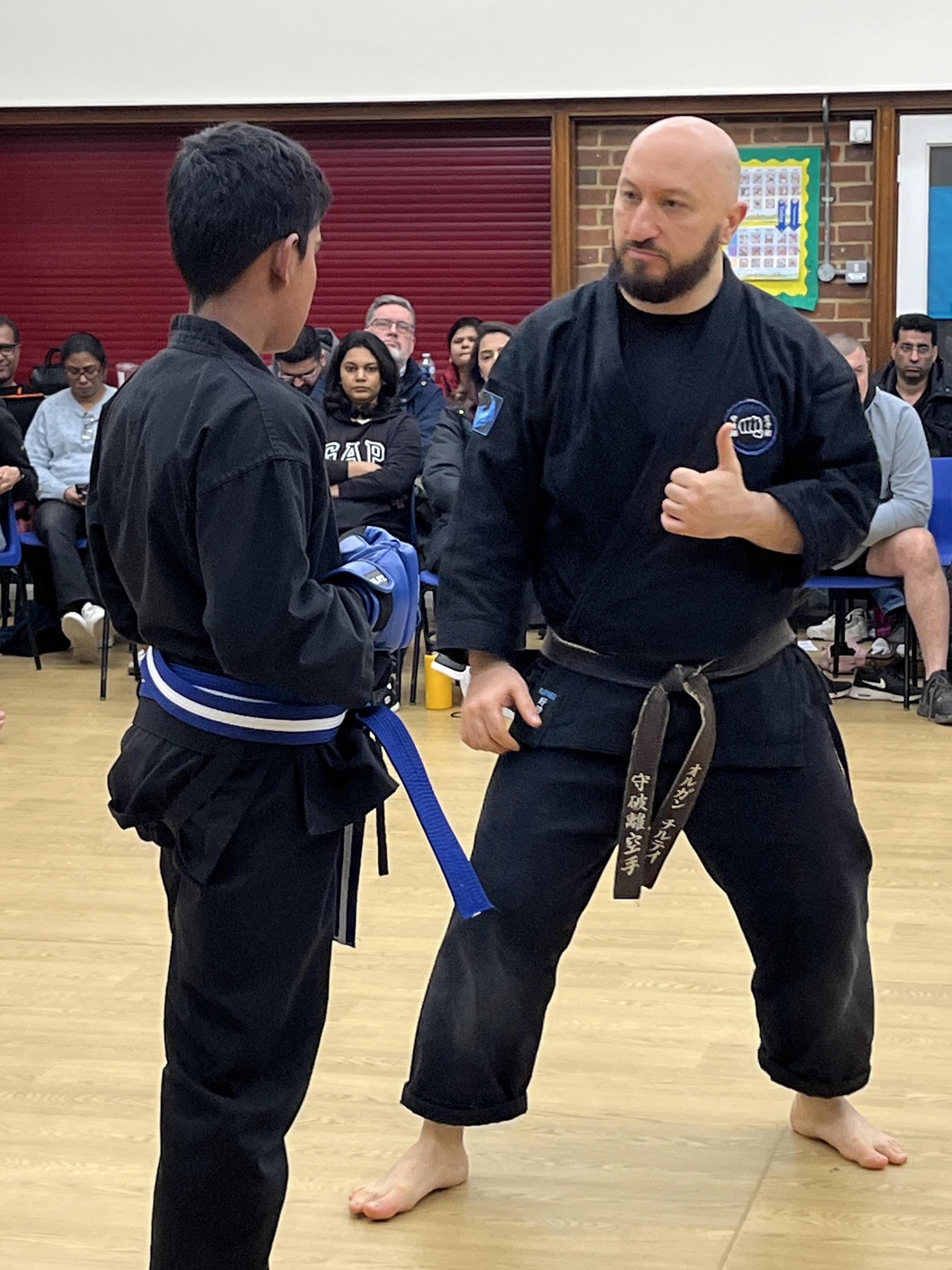
Self-discipline does not typically arise in isolation. It is built through a relationship with a teacher who sets expectations clearly, notices when you are coasting, and holds you to a higher standard than you might hold yourself.
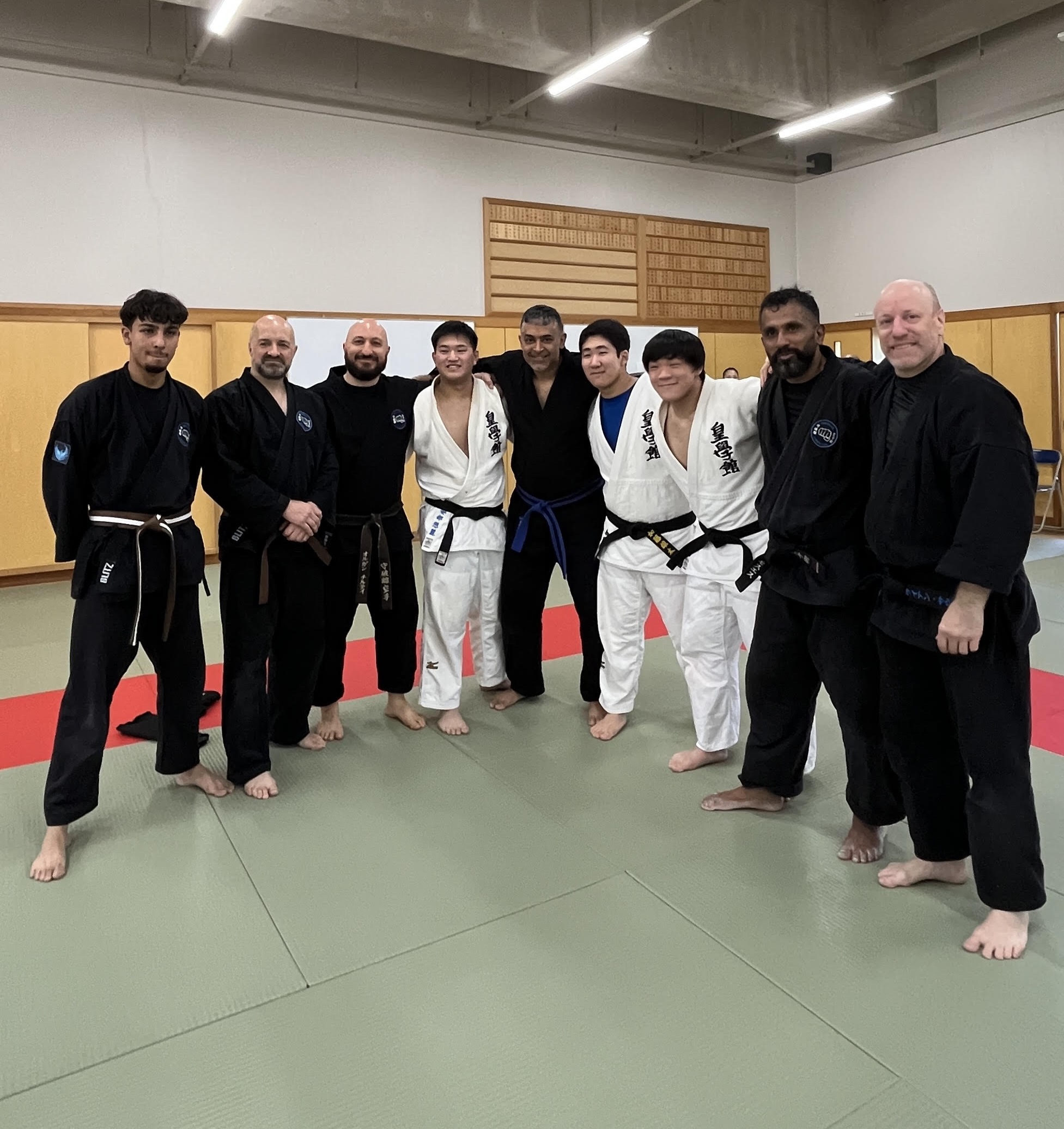
At Shuhari, our team of 23 experienced instructors teach techniques from Karate, Boxing, Wrestling, Krav Maga, Kung Fu, Judo, Brazilian Jiu-Jitsu, Kickboxing, and Muay Thai. The breadth of knowledge matters, but so does the culture of the organisation. An instructor who combines technical authority with genuine investment in a student's development creates exactly the conditions under which self-discipline flourishes.
The teacher-student relationship in traditional martial arts is one of the oldest frameworks for mentorship that exists. It works because it is built on earned trust, clear standards, and consistent accountability.
The Impact on Children and Teenagers
For young people, the benefits of martial arts discipline are particularly profound and particularly timely.
Children who struggle with impulse control, frustration tolerance, or maintaining focus often respond remarkably well to the structured environment of a martial arts class. The reasons are practical: the rules are clear, the expectations are consistent, and progress is visible. There is no ambiguity about what is expected or what it means to improve.
Teenagers benefit in different ways. Adolescence is a period of significant neurological development, particularly in the prefrontal cortex, the part of the brain most associated with planning, decision-making, and impulse control. Martial arts training during these years actively engages and strengthens exactly this system, providing a meaningful counter to the risk-seeking, present-biased tendencies that are neurologically normal in adolescence but can cause significant problems without healthy outlets.
Beyond neuroscience, teenagers who train develop something harder to quantify but equally important: a sense of competence. They discover they can do hard things, that sustained effort produces real results, and that they are capable of conducting themselves with maturity and respect. These realisations tend to ripple outward into school, friendships, and family relationships.
Frequently Asked Questions
Does martial arts really improve discipline, or is it just for people who already have it?
It is genuinely for everyone, regardless of starting point. The structure of martial arts training builds discipline through practice, it does not select for people who already possess it. Many students who arrive describing themselves as unfocused or inconsistent find the environment transformative precisely because the expectations are external and consistent at first, and gradually become internalised.
How long before I notice these benefits in everyday life?
Most students notice subtle shifts within the first year, improved patience, better ability to concentrate, a greater sense of calm under pressure. Deeper changes, such as consistent emotional regulation and long-term follow-through, tend to emerge over years of regular training.
Is this relevant to adults as well as children?
Entirely. Adults often find the structured, goal-oriented nature of martial arts refreshing compared to other fitness pursuits. The psychological benefits, managing stress, sustaining focus, building resilience are as relevant at fifty as they are at ten.
What martial art is best for developing discipline?
All of them, when taught well. Different disciplines emphasise different aspects, Karate and traditional arts focus strongly on formal structure; Brazilian Jiu-Jitsu develops problem-solving and patience under physical pressure; Thai boxing is excellent for emotional regulation under real intensity. At Shuhari, students draw from multiple disciplines, which provides a comprehensive development rather than a narrow one.
Training at Shuhari Self Defence
Shuhari Self Defence has been serving communities across Berkshire since 2010, with classes now running across Slough, Maidenhead, Bracknell, Cippenham, Burnham, and Langley. With over 8,670 students taught across 16 years, and a Trustpilot rating of 4.9 out of 5.
Classes are available for children aged 7 and over, teenagers, and adults at multiple times throughout the week. Whether you are looking to improve your own focus and composure, or hoping to find a positive environment for your child to grow, a trial class is the simplest place to start.
Strong Body. Sharp Mind. Immovable Spirit.
📍 Locations: Slough · Maidenhead · Bracknell · Cippenham · Burnham · Langley
📞 Call: 07739 464005
🌐 Please check our timetable here