





Karate vs Taekwondo: What's the Difference?
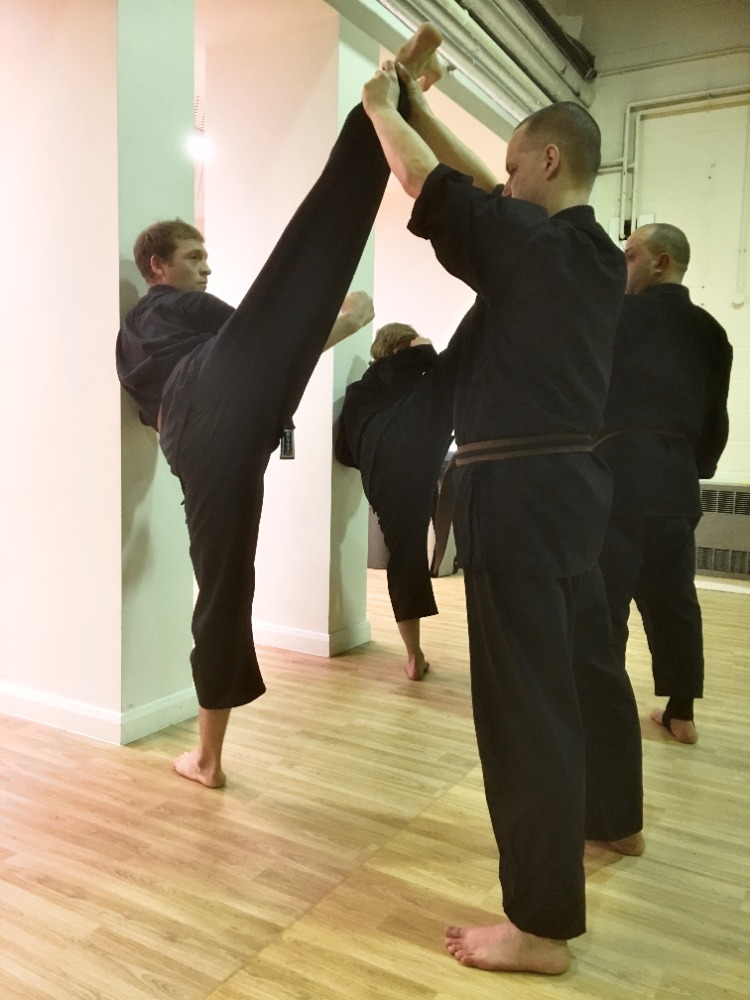
Two of the world's most widely practised martial arts, Karate and Taekwondo are often mentioned in the same breath and just as often confused with one another. Both are striking disciplines with deep cultural roots, both build fitness and self-confidence, and both are taught to children and adults worldwide. Yet the two arts are distinct in their philosophy, technique, and purpose.
If you're searching for martial arts classes in Berkshire and trying to decide which discipline might suit you or your child, this guide will help you.
Origins: Where Did Each Art Come From?
Karate developed in Okinawa, Japan, drawing heavily from indigenous Okinawan fighting traditions and Chinese martial arts brought to the island through trade. During the early 20th century it spread to mainland Japan, where it was refined and systematised. The word itself translates as "empty hand" — a reference to not needing weapons to defend yourself because you become a weapon yourself through rigorous training.
Taekwondo is Korean in origin. It emerged in the mid-20th century, consolidating older Korean fighting traditions such as Taekkyeon and Subak and drawing some influence from Karate during Japan's occupation of Korea. Taekwondo was formalised as a national sport and martial art in the 1950s and became an Olympic discipline in 2000. It means the way of the foot and fist.
Both traditions carry rich histories, though their cultural DNA and developmental paths are quite different.
Purpose: Sport vs Self-Defence
Taekwondo is, nowadays, a sport-oriented martial art. It has competitive sparring under strict rules, and the Olympic format places enormous emphasis on head-height and jumping kicks. Points are scored for precision and athleticism. This sporting focus makes Taekwondo excellent for competitive athletes, and its spectacular kicking techniques are genuinely impressive — but the emphasis on scoring points within a ruleset can limit its practical self-defence application.
Karate, depending on the style, can take a broader approach. Traditional Karate systems — including Shotokan, Goju-Ryu, Wado-ryu, Shito-Ryu and Kyokushinkai — have built in self-defence applications as much as sporting competition. They study techniques that include vertical grappling, throws, and close-range strikes alongside the punches and kicks typically seen in sparring.
Techniques: Hands vs Feet
Both disciplines are striking arts, but they differ markedly in how they balance upper and lower body techniques.
Taekwondo is leg-dominant. Approximately 70–80% of scoring techniques in competition are kicks. Practitioners develop extraordinary flexibility, balance, and kicking power, executing spinning heel kicks, axe kicks, and jumping roundhouses with remarkable fluency. Hand techniques exist within the system but are less emphasised and, in Olympic competition, cannot score points to the head.
Karate strikes a more even balance. Punches, open-hand strikes, elbow techniques are trained alongside kicks, making it a more well-rounded striking system for self-defence scenarios.
Taekwondo practitioners keep their hands low because punches to the face are often disallowed in competition, but karate guard is higher because head level punches are allowed.
Training Methods and Structure
In both disciplines, students progress through a coloured belt ranking system, working from white belt through to black belt and beyond. Belt gradings provide structure, measurable milestones, and motivation.
Karate training typically includes:
- Kihon — basic technique drills practised solo or in lines
- Kata — sequences of movements performed against imaginary opponents, preserving traditional techniques
- Kumite — controlled sparring, ranging from structured one-step drills to free sparring
- Pad work
Taekwondo training similarly includes:
- Poomsae — the equivalent of kata, known as forms or patterns
- Kyorugi — free sparring under competition rules
- Pad work and kicking drills — a significant feature of most Taekwondo sessions
Both arts develop physical fitness, coordination, and mental focus. The choice between them is often less about which is "better" and more about which emphasis resonates with you.
Physical Benefits: What Will You Actually Gain?
Both martial arts deliver meaningful physical improvements, but they target slightly different attributes.
Taekwondo particularly develops:
- Speed
- Flexibility, especially in the hips and hamstrings
- Cardiovascular fitness through dynamic, fast-paced combinations
- Balance and proprioception (body awareness)
Karate tends to develop:
- Full-body strength and core stability
- Coordination between upper and lower body
- Self defence emphasis
- Toughness and physical conditioning through impact training
For children, both arts build confidence, concentration, and resilience — qualities that transfer directly into school and social life.
Self-Defence: Which Is More Practical?
For parents researching martial arts for self-protection purposes, this question matters.
Taekwondo's high-line kicks are powerful weapons in open space, but they require significant flexibility and are difficult to execute in confined environments or against an attacker who closes distance quickly. The sport-specific focus of most Taekwondo curricula means that some self-defence fundamentals — breaking grabs, defending against pushes, managing an ambush, being grabbed, limb control — may receive limited attention.
Karate, particularly when taught in a pragmatic environment, tends to cover a wider range of self-defence scenarios. Its techniques function at multiple ranges — close-quarters grappling and elbow & knee range, punching distance, kicking distance.
That said, the quality of instruction matters enormously regardless of which art you choose. A well-taught Taekwondo class will produce confident, capable students; a poorly taught Karate class will not.
Which Is Better for Children?
Both disciplines are genuinely excellent for children. The structure, respect, and progression of the belt system suit young learners well.
Taekwondo's dynamic kicking is often an immediate hit with energetic children who enjoy the acrobatic side of training. Karate's broader emphasis on integration of striking, blocking, vertical grappling tends to produce very well-rounded young martial artists.
The most important factor is usually the instructor and the environment rather than the specific style. A class where children feel safe, challenged, and respected will benefit them regardless of the art being taught.
Competitions and Grading
Both arts offer structured competition pathways. Taekwondo has the advantage of Olympic recognition, giving ambitious young athletes a clear competitive ladder to aspire to.
Local, regional, and national competitions are available in both disciplines across the UK, and many schools and clubs support students who wish to compete without making it compulsory for those who prefer recreational or self-defence-focused training.
Do You Have to Choose Just One?
Many dedicated martial artists train in multiple disciplines over their lifetime, finding that each art illuminates the others. Karate practitioners often find that cross-training in Kickboxing or Muay Thai sharpens their striking, whilst Judo or BJJ completes the picture at ground range. Taekwondo athletes may supplement their training with wrestling or boxing to address the gaps that a purely kicking-focused art leaves open.
At Shuhari Self Defence, with classes across Slough, Maidenhead, Bracknell, Cippenham, Burnham, and Langley, students train in a genuinely multi-disciplinary environment. Our curriculum draws from nine martial arts, including Karate, Boxing, Kickboxing, Muay Thai, Judo, Brazilian Jiu Jitsu, Krav Maga, Kung Fu, and Wrestling. Rather than restricting students to a single tradition, we give them a toolkit; practical, well-rounded, and grounded in over 16 years of teaching experience.
Frequently Asked Questions
Is Karate or Taekwondo better for self-defence?
Karate generally offers a more practical self-defence foundation due to its balanced use of elbow, knee, hand and foot techniques across multiple ranges. That said, quality of instruction makes the biggest difference in any art.
Is Karate harder to learn than Taekwondo?
Neither is objectively harder. Taekwondo's kicking demands significant flexibility and may take longer to develop technically. Karate's various techniques can take longer to master. Both reward consistent practice.
Can my child do these arts if they're not flexible?
Yes. Flexibility improves naturally through training over time.
At what age can children start martial arts?
At Shuhari Self Defence, we welcome children from age seven. At this stage, children have the attention span and coordination to benefit meaningfully from structured martial arts training.
The Bottom Line
Karate and Taekwondo are both rewarding martial arts; they simply offer different things. Taekwondo is an outstanding athletic sport with spectacular technique and strong competitive pathways. Karate is a more balanced system with deeper roots in self-defence.
If you're looking for martial arts training in Berkshire that draws the best from multiple traditions — rather than limiting you to a single style — Shuhari Self Defence offers exactly that. With over 8,670 students taught since 2010, 23 experienced instructors, and classes running seven days a week across the county, there's a session to suit every schedule and every goal.
Your first class is always a trial. Come and see for yourself.
📍 Locations: Slough · Maidenhead · Bracknell · Cippenham · Burnham · Langley
📞 Call: 07739 464005
🌐 Check our timetable