




How to Choose the Right Martial Arts Club: 10 Questions Everyone Should Ask Before Joining
You just watched a UFC fight or Jean-Claude Van Damme's Kickboxer and decided that it is finally time to learn martial arts. You put the crisps packet down, made a power move, grabbed your phone and searched what's around your area and saw that there are many options.
Now what?
The right club builds confidence, physical & mental toughness, practical self-defence skills, lifelong friendships and helps you become the legend you were born to be. The wrong club can waste your time, might put you off training entirely, or worse, it will give you false confidence without giving you the skill.
In this guide, Olgun Tiltay, founder of Shuhari Self Defence explains 10 questions to ask before you enrol to any martial arts club.
Remember, the style matters, but the club matters a lot. The quality of the club, the experience, skill and character of the instructors and the culture of the dojo is paramount.
Q1: What is my martial arts goal?
Before you visit any club, ask the first question to yourself: Why am I training?
Practical self-defence skills?
You are in a boring meeting, day dreaming of a scenario where someone tries to mug you, and you defend yourself in such a spectacular way that there are no more muggings in that postcode ever and bards sing songs dedicated to your bravery for generations.
As the mugger falls in slow motion to the floor completely incapacitated, the crowd cheers for their new local hero. You take selfies with your new fans and the ambulance crew that came to take away your unfortunate attacker on a stretcher.
Competition training?
Mid-life crisis, can't afford the red sports car, so you set yourself a new goal. You want to test yourself in the local jiu jitsu tournament. As a father of three, you want to see if you can choke out the other dads in your neighbourhood and establish your dominance.
A social hobby?
You want to meet like-minded people and punch them in the face and become close friends.
To get in shape?
Summer is coming, and you want to look presentable in your holiday pics and you want to try to out train a bad diet.
Discipline?
You are stoic in your mind and in conversations but not yet in action. You want to bridge this gap and you know deep inside that the martial way is the perfect start.
Confidence?
Life is hard and you want to feel self-assured and assertive in social encounters.
You need to choose the club well, based on your reason, because not every martial arts club has the same focus.
If you are 52 and just want to get in shape, then getting choked by unemployed twenty-year-old super athletes on performance enhancing drugs who train three times a day, destroying your spine, knees and fingers daily might not be the best option for you.
If you live in a really dodgy area, and want to learn how to survive real life physical violence, then practicing solo or doing point based non-contact sparring might not be suitable for your needs.
You wanted a new hobby, and have a very important job interview coming up next week, so getting elbowed in the head in a Muay Thai fight camp with "interesting" music on the background might not be the way to go.
So, the first question is the most important. Why do you want to train?
Q2: Who is the instructor?
An experienced instructor, who is skilled as a martial artist and as a coach, who can inspire you, will matter more than fancy gym equipment in a shiny venue.
- How long has the instructor been teaching?
- Who taught them?
- Does the instructor seek knowledge, continue to learn and train actively?
- Do they teach more for the income or the outcome?
- Is the instructor approachable and patient?
- Does the instructor truly love teaching?
- Can they articulate the concepts and techniques in a simple way?
It is a good idea to look into who will be teaching you, because this will have the biggest impact on your journey.
Q3: What Is the Instructor-to-Student Ratio?
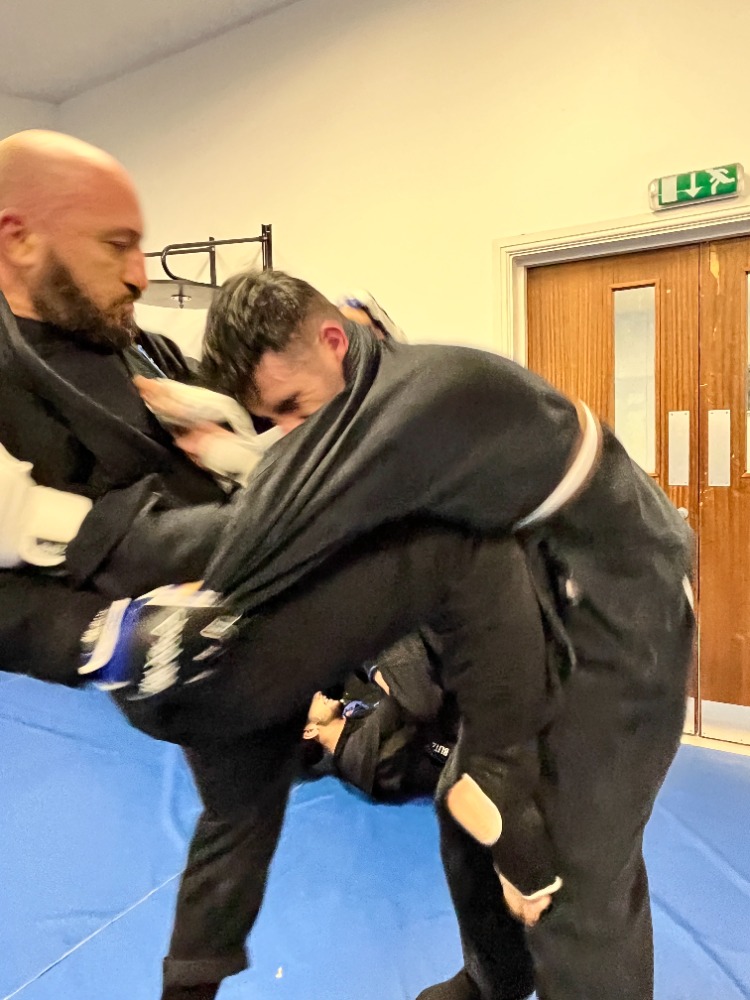
A good club has multiple coaches monitoring the class. In order to correct technique, supervise sparring safety and pay attention the development of students individually, a ratio of one instructor (or assistant) for every 8-10 students is advisable. So, if you see one overstretched coach trying to teach 30 kids in a room, you might want to look around for more options.
Q4: How long does it take to get to black belt?
Although time is not the only marker, it is an important one.
If the answer is around a decade, and the norm is training multiple days a week, then training in a club at this calibre should give some solid results for the student.
If the answer is 2-3 years, then you might draw your own conclusions on the value of that for you.
A serious clubs grading system is meritocratic and rewards clear technical skill, not just attendance. Belts are earned when the student is truly ready, never handed out. You can also ask them what the grading criteria is for each level is.
Q5: What age do you start from?
If a club starts from 3-4 years of age, then you can expect a watered down, creche like, games and activities-based tuition. Normally classes for this age group are available due to financial pressure on a club. Probably the cost of running the club is too high, and they offer this age bracket to survive.
But the truth is that you shouldn't teach a toddler how to choke someone out or how to do an elbow strike to the head, for developmental reasons. The student has to have the mental maturity and emotional regulation to know when not to use techniques learned in real life. 6-7 years of age is a better age to start learning martial technique.
Q6: Is the atmosphere in the club beginner friendly?
Just go to a class and watch carefully how the students treat each other during training.
Is it a meat head city, ego rally, injury fest gym, where everyone is trying to prove something at all times and every bout is a death match?
How much ego is in the room?
Do people understand what learning pace is?
Does it have a welcoming feeling?
Are respect and courtesy the norm?
Is it a top end athlete, tournament medal focused, professional fighting-based gym, or is the focus on beginners?
Is the main effort of the club to choose gifted athletic students who are at 80% and make them into champions that represent and make a name for the gym, or is it to take a student who is at 0% and to help them get to a very respectable level?
Q7: Is the style pragmatic?
Is the style, artistic, Olympic, pragmatic?
Is the training based on testing the techniques on resisting training partners.
Is there stress testing of the concepts and techniques?
Practical self-defence never fits neatly into one style. A real-life confrontation might begin standing and suddenly end up the ground for one or both sides, involve punches, kicks, vertical grappling, limb manipulation, clinch, take downs, throws, escapes, control, weapons, multiple opponents.
It is important for the students to gain a complete and adaptable skill set.
Q8: Is the self-defence focus real?
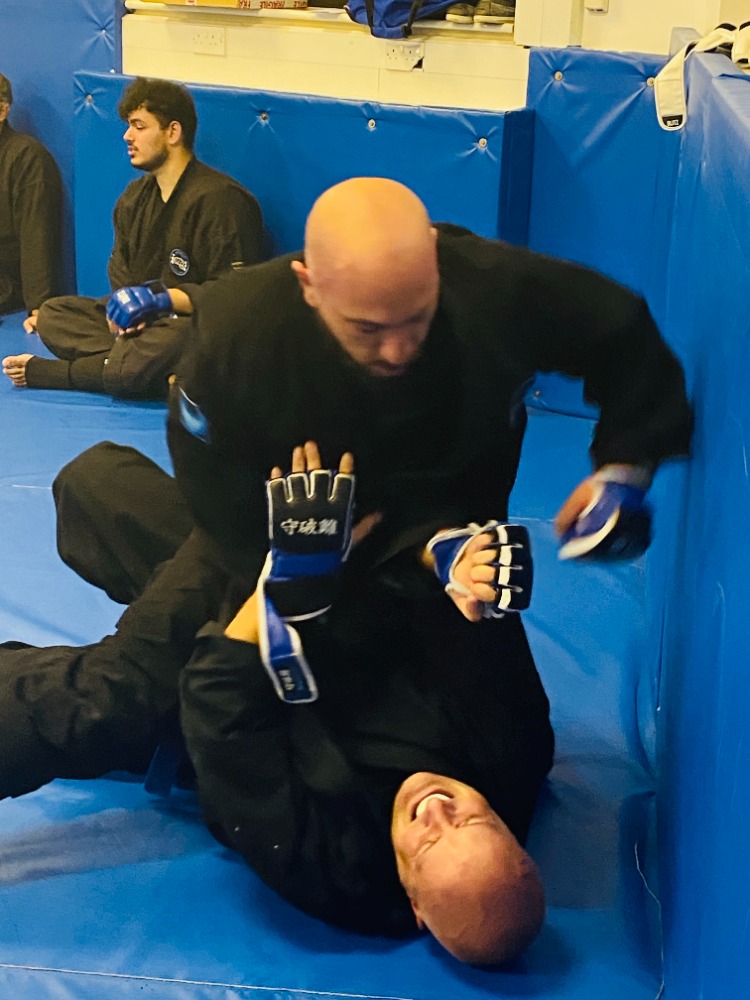
How has the self-defence instructor built the experience for surviving violence?
Generally speaking, good people to learn from are:
- Police officers who have lots of experience in altercations & restraining people
- Door supervisors (bouncers) who have been in hundreds of physically violent situations.
- Military personal/private contractors who have experienced hand to hand combat
- Close protection officers
- Prison officers
- Debt collectors
The best people to learn real life self-defence from are the people who have experienced violence on a regular basis and built their understanding of the subject through real life.
Q9: Where & How much?
In an ideal world, the student will make the effort to travel to the right instructor for knowledge regardless of distance. However, in the real world, proximity matters. When you have work, school, family and personal commitments, it is important to chose a club that you can get to easily, multiple times a week. How much time you spend training matters.
On the subject of cost, you should ask:
- How much is it a month?
- Is there a contract?
- Is there a joining fee?
- How much are the gradings?
- How much is the uniform and sparring kit?
Please keep in mind that the bottom line is, you are not in the grand bazaar in Istanbul, haggling for a carpet.
When you find a good club, you should join them, train with them, spread the word and support them every opportunity, because they deserve it. Generally, what you get from a good martial arts club as a student, exceeds what you pay for it.
Q10: What is the learning curve like?
Are the new students chucked at the deep end? Is it, day one, put the gloves on and fight?
Or are students never tested truly. Because both are equally bad. A good balance for a club is to build the foundation of stances, footwork, techniques, distancing, timing, aiming, fitness, balance, coordination, weight distribution by introducing sparring & rolling gradually, using the correct protective equipment, and at the beginning, match people by size and skill, and supervise.
Bonus question: How Long Have You Been Operating?
Time served matters in martial arts. If a club has survived at least 10-15 years and has weathered all sorts of difficulties, retained students, instructors, and built a great reputation, they must have done something right.
Remember, the best martial arts club is not always the biggest, cheapest or the most famous one.
It is the one that: aligns well with your goals, challenges you in a safe way, supports you individually and keeps you training consistently.
So take your time, visit many clubs, ask questions and trust your instincts.
If you're completely new to training, please read our beginners guide.
You can also learn more about Olgun Tiltay and the instructor team here.
If you are in Slough, Maidenhead, Bracknell, Cippenham, Burnham or Langley area and would like to meet us, please get in touch with us here.