




Is Martial Arts Good for Shy Children? How Training Brings Quiet Kids Out of Their Shell
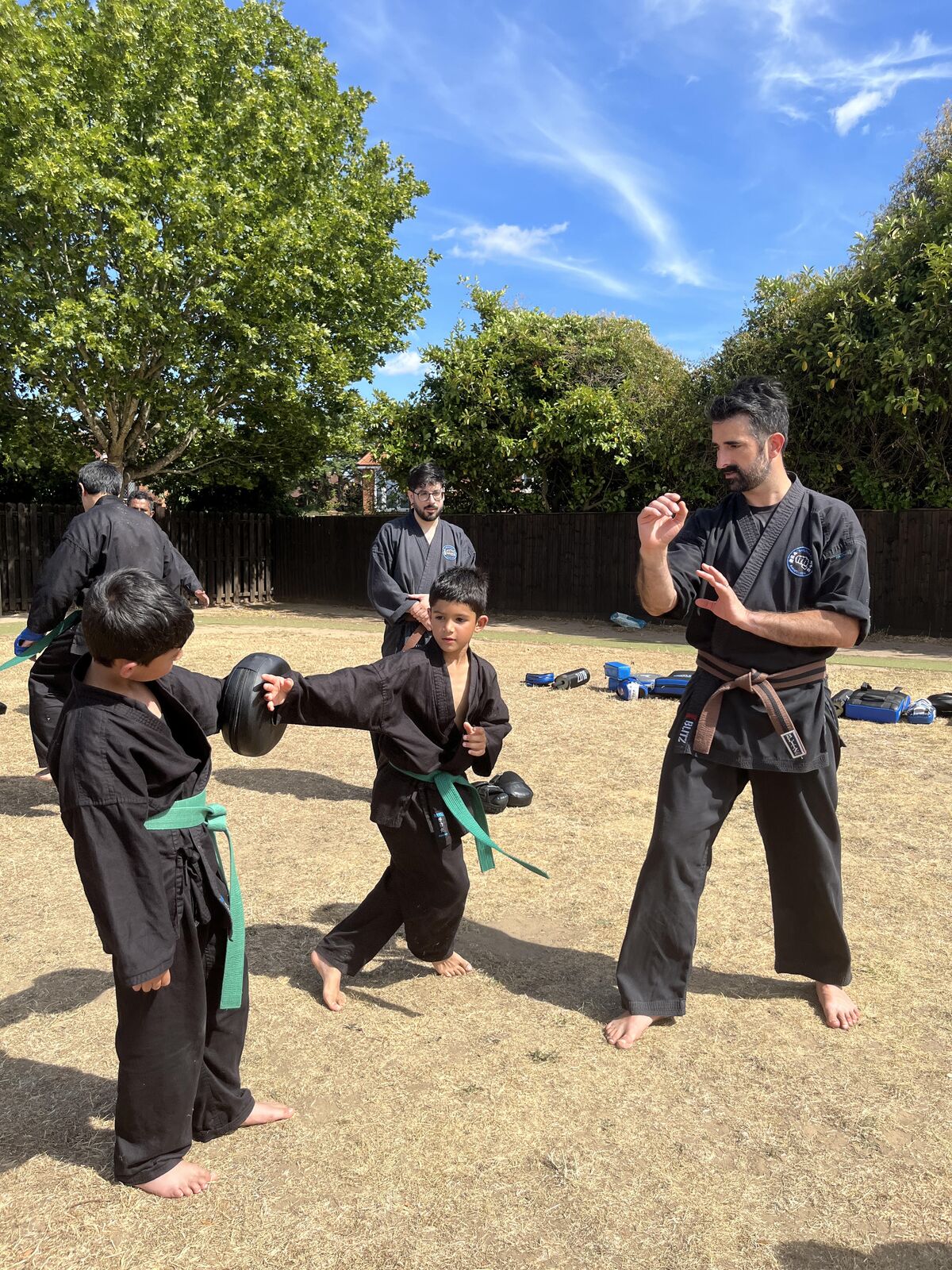
Some children walk into their first martial arts class full of excitement. They cannot wait to put on their uniform, learn how to punch and kick, and make new friends.
Others have a very different experience.
They hide behind their parents. They avoid eye contact. They refuse to participate. Sometimes, simply walking through the door of an unfamiliar environment is a significant challenge.
If you have a shy child, you might wonder whether martial arts is really the right activity for them.
The answer is yes. In fact, shy children can be among those who benefit most from martial arts training, provided they are introduced to it in the right way.
At Shuhari Self Defence, we have been teaching children martial arts since 2010. Over the past 16 years, we have seen countless nervous beginners develop into capable, confident young martial artists.
Some of these children were initially reluctant even to step onto the training mat.
Months later, they were participating enthusiastically, making friends and achieving things their parents never imagined they would attempt.
One of the objectives of martial arts training is to help people become comfortable with themselves, confident in their abilities and capable of facing challenges without being overwhelmed by fear.
Let's explore how that happens.
Why Are Some Children Shy?
Shyness is not necessarily a problem that needs fixing.
Some children are naturally reserved. They prefer observing before participating, take longer to become comfortable around strangers or simply enjoy quieter activities.
There is nothing inherently wrong with that.
However, shyness can become a disadvantage when it prevents children from doing things they would otherwise enjoy.
A child might want to make friends but feel too nervous to approach other children.
They might avoid trying a new sport because they are afraid of making mistakes.
They might know the answer to a question at school but feel uncomfortable raising their hand.
Some children become so accustomed to avoiding unfamiliar situations that their confidence has little opportunity to develop.
This is where a supportive extracurricular activity can make a difference.
Martial arts provide a structured environment in which children can gradually become comfortable with new people, unfamiliar challenges and physical activities.
Importantly, they don't have to overcome all their fears on the first day.
What Happens When a Shy Child Attends Their First Martial Arts Class?
After teaching thousands of students, we have become very familiar with the nervous beginner.
A child arrives with their parents, looks around the training hall and maybe hesitates.
They might hide behind their mother or father.
They might refuse to make eye contact.
They might say they don't want to participate, even though they were enthusiastic about the idea of martial arts at home.
Imagine being seven or eight years old and walking into a room full of unfamiliar people practising punches, kicks, throws and other martial arts techniques.
It can look intimidating.
An experienced instructor understands this and knows that forcing immediate participation is often counterproductive.
Our Approach: No Pressure, Just Watch
At Shuhari, when a particularly nervous child arrives, we often suggest something very simple.
Just watch the class.
There is no obligation to train immediately.
They can sit with their parents, observe the activities and become familiar with the environment.
They see children their own age having fun.
They notice that the instructors are friendly.
They begin to understand what happens during a lesson.
Most importantly, the unfamiliar gradually becomes familiar.
We have seen this situation many times over the past 16 years.
A child arrives for their first session and refuses to participate.
We suggest that they simply observe.
They return for another session, decide to give it a try and discover that they actually enjoy it.
Within a couple of weeks, they begin to feel at home.
After a few months, they are participating confidently, developing their techniques and looking forward to training.
We have had parents tell us that martial arts was the first activity their child had genuinely wanted to continue.
For an instructor, that is an incredibly rewarding outcome.
1. Martial Arts Builds Confidence Through Real Achievement
One of the biggest advantages of martial arts is that confidence develops through genuine progress.
We don't simply tell children that they are capable.
We give them opportunities to discover it for themselves.
Consider a child learning their first martial arts technique.
Initially, they might struggle to coordinate their movements.
Their balance might be poor.
They might forget the sequence or perform the technique incorrectly.
But they practise.
The following week, they improve.
A few weeks later, they can perform something that previously seemed difficult.
That achievement creates a powerful realisation.
"I couldn't do this before. Now I can."
This is the foundation of genuine self-confidence.
A child begins to understand that being unsuccessful at something initially doesn't mean they are incapable of learning it.
They discover that improvement comes from effort, patience and repetition.
And that lesson extends far beyond martial arts.
A child who learns to overcome difficulties in the dojo may become more willing to attempt unfamiliar challenges at school, in other sports or in everyday life.
Confidence isn't something an instructor can simply hand to a student.
It has to be earned through experience.
2. Learning Self-Defence Can Help Children Feel More Secure
There is another important reason martial arts can be particularly valuable for shy children.
Physical confidence can contribute to social confidence.
Some children are uncomfortable around others because they feel physically vulnerable.
They might worry about being pushed around, intimidated or bullied.
They might lack confidence in their ability to stand up for themselves.
Learning practical self-defence can help address some of these concerns.
At Shuhari, children learn techniques drawn from martial arts including Karate, Boxing, Judo, Wrestling, Brazilian Jiu-Jitsu and other systems.
They develop their balance, coordination, strength, speed and ability to respond to physical challenges.
As their abilities improve, they may begin to feel more secure in themselves.
This can influence how they interact with other people.
Over time, we have observed improvements in children's:
- Posture and body language.
- Willingness to make eye contact.
- Ability to communicate with others.
- Confidence when speaking up.
- Willingness to stand their ground.
- General comfort in unfamiliar situations.
Children must learn awareness, avoidance, verbal boundaries and when to seek help from adults.
Nevertheless, knowing that they are developing the ability to protect themselves can provide considerable reassurance.
3. Martial Arts Helps Shy Children Make Friends
For some shy children, making friends can be more difficult than learning martial arts techniques.
Starting a conversation with an unfamiliar child might feel intimidating.
Joining an established friendship group can be uncomfortable.
Martial arts provide a useful solution because social interaction happens naturally through shared activities.
Children don't have to think of something interesting to say to start a conversation.
They already have something in common.
They are learning together.
Working With Training Partners
Many martial arts activities involve working with another student.
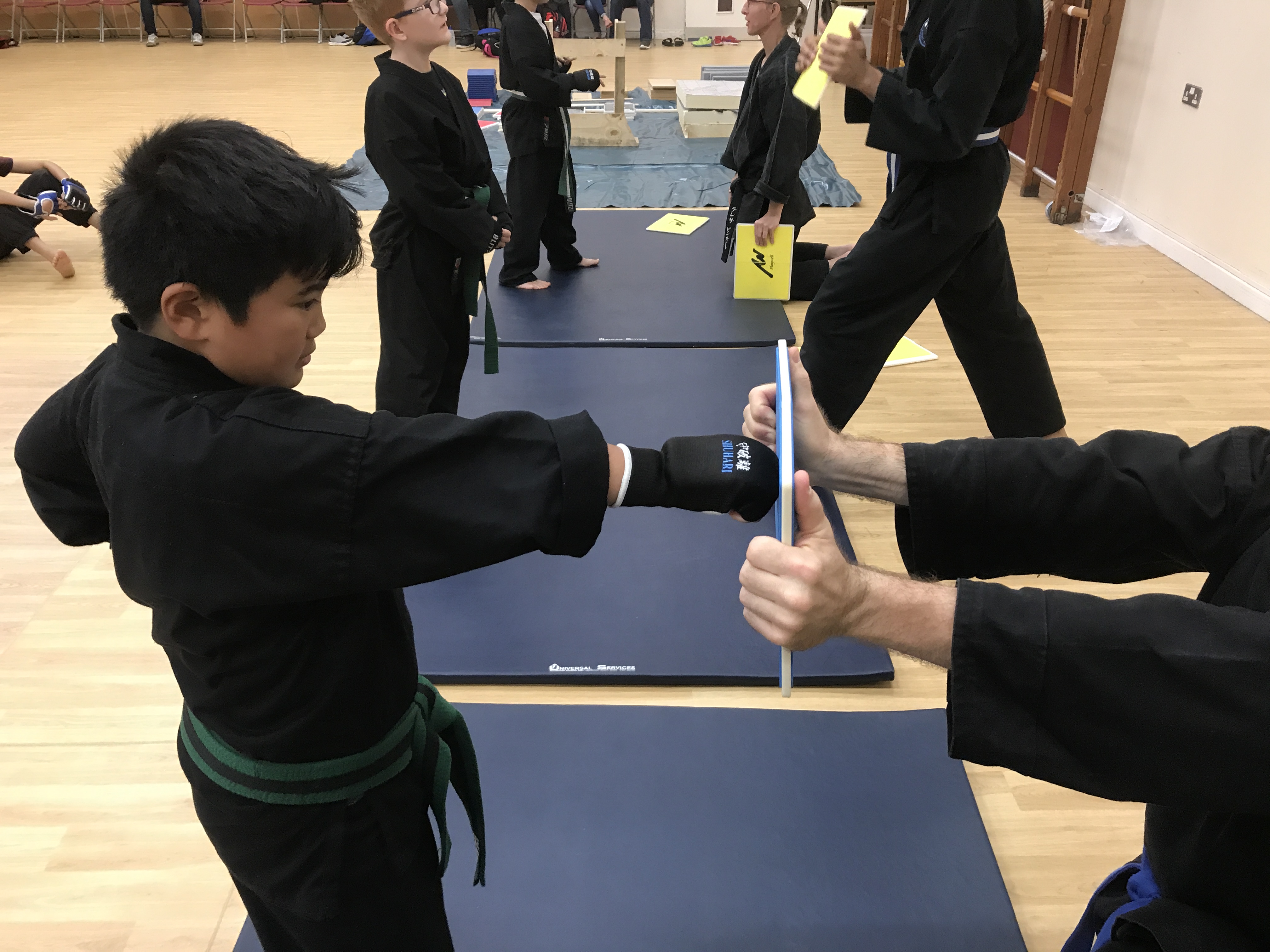
Children practise techniques, hold pads, help each other remember movements and participate in supervised partner exercises.
These activities encourage communication without making conversation the primary objective.
A shy child might initially say very little to their training partner.
But after several sessions, they begin recognising familiar faces.
They become comfortable working with particular students.
Conversations develop naturally.
Friendships begin to form.
The dojo gradually becomes somewhere they feel they belong.
The Importance of Experienced Students
At Shuhari, we often pair particularly shy beginners with friendly, experienced students or student leaders.
This can make a considerable difference.
An experienced student already understands how the class works.
They can demonstrate techniques, offer encouragement and help the beginner feel included.
Instead of feeling surrounded by strangers, the new student has someone looking after them.
For a nervous child, having one friendly face in the room can be enough to make the experience considerably more comfortable.
4. Small Achievements Lead to Bigger Changes
One mistake adults sometimes make is expecting confidence to develop too quickly.
A child who struggles to speak to strangers isn't necessarily going to become comfortable demonstrating techniques in front of an entire class after two lessons.
Confidence needs to develop gradually.
At Shuhari, we believe in encouraging children through manageable challenges and recognising their achievements.
These might include:
- Participating in an activity for the first time.
- Working successfully with a new training partner.
- Remembering a technique without assistance.
- Demonstrating improved coordination.
- Showing perseverance when something is difficult.
- Helping another student.
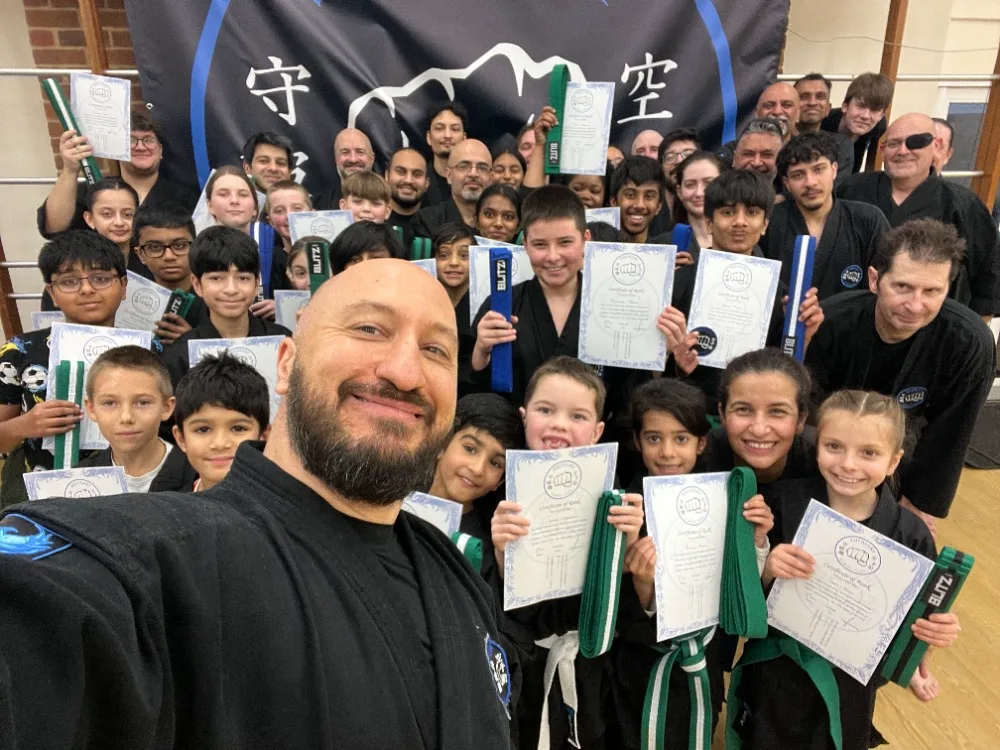
We use praise, best student stickers and achievement certificates to recognise effort, improvement and positive behaviour.
For a naturally confident child, receiving a sticker might seem like a small achievement.
For a shy child who was previously too nervous to participate, it can mean considerably more.
It represents something they have overcome.
However, recognition should be genuine.
Children quickly recognise empty praise.
The objective isn't to reward every movement regardless of effort. It is to help children recognise their own progress and understand why they have earned that recognition.
Over time, these small achievements accumulate.
The child who was initially afraid to join an activity becomes willing to participate.
Then they become comfortable.
Eventually, they begin actively looking forward to the next challenge.
5. Martial Arts Teaches Children to Step Outside Their Comfort Zone
Should shy children be encouraged to do things that push them?
In our opinion, absolutely.
But there is a right way and a wrong way to approach it.
Protecting children from every uncomfortable experience might seem helpful in the short term.
However, children also need opportunities to discover that they can handle situations they initially find difficult.
The key is to introduce challenges gradually.
We believe children should be encouraged to step outside their comfort zones in small, manageable steps, under the guidance of experienced instructors.
Consider the progression of a particularly shy beginner.
Their first achievement might simply be entering the training hall.
Their next achievement might be watching a class without feeling overwhelmed.
Then they might participate in the warm-up.
Later, they practise with another student.
Eventually, they become comfortable demonstrating techniques or taking part in more challenging activities.
Each step builds on the previous one.
This is very different from forcing a frightened child to stand in front of twenty strangers and perform a technique on their first day.
Pushing too hard can reinforce the very anxiety we are trying to help them overcome.
On the other hand, never encouraging them to attempt anything unfamiliar can prevent progress.
Good instruction involves finding the balance between support and challenge.
A child should feel safe enough to try, but challenged enough to grow.
6. Martial Arts Can Turn Quiet Beginners Into Leaders
One of the most rewarding experiences in teaching martial arts is watching students develop over several years.
A child might begin training with very little confidence.
Initially, they need considerable encouragement.
They rely on experienced students to help them understand the exercises.
They are reluctant to speak up or take responsibility.
But as they become more experienced, something interesting can happen.
Their role begins to change.
Instead of being the beginner who needs help, they become the experienced student helping someone else.
They demonstrate techniques.
They assist younger students.
They encourage nervous beginners.
They begin taking responsibility.
This is particularly valuable because leadership doesn't necessarily require an outgoing personality.
Some of the best student leaders are naturally quiet individuals.
They listen carefully, demonstrate patience and lead through their actions.
At Shuhari, we encourage experienced students to support beginners because teaching and helping others develops qualities beyond technical martial arts ability.
It builds responsibility, communication, patience and leadership.
For a child who once struggled to participate, becoming someone another student looks up to can be an enormous achievement.
And importantly, they don't have to stop being naturally quiet to become an effective leader.
7. How Long Does Martial Arts Take to Improve a Shy Child's Confidence?
Parents understandably want to know how quickly they can expect results.
The answer depends on the individual child.
Some children become comfortable with the training environment relatively quickly.
Others need considerably more time.
Based on our experience, meaningful, visible improvements in confidence generally develop over months rather than days or weeks.
During the first few sessions, the priority is helping the child feel comfortable.
After a couple of weeks, some children begin participating more willingly and recognising familiar faces.
As the months pass, they develop friendships, improve their techniques and become more independent.
Parents may begin noticing changes outside the dojo as well.
Perhaps they speak more confidently.
Perhaps they become less upset when they make mistakes.
These are all encouraging signs.
Confidence develops at different speeds, and occasional setbacks are normal.
The important thing is to look at the overall direction of progress rather than expecting dramatic changes after every lesson.
Consistency matters.
8. Will Martial Arts Make a Shy Child Aggressive?
This is a concern we occasionally hear from parents.
If a child learns how to punch, kick and fight, won't that encourage aggression?
Not when martial arts is taught responsibly.
There is a significant difference between aggression and confidence.
Aggression involves using force or intimidation against others.
Confidence involves believing in your ability to handle challenges.
A good martial arts instructor teaches children how to control their physical abilities, not misuse them.
Students learn discipline, respect, restraint and responsibility alongside practical techniques.
They also learn that physical confrontation should be avoided whenever possible.
In fact, one of our objectives is to help children become confident enough that they don't feel the need to prove themselves physically.
The goal is to develop capable children who know when not to fight, as well as how to protect themselves when necessary.
9. Is Martial Arts Too Intimidating for a Shy Child?
It certainly can be if the training environment is unsuitable.
Not every martial arts class is the same.
Some clubs place considerable emphasis on competition
Those approaches may suit certain students, but they aren't necessarily the best introduction for a particularly nervous beginner.
Parents should pay attention to how instructors interact with children.
Does the instructor welcome beginners?
Are students encouraged rather than embarrassed when they make mistakes?
Do experienced students help newcomers?
Is the training challenging but appropriately supervised?
These factors can be more important than the particular martial art being taught.
A shy child doesn't necessarily need an easy activity.
They need an environment where they feel supported while learning to overcome genuine challenges.
At Shuhari, our approach is to introduce beginners gradually, encourage participation and increase expectations as their confidence and ability develop.
We want children to become stronger and more capable.
But that process begins by making them comfortable enough to participate.
10. What If My Child Refuses to Try Martial Arts?
This is perhaps the most important question for parents of particularly shy children.
You believe martial arts could help your child.
You have researched the benefits.
You have found a suitable local club.
But your child refuses to attend.
What should you do?
Our advice is simple.
Start by meeting the instructor and watching a class.
You don't need to persuade your child to commit
You don't even need to insist they participate during their first visit.
Explain that you are simply going to see what happens during a martial arts lesson.
Let them observe other children training.
Introduce them to the instructor.
Allow them to become familiar with the environment.
If they feel comfortable, encourage them to try an activity.
Sometimes a child who refuses to participate during their first visit will happily join the following week.
We have seen this happen repeatedly.
Once children realise that martial arts classes are welcoming, enjoyable and filled with other children learning just like them, their attitude can change dramatically.
The objective should be to find an activity that helps your child grow.
If a child's anxiety is severe or consistently interferes with everyday life, parents should also consider seeking advice from an appropriate healthcare professional. Martial arts can be a valuable activity, but it isn't a substitute for professional support when that is needed.
Shy Doesn't Mean Weak
There is a misconception worth challenging.
Being shy doesn't mean being weak.
Some naturally quiet children are exceptionally determined, observant and resilient.
They simply express themselves differently.
A naturally reserved child doesn't need to become the loudest person in the room.
They need to know that they can speak when necessary.
They don't need to become aggressive.
They need to know that they can stand up for themselves.
They don't need to enjoy being the centre of attention.
They need to become comfortable attempting challenges, even when other people are watching.
True confidence isn't about being loud. It's about being comfortable and knowing what you're capable of.
That is the kind of confidence we aim to develop through martial arts.
Why We Believe Martial Arts Is Particularly Valuable for Shy Children
After 16 years of running Shuhari Self Defence, we have come to believe that some of the most important benefits of training have very little to do with fighting.
Of course, students learn practical self-defence.
They become stronger, fitter, faster and more coordinated.
They develop valuable physical skills.
But the changes that happen beyond the physical training are just as important.
Watching a child who was initially too nervous to join a class become a confident, enthusiastic student is incredibly rewarding.
They come from months and years of consistent training, overcoming challenges, developing friendships and discovering new abilities.
The process is gradual, but the lessons can last a lifetime.
And sometimes, the biggest achievement isn't winning a competition or earning a new belt.
Children's Martial Arts Classes at Shuhari Self Defence
Shuhari Self Defence has been helping children develop confidence, discipline, resilience and practical self-defence skills since 2010.
Our classes welcome children aged seven and above, including complete beginners with no previous martial arts experience.
We understand that every child is different.
Some arrive full of enthusiasm.
Others need time, patience and encouragement before they feel comfortable participating.
Our experienced instructors and student leaders help beginners settle in, develop their skills and progress at a suitable pace.
Through structured martial arts training, partner exercises, practical self-defence and progressive challenges, we aim to help children become physically capable and mentally resilient.
We offer classes across Slough, Maidenhead, Bracknell, Langley, Cippenham, Burnham and High Wycombe.
Give Your Child the Opportunity to Try
If your child is shy, nervous around unfamiliar people or reluctant to try new activities, martial arts could be an excellent opportunity to develop their confidence.
You don't need to convince them to become a martial artist overnight.
Simply bring them along to meet an instructor and experience the atmosphere.
Book a FREE trial class at Shuhari Self Defence and discover what your child is capable of achieving.
Frequently Asked Questions
Can martial arts help a child who struggles to make friends?
Yes. Partner exercises, group activities and shared challenges create natural opportunities for children to interact. Shy children can develop friendships without feeling pressured to initiate conversations with strangers.
What is the best martial art for a shy child?
Karate, Judo, Brazilian Jiu-Jitsu, Taekwondo and other martial arts can all be beneficial. The instructor, teaching methods and training environment are generally more important than the specific style. Look for a club that excels at welcoming beginners, encourages gradual participation and provides a supportive atmosphere.
What if my child is too nervous to join the first class?
Allow them to watch. Many shy children benefit from observing a session before participating. Once they become familiar with the instructor, other students and activities, they may feel more comfortable joining in.
How long does it take for martial arts to build confidence?
Some children become comfortable within a few weeks, but more substantial improvements often take several months of consistent training. Every child progresses differently, and confidence usually develops through repeated experiences of learning, improving and overcoming challenges.
Will martial arts make my child more outgoing?
Not necessarily, and that shouldn't be the objective. Martial arts can help children become more confident, assertive and socially comfortable without changing their naturally quiet personalities.
Can martial arts help children who are afraid of being bullied?
Martial arts can help children develop practical self-defence skills, confident body language and the ability to establish boundaries. However, physical training should be combined with awareness, avoidance, communication and appropriate support.