




Mental Health Benefits of Martial Arts: How Training Helps Anxiety and Builds Resilience
When most people think about martial arts, they picture the physical techniques like punches, kicks and throws.
What they don't always see is what happens inside the person's mind doing the training.
Regular martial arts training will improve physical fitness, but some of its most valuable benefits are mental. Students learn to remain composed when they are uncomfortable, manage pressure, overcome setbacks, develop confidence and keep going when something becomes difficult.
For someone dealing with stress or anxiety, martial arts can also provide something increasingly difficult to find in modern life: an hour where your attention is completely occupied by what is happening right now.
You cannot worry about tomorrow's meeting while someone is trying to sweep your leg.
At Shuhari Self Defence, we have been teaching martial arts since 2010, and over the years we have seen students become fitter and technically better at martial arts. But we have also watched quiet children become confident teenagers, nervous beginners become capable martial artists and adults discover that they can handle considerably more pressure than they previously thought.
This is one of the reasons our philosophy is:
Strong Body. Sharp Mind. Immovable Spirit.
Mental strength isn't something you either have or don't have. Like physical strength, it can be trained.
Why Martial Arts Can Be Good for Mental Health
Exercise in general can be beneficial for mental wellbeing, but martial arts has an interesting advantage.
It combines several things at once:
- Physical exercise
- Learning new skills
- Concentration
- Social interaction
- Goal setting
- Controlled exposure to pressure
- A sense of progression
- Confidence through competence
You aren't simply running on a treadmill while thinking about everything that went wrong that day.
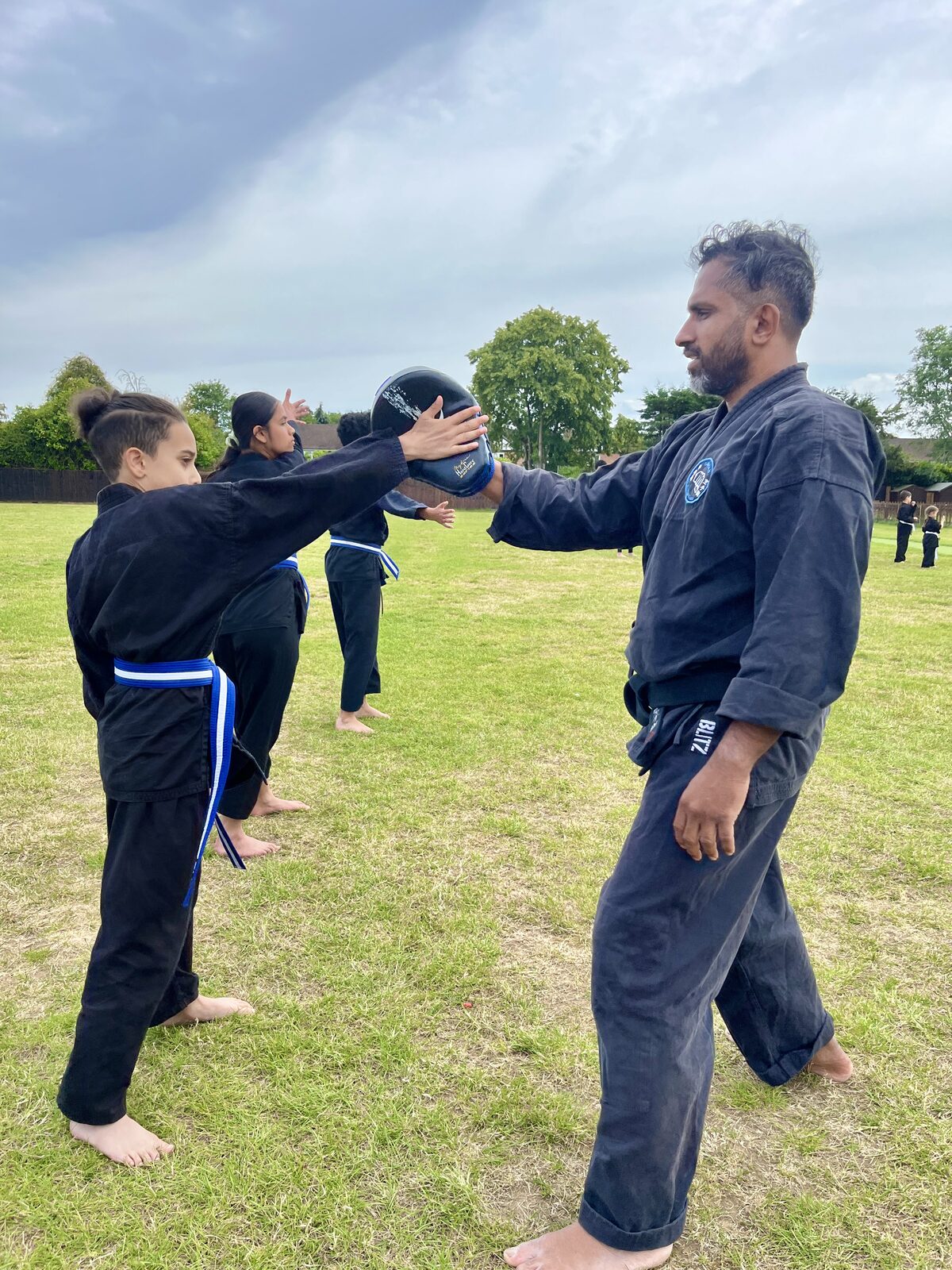
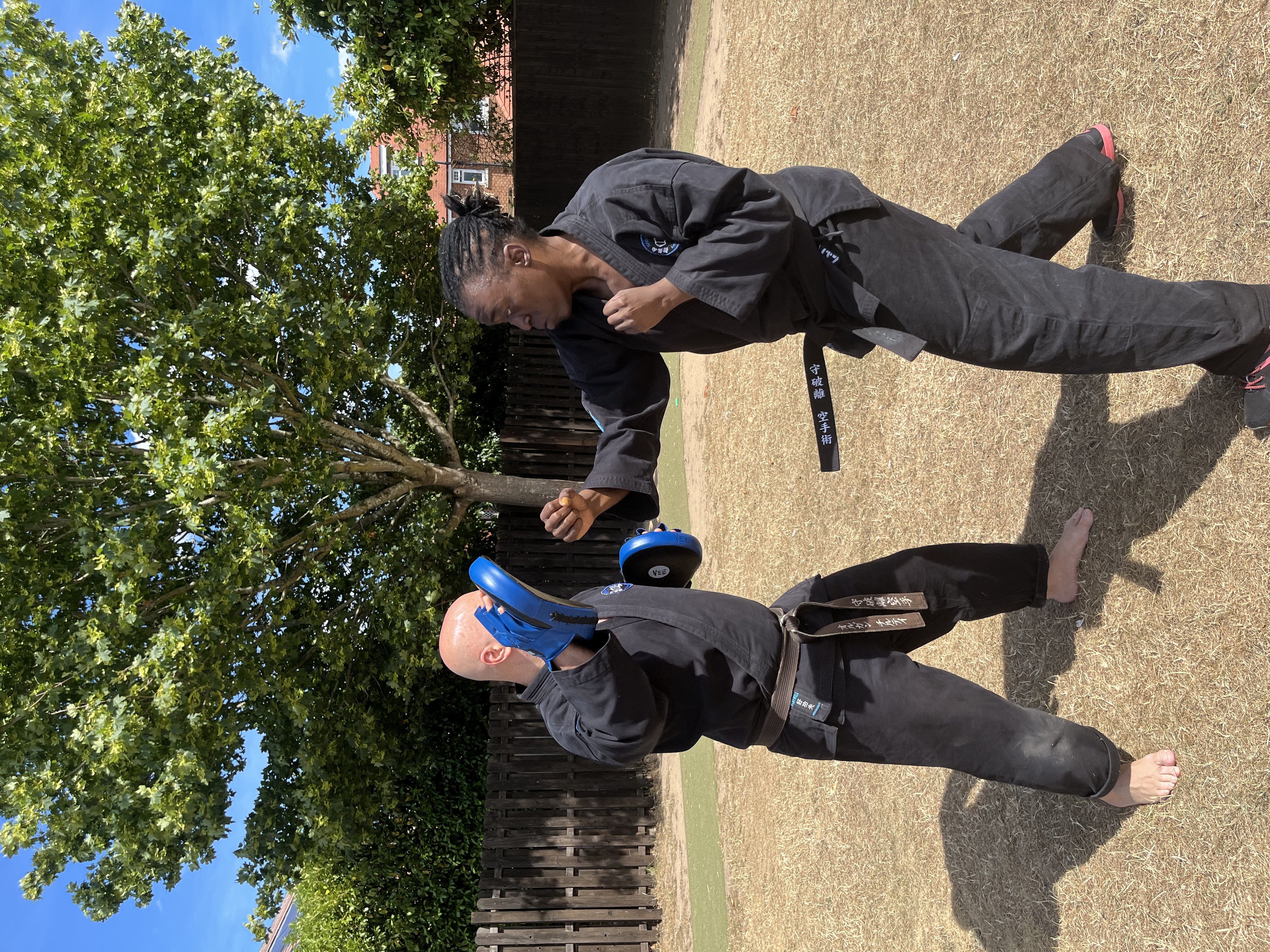
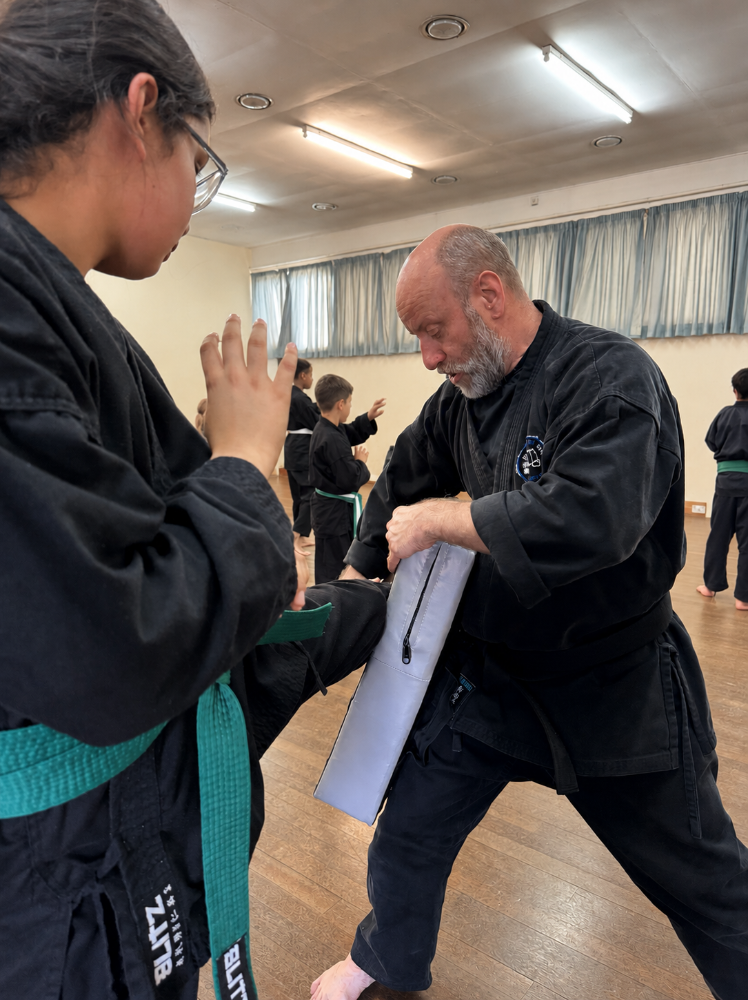
During pad work, sparring, grappling or technical practice, you have to pay attention.
Where are your hands?
What is your opponent doing?
What's your balance like?
Where is the next attack coming from?
For that period of time, the outside world becomes quiet. And sometimes that is exactly what the mind needs.
How Martial Arts Can Help With Anxiety
Anxiety isn't simply "being nervous".
It can involve excessive worrying, racing thoughts, difficulty concentrating and physical symptoms such as increased heart rate, sweating and muscle tension.
Martial arts isn't a replacement for professional mental health treatment when someone needs it. But regular training can be a useful part of a healthy lifestyle and may help people become better at managing everyday stress and anxiety.
There are several reasons why.
1. Training Forces You Into the Present Moment
A lot of anxiety is focused on the future.
What if this happens?
What if I fail?
What if something goes wrong?
Martial arts repeatedly pulls your attention back into the present.
When you're hitting pads, defending a combination or trying to escape from underneath someone during grappling, there isn't much spare mental capacity available for worrying about next Tuesday.
You have an immediate problem to solve.
This intense concentration can give people a temporary break from the constant internal conversation happening in their heads.
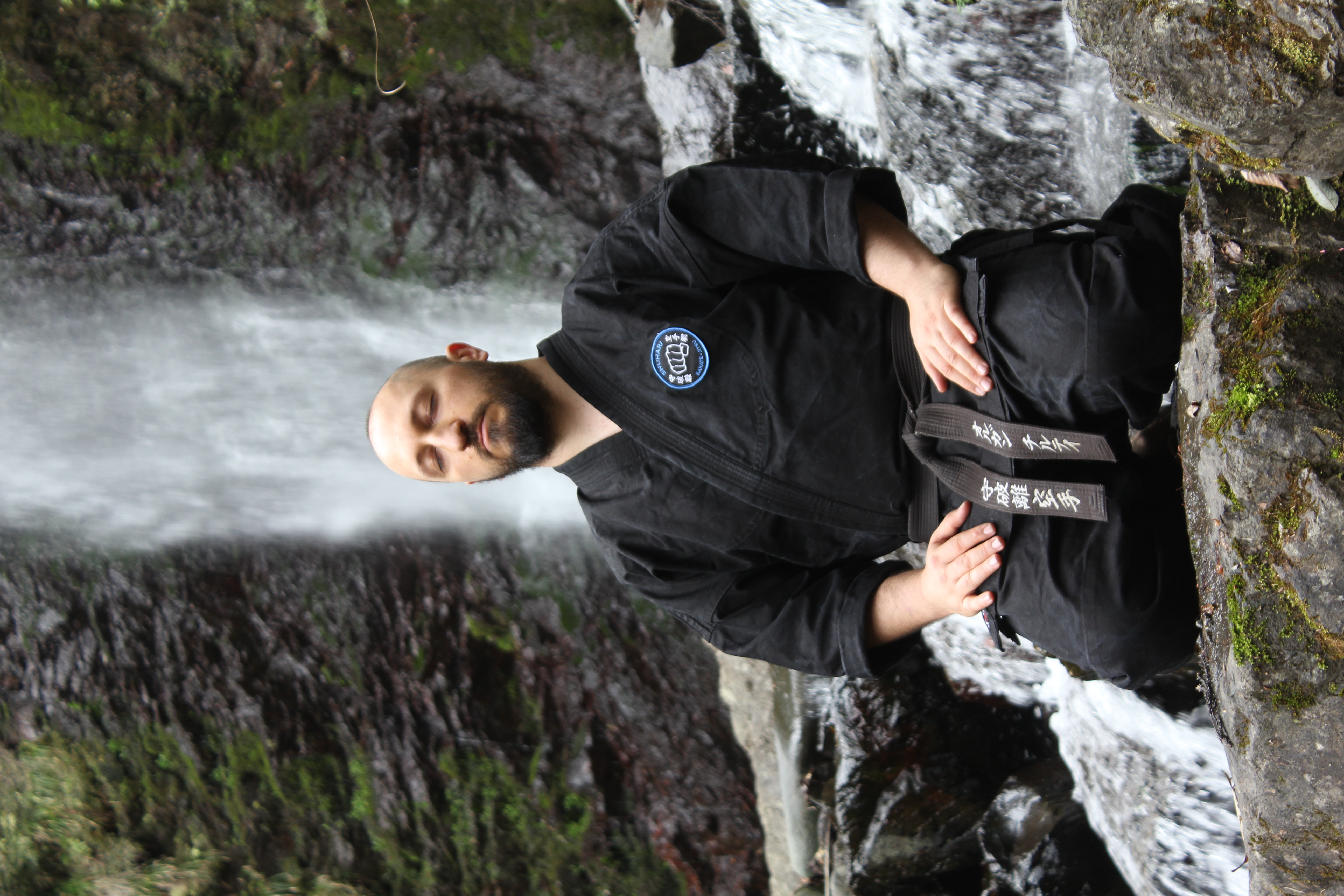
It is a form of moving meditation.
2. You Become More Comfortable With Being Uncomfortable
One of the most valuable lessons in martial arts is discovering that discomfort doesn't automatically mean danger.
Your heart is beating quickly. You're breathing heavily. Someone is putting pressure on you.
You're tired. You're nervous before sparring. Your body is telling you that the situation is uncomfortable.
But you learn:
I'm uncomfortable, but I'm OK.
Then you continue.
Over years of training, students experience this repeatedly.
That experience can change the relationship someone has with pressure.
Instead of immediately trying to escape uncomfortable situations, they learn that discomfort can be tolerated, managed and eventually overcome.
That is resilience being developed in real time.
3. Martial Arts Gives Stress Somewhere to Go
Modern life creates an unusual problem.
Our bodies have a powerful stress response designed to prepare us for action, but much of today's stress doesn't involve physical action at all.
Deadlines ,traffic, emails, financial pressure, arguments, work, school.
Phones constantly demand our attention.
You can spend an entire day mentally stressed while barely moving physically.
Martial arts give that energy somewhere productive to go.
Hit the pads, work the heavy bag, wrestle, spar, sweat, then go home.
Problems don't magically disappear after training, but they can sometimes feel considerably more manageable.
Martial Arts and Resilience
Resilience is often misunderstood.
Being resilient doesn't mean that nothing bothers you.
It means you can experience difficulty, disappointment or pressure and continue functioning effectively.
Martial arts provides constant opportunities to practise exactly that.
You will lose rounds.
You will struggle with flexibility or coordination.
Someone smaller than you will occasionally throw you across the room.
You will struggle with techniques that everybody else appears to understand.
You might fail a grading.
You will have days when you feel brilliant and other days when you wonder whether you've learned anything at all.
And then you come back to the next class.
That process matters.
Failure Becomes Information
In normal life, people often try to avoid failure.
Martial arts makes that almost impossible.
When you practise resisting partners, techniques sometimes don't work.
Instead of treating that as a disaster, you begin asking:
Why didn't it work?
Was your timing wrong?
Was your balance wrong?
Did your opponent anticipate it?
Did you hesitate?
What can you change next time?
Failure gradually becomes feedback and that mindset can extend far beyond martial arts.
A setback at work, school or elsewhere becomes something to analyse and overcome rather than something that automatically defeats you.
Confidence Is Earned, Not Given
There is a big difference between being told to be confident and having genuine reasons to believe in yourself.
Martial arts provides evidence.
The beginner who couldn't even complete the warm-up eventually finishes the class comfortably.
The student who was terrified of sparring eventually starts enjoying it.
The person who couldn't perform a technique eventually executes it naturally.
The white belt becomes a green belt. Then another grade. Then another.
Eventually that person looks backwards and realises:
"I can do things now that I genuinely couldn't do before."
That is where real confidence comes from. Not motivational slogans. Competence.
When you've repeatedly demonstrated to yourself that you can learn difficult things, your perception of other challenges begins to change.
Learning to Stay Calm Under Pressure
One of the biggest differences between practising techniques alone and training martial arts with another person is unpredictability.
Partners move. They resist. They attack back.
You have to make decisions.
Controlled sparring and grappling gradually expose students to pressure in a safe environment.
At first, beginners often tense every muscle and forget half of what they have learned.
That's completely normal. With experience, something changes.
The same situation that once created panic becomes familiar. You start breathing properly.
You see openings, make decisions and remain calmer.
The situation hasn't necessarily become easier. You've become better at dealing with it.
This ability to remain composed under pressure is valuable far beyond self-defence.
The Importance of Physical Confidence
There is also a connection between physical capability and psychological confidence.
Knowing that you can protect yourself doesn't mean walking around looking for confrontation.
Good martial arts training should produce the opposite.
When you feel physically capable, there is less need to prove it.
Students learn awareness, avoidance and de-escalation alongside physical techniques.
But underneath those skills sits something important:
The knowledge that if you genuinely had to act, you could.
That feeling can change how someone carries themselves.
Posture improves, eye contact improves and people become more assertive.
Situations that once felt intimidating become manageable.
For someone who has spent much of their life feeling physically vulnerable, that can be incredibly empowering.
Martial Arts Creates Structure and Routine
Mental wellbeing isn't only influenced by what happens during the class.
Sometimes simply having somewhere to be every Tuesday and Thursday evening can be valuable.
Training creates routine. You finish work. You might feel tired. You might not particularly feel like training, but you go anyway. Then afterwards you're usually glad you did.
Over time, martial arts becomes an anchor in the week. There are familiar faces and there are instructors who know you. There are people progressing alongside you.
There is always another technique to improve and another goal to work towards. That consistency can provide a sense of purpose that is surprisingly powerful.
The Social Side of Martial Arts
Adults can find it surprisingly difficult to make new friends.
Martial arts solves that problem in a slightly unusual way.
Put two strangers together and tell them to practise punching, throwing or strangling each other and somehow they frequently become very close friends.
Training creates shared experiences. You struggle together, you improve together, you laugh at mistakes and you help each other prepare for gradings.
Experienced students help beginners and beginners eventually become the experienced students helping someone else.
A good dojo becomes a community rather than simply somewhere you exercise.
That sense of belonging is another reason many people continue training long after achieving their original fitness or self-defence goals.
Martial Arts for Children and Mental Resilience
These lessons can be particularly valuable for children.
Children will inevitably experience situations that parents cannot solve for them.
A difficult exam, losing a competition, arguments with friends, bullying, rejection, failure, pressure.
The objective shouldn't be to remove every obstacle from a child's life.
It should be to give them the tools to deal with obstacles when they appear.
Martial arts provides controlled challenges appropriate to the student's ability.
A child might struggle with a technique. They practise it and they improve.
They might feel nervous about grading but they do it anyway.
They might be uncomfortable sparring and they gradually learn to remain calm.
These experiences create a simple but powerful internal message:
"Difficult doesn't mean impossible." That is a lesson worth learning young.
You Don't Need to Be Confident Before Starting
There is a strange assumption that you need to be tough, confident or fit before walking into a martial arts club. You don't.
Those are some of the reasons people train in the first place.
Almost every experienced martial artist was once the nervous beginner standing at the edge of the mat wondering what on earth they had signed themselves up for.
Confidence develops through participation and resilience develops through challenges.
Fitness develops through training just as skill develops through practice.
You don't need these qualities to start. You start to develop these qualities.
Martial Arts Isn't Therapy — But It Can Be Therapeutic
It is important to make this distinction.
Martial arts instructors are not mental health professionals, and martial arts should not be presented as a cure for anxiety, depression or other mental health conditions.
Anyone experiencing persistent or serious mental health difficulties should consider speaking with an appropriately qualified healthcare professional.
But something doesn't have to be therapy to have therapeutic benefits. Exercise, friendship, routine, achievement, purpose, learning, physical confidence, facing manageable challenges and belonging to a community. These are all things martial arts can provide.
And together, they can have a meaningful positive effect on someone's wellbeing.
Strong Body. Sharp Mind. Immovable Spirit.
At Shuhari Self Defence, we believe martial arts should develop more than someone's ability to punch, kick or grapple. The physical skills matter, being able to protect yourself matters.
But ultimately, martial arts should help develop the person using those skills.
A strong body capable of taking action.
A sharp mind capable of making good decisions.
And an immovable spirit capable of continuing when life becomes difficult.
You may initially walk into a martial arts class because you want to get fitter or learn self-defence.
Years later, you may discover that the most valuable thing you learned wasn't how to fight.
It was how to deal with pressure, failure, fear and adversity without allowing them to control you.
And that is something you can carry with you everywhere.
How Shuhari's Approach Helps
Shuhari's sessions draw techniques from Karate, Boxing, Kickboxing, Muay Thai, Wrestling, Judo, Brazilian Jiu-Jitsu, Kung Fu, and Krav Maga and the pragmatic nature of the training develops mentally strong students who deal with life's challenges in a more confident way.
Shuhari Self Defence has operated in Berkshire since 2010, founded by Olgun Tiltay. The organisation runs sessions across Slough, Maidenhead, Bracknell, Cippenham, Burnham, and Langley, with 24 instructors and more than 8,670 students trained. The 4.9-star Trustpilot rating is based on 250+ verified reviews.
We run sessions for children aged seven and above, teenagers, and adults across six Berkshire locations: Slough, Maidenhead, Bracknell, Cippenham, Burnham, and Langley. Female-only sessions are available with Sensei Vee.
View the full timetable and find your nearest class at shuhari.com/locations. Contact the team at info@shuhari.com or on 07739 464 005.