




After-School Martial Arts Programmes: Why They Outperform Other Activities
The school bell rings at 3:15. What happens next shapes your child more than most parents realise. Those three or four hours between pickup and bedtime aren't just a logistical puzzle to solve, they're a daily window where habits, confidence, and character take root.
Across Berkshire, parents in Slough, Maidenhead, Bracknell, Cippenham, Burnham, and Langley face the same question: which after-school activity actually delivers value, not just supervision? Childminding fills time. A weekly piano lesson develops one specific skill. A football club gets them moving for an hour. Each has merit. But when it comes to the breadth of what a child needs, physical activity, mental focus, social skills, confidence, and resilience, martial arts after-school clubs training stands apart.
The After-School Activity Problem in Berkshire
Sport England's most recent Active Lives Children and Young People Survey (academic year 2024-25) found that only 49.1% of children in England meet the Chief Medical Officers' guideline of 60 minutes of moderate-to-vigorous physical activity a day. Worse, 28.4% do less than 30 minutes daily. That's roughly one in four children leading what the report classifies as inactive lives.
The NHS recommends that children aged 5 to 18 do at least 60 minutes of physical activity every day, with vigorous activity and muscle-strengthening exercise on three days a week. School PE alone doesn't get most children there. The gap has to be filled outside school hours, which means the after-school window matters more than ever.
Yet many popular after-school options fall short:
Childminding and after-school clubs at school sites typically involve homework, screen time, and unstructured play. They solve the supervision problem but rarely the activity one.
Single-sport clubs like football or netball provide one or two hours of activity weekly, often seasonal, and don't develop the breadth of physical literacy a growing child needs.
Tutoring and academic enrichment add to a child's already substantial sitting time.
Drama and music build creativity and discipline, but offer little physical benefit.
Parents often piece together two or three of these to cover all the bases. The result is a packed, expensive schedule that still leaves gaps. Martial arts is one of the few options that addresses physical, mental, and social development inside a single class.
What Makes Martial Arts Different from Other After-School Activities
Most after-school activities like tutoring or table tennis etc target one outcome. Martial arts is structurally different because every class delivers on multiple fronts simultaneously.
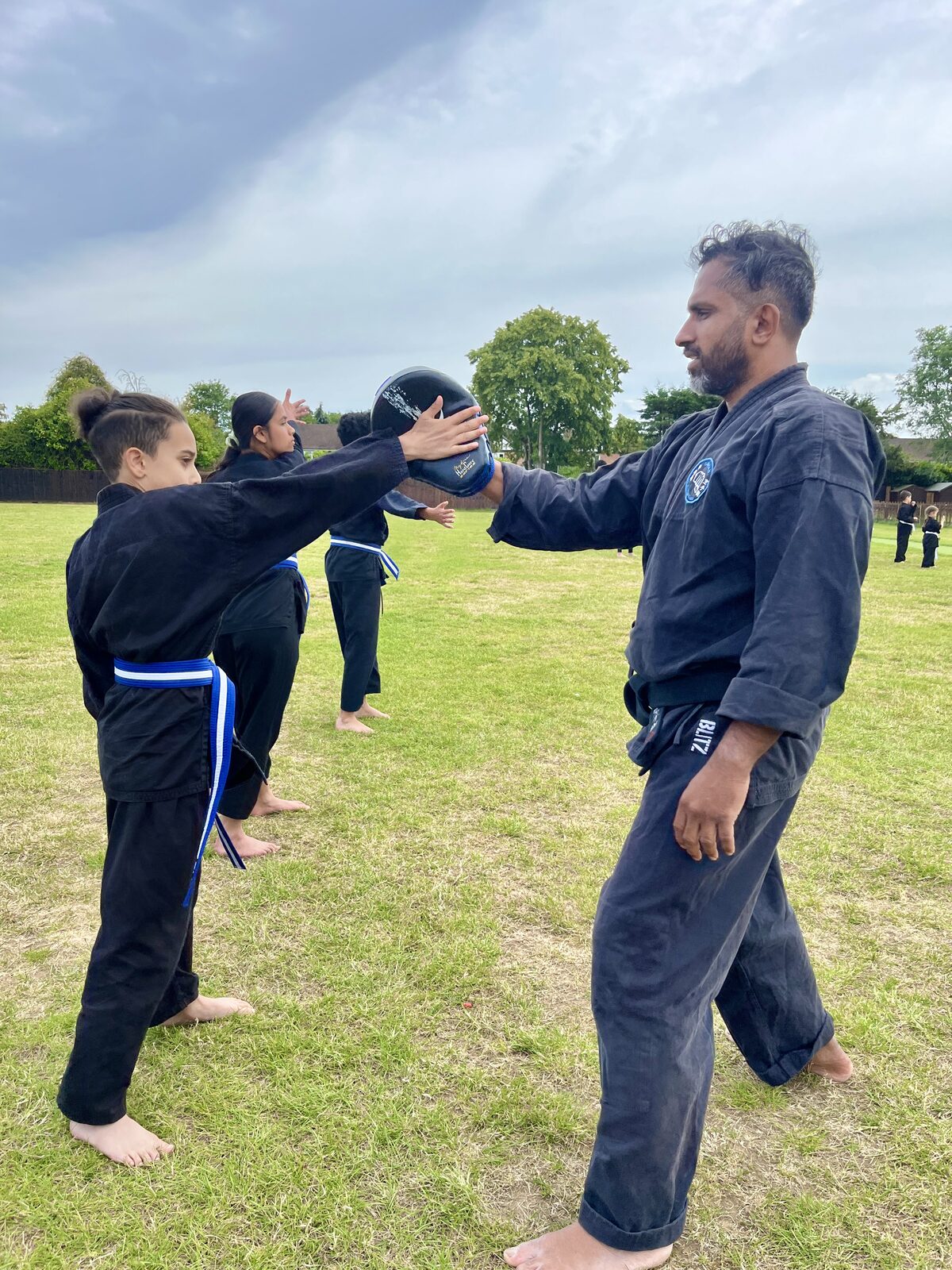
At Shuhari Self Defence, our adult, teen, and kids classes blend techniques from multiple disciplines: Karate, Boxing, Wrestling, Krav Maga, Kung Fu, Judo, BJJ (Brazilian Jiu-Jitsu), Kickboxing, and Muay Thai. Children learn techniques from all of them inside the same session, building a genuinely well-rounded skill set.
In a single 60-minute class, a child will typically:
Warm up with cardiovascular and mobility work that meets the NHS vigorous-intensity threshold.
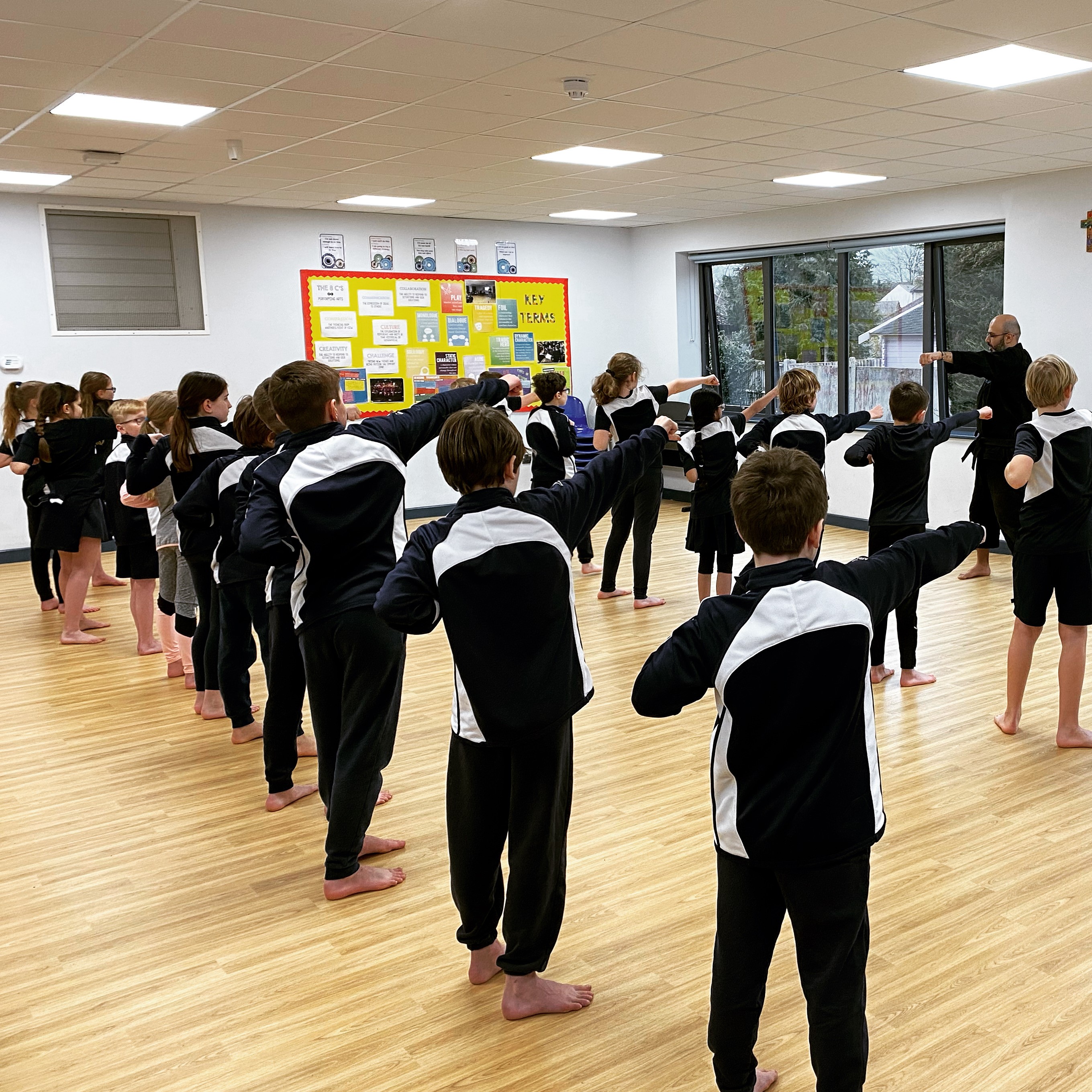
Drill technique under instruction, requiring focused attention and immediate correction.
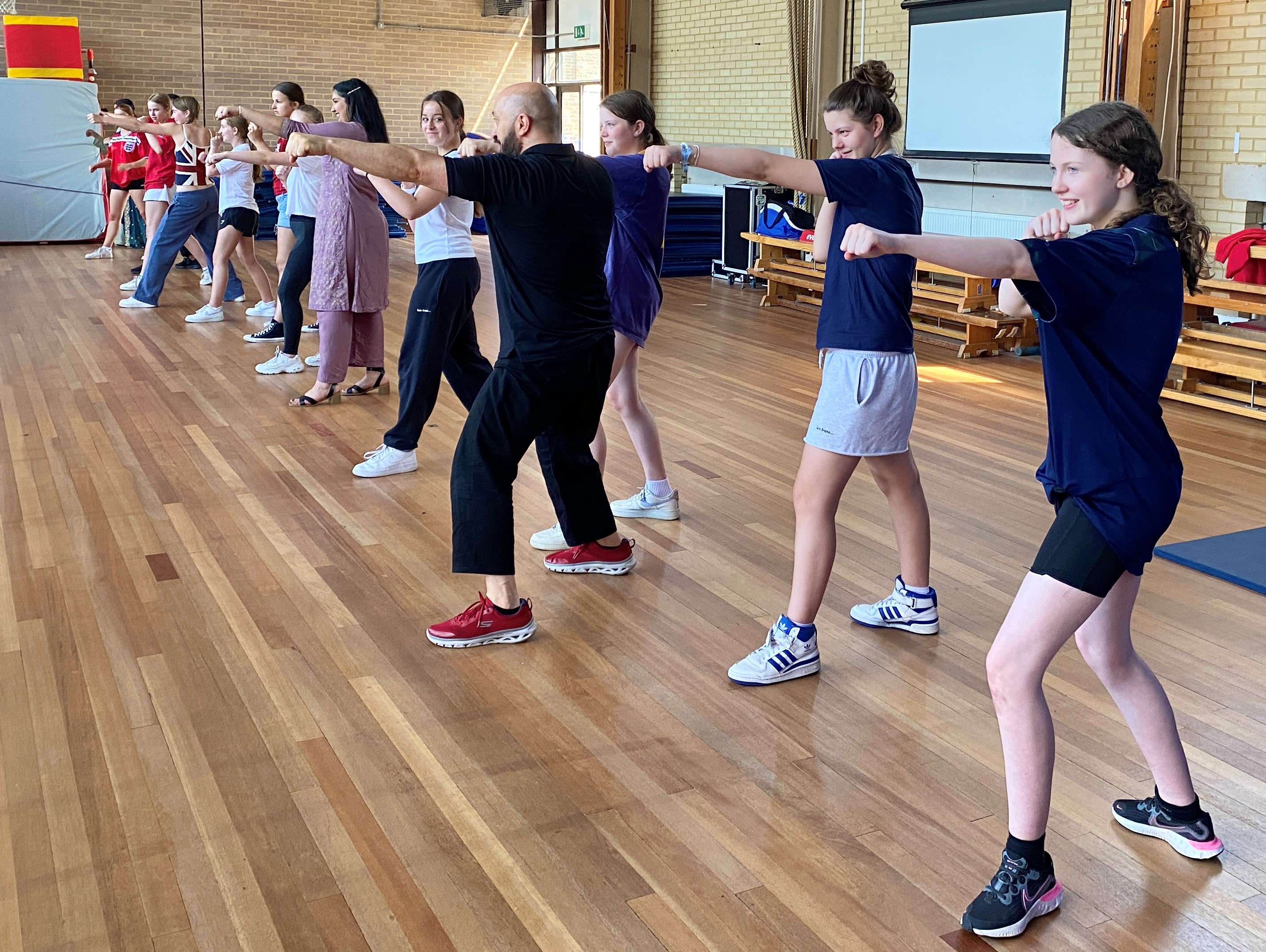
Practise with partners, learning to give and receive controlled physical contact respectfully.
Apply skills in light sparring or scenario work, developing decision-making under pressure.
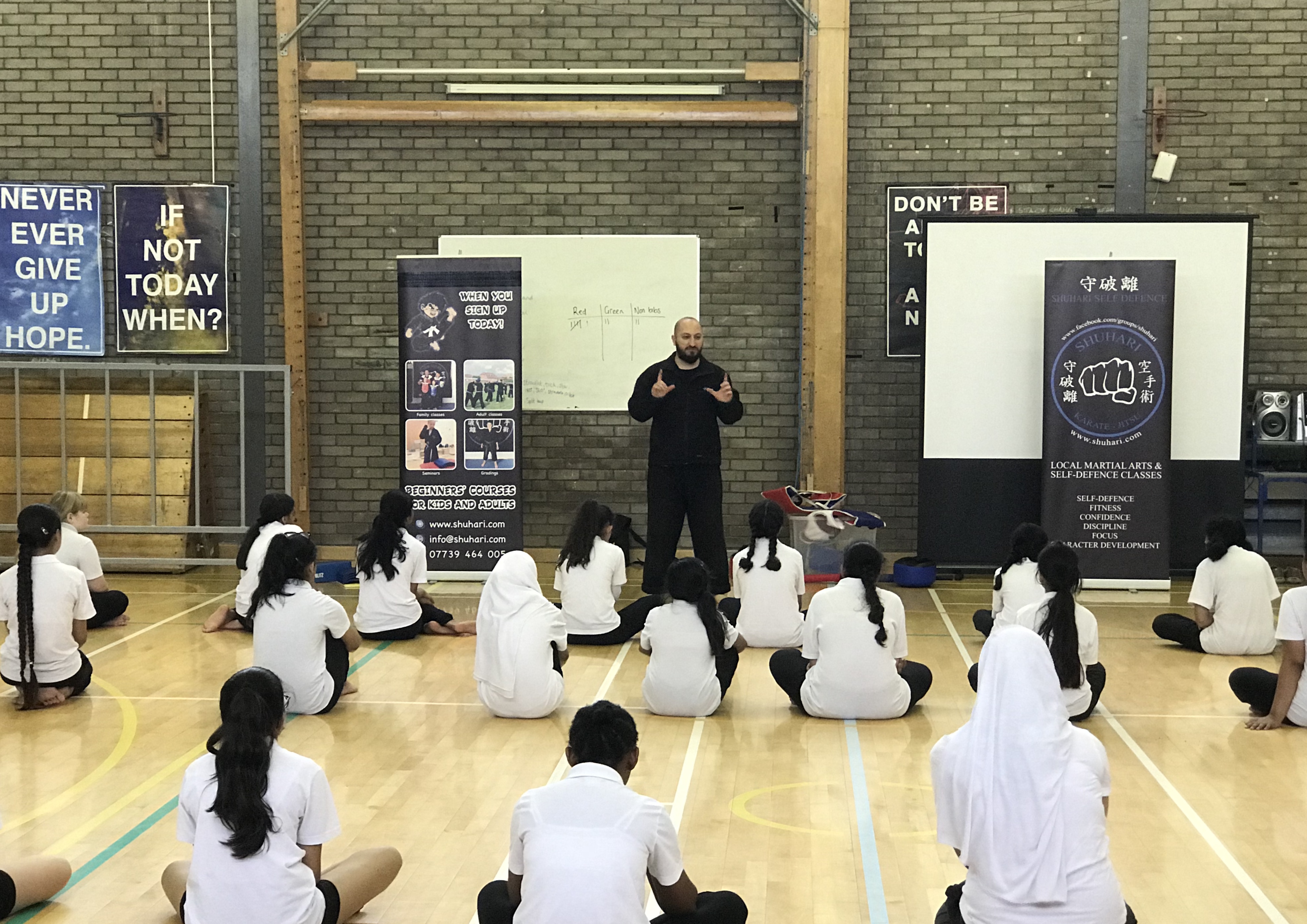
End with a moment of reflection rooted in meditation and traditional values.
That's physical fitness, cognitive load, social interaction, emotional regulation, and character development inside one hour. Few other activities compress so much developmental value into a single session.
How Martial Arts Compares to Common After-School Activities
To make the comparison concrete, here's how martial arts measures against four popular alternatives across the outcomes parents say they care about most.
| Outcome | Martial Arts | Single Sport (e.g. football) | Music or Drama | After-School Childcare |
|---|---|---|---|---|
| Vigorous physical activity | Yes | Yes | Limited | Minimal |
| Self-defence skills | Core focus | None | None | None |
| Discipline and focus | Embedded in every class | Variable, age group & coach-dependent | Strong | Limited |
| Confidence building | Through sparring | Through team success | Through performance | Incidental |
| Social skills with mixed ages | Yes, classes mix ages | Same age group | Often same age | School peers only |
| Resilience under pressure | Built through controlled adversity | Some | Performance pressure | Low |
Four Reasons Martial Arts Outperforms Other After-School Activities
1. It Meets the NHS Daily Activity Target in a Single Class
A typical Shuhari class delivers a full 60 minutes of moderate-to-vigorous activity. That's the entire daily NHS target hit in one session, two or three times a week.
2. It Builds Confidence That Transfers to School
Confidence built in martial arts is earned, not given. A child who lands a clean technique under pressure, holds their ground in sparring, or grades up to the next belt has tangible proof of their own capability. Parents repeatedly tell us the change shows up at school: a quieter child speaks up in class, a child who used to avoid PE volunteers first, a child being teased finds the confidence to deal with it.
3. It Teaches Real Self-Defence, Not Just Sport
Ball games won't help a child handle a confrontation in the school corridor. Martial arts will. Our curriculum is rooted in practical self-defence, drawing techniques from disciplines designed for genuine personal protection: Krav Maga for awareness and de-escalation, Boxing and Muay Thai for striking, Judo and BJJ for grappling and ground control. Children learn how to avoid trouble, how to defuse it verbally, and how to defend themselves physically when nothing else works.
4. It Gives Parents Genuine Peace of Mind
With 24 instructors led by Chief Instructor Olgun Tiltay, classes are properly supervised by qualified, experienced coaches. Our 4.9-star rating across 250 verified reviews reflects what parents consistently say: their children come home tired, focused, and visibly proud of themselves. That's a different kind of peace of mind than knowing they were merely supervised.
Why We Start Children at Age Seven
A common parent question is whether a three or four-year-old can start martial arts. At Shuhari, our minimum age is seven, and that's a deliberate choice rooted in child development.
Genuine martial arts training is a contact discipline. To train safely, a child needs sufficient cognitive maturity to understand instruction, control their own force, recognise when to stop, and process the concepts behind technique. Most children reach this threshold around age seven. Starting earlier doesn't accelerate development. It introduces unnecessary risk without any meaningful long-term advantage. This is why our kids classes start at seven and run alongside teen and adult classes, creating a natural progression pathway as your child grows.
How After-School Martial Arts Fits Into a Berkshire Family's Week
With six locations across Berkshire, fitting training into your family's schedule is straightforward. Our class times are deliberately set to work around school pickup and dinner.
A few examples of how this looks in practice:
Burnham parents at Our Lady of Peace School can send their child straight from school into our Tuesday after-school class at 15:45, with a 16:45 finish that still leaves time for homework and dinner.
Slough families can choose between Thursday evening classes at the Ramgarhia Educational and Cultural Centre.
Maidenhead parents using Larchfield Primary School get the convenience of training on the same site as the school, with both Wednesday and Friday options.
Bracknell, Cippenham, and Langley each run weekday evening classes timed for working parents who want to combine pickup, training, and dinner in one trip.
What to Look For in an After-School Martial Arts Programme
Not every martial arts club is built for after-school programming. Before you sign up anywhere, ask these questions:
How experienced are the instructors? Look for clubs with multiple qualified coaches, not a single owner-instructor. Shuhari operates with 24 instructors across 19 weekly classes.
Is there a real curriculum, or just freeform sessions? A proper programme has a syllabus, grading criteria, and clear progression. Loose drop-in classes don't build long-term skill.
Do classes teach self-defence or just sport? Some clubs focus on competition; others on practical defence. Ask which, and choose what matches your child's needs.
How long has the club been running? Longevity matters. Shuhari has been operating since 2010.
What do other parents say? Independent reviews on third-party platforms carry more weight than a club's own words. Look for verified reviews, not testimonials.
Frequently Asked Questions About After-School Martial Arts
How many sessions a week does my child need?
One session a week builds steady, gradual progress. Two-three sessions a week is the sweet spot for most children, delivering noticeable improvement in fitness, technique, and confidence within the first year.
Will martial arts make my child more aggressive?
Research and our 16 years of experience point the other way. Children who train martial arts typically become calmer and less reactive, not more aggressive. They develop the confidence to walk away from confrontation because they no longer feel they have to prove themselves. The discipline of bowing in, following instruction, and respecting training partners builds restraint, not aggression.
What if my child is shy or has never done a sport before?
Most of our students walked through the door for the first time feeling exactly that way. Our beginner-friendly classes are designed for first-timers, with instructors trained to bring quiet children out of their shells gradually. Martial arts is uniquely suited to shy children because progress is individual and measurable, not dependent on team selection or peer comparison.
How much does after-school martial arts training cost in Berkshire?
Costs vary by club and frequency, but martial arts generally compares favourably to alternatives. Call 07739 464 005 for current rates and beginner offers at your nearest location.
Is the kit expensive to get started?
To start, your child needs only loose, comfortable clothing. A proper gi (uniform) is introduced after a trial period, and protective equipment for sparring is added gradually as your child progresses through the syllabus. There's no upfront equipment cost beyond what most children already have at home.
Which Shuhari location is best for my family?
That depends on where you live and your school pickup logistics. Burnham has after-school classes for Our Lady of Peace pupils. Windsor has the St.Edwards Middle School after school club. Maidenhead students train at Larchfield Primary School. Slough offers the widest variety of class times across weekdays. Bracknell, Cippenham, and Langley all run evening classes timed for working parents. See our full timetable here for your nearest location.
Try a Class at Your Nearest Shuhari Location
If you're weighing up after-school options for your child this term, the best way to judge whether martial arts is the right fit is to see a class in action. We run 20 classes a week across our six Berkshire locations, and beginners are welcome at any session.
Call us on 07739 464 005 or visit shuhari.com to book a trial class in Slough, Maidenhead, Bracknell, Cippenham, Burnham, or Langley. Strong body, sharp mind, immovable spirit. That's what your child takes home from every session, and it shows up everywhere else in their life.